
G-flat Piano Chords
Here we can explore every chord built on G-flat, the first black key of each group of three. The root stays the same from chord to chord; what changes is the distance from G-flat to the notes stacked above it, and that is what gives each chord its own quality and unique sound. Because G-flat is a black key, the right thumb and the left 5th finger start on a black key in root position, so the hand sits further in toward the fallboard than it does for chords built on white keys. G-flat and F-sharp are the same key on the piano. The chords here are spelled from G-flat; F-sharp piano chords spells the same sounds the other way, and which name a chord takes depends on the key it appears in.
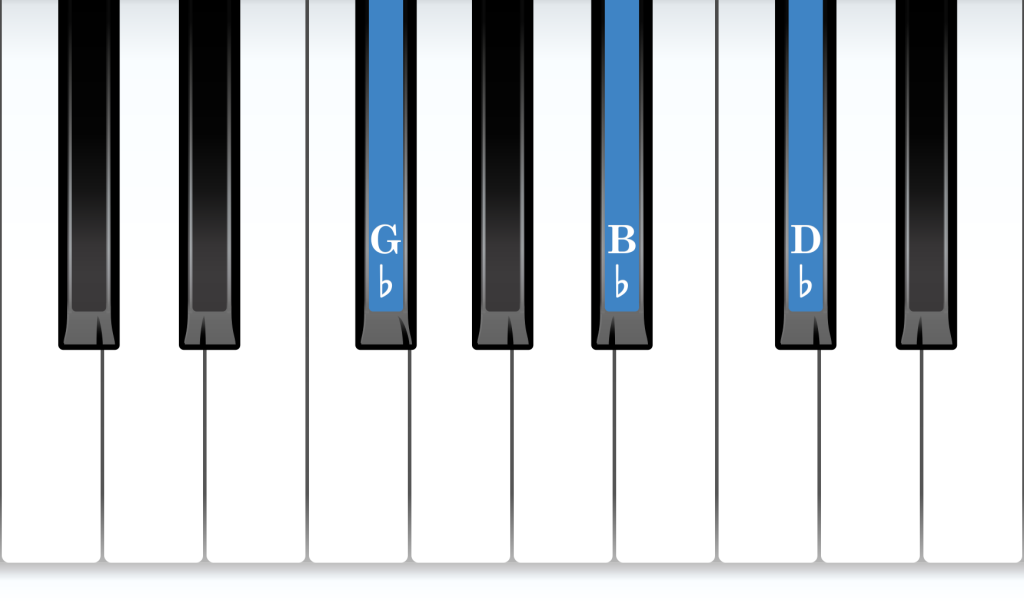
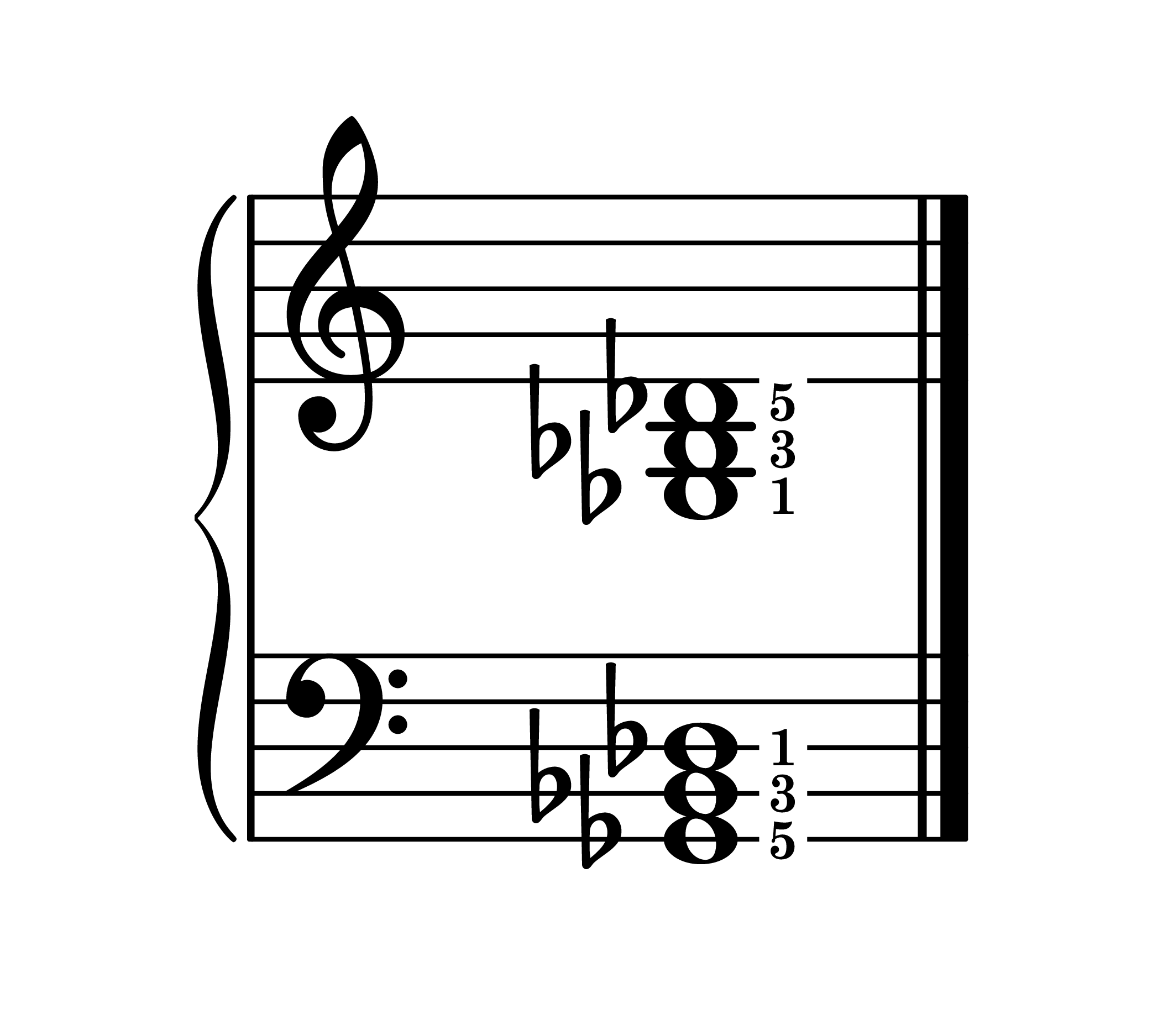
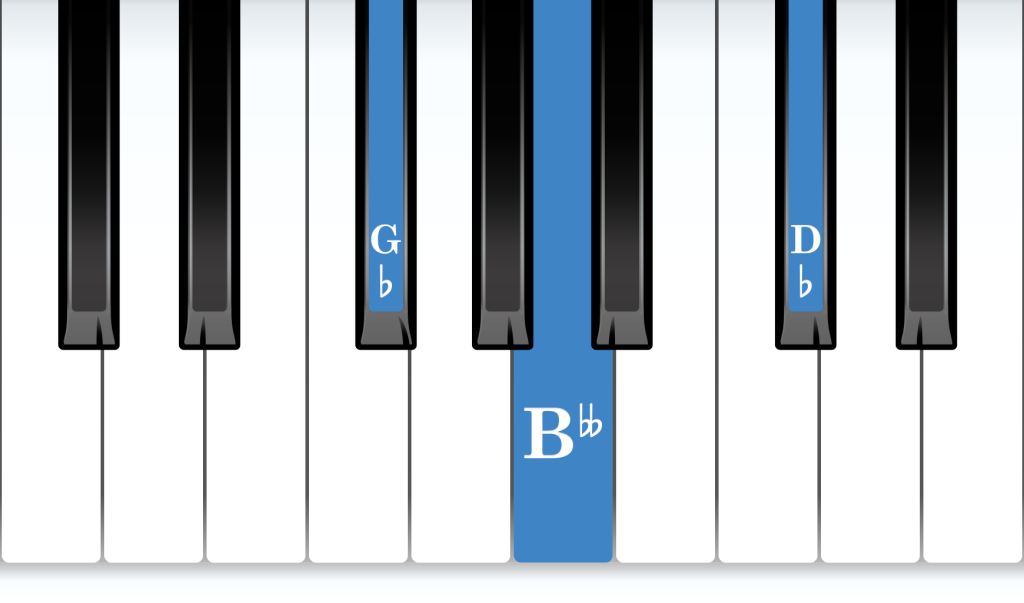
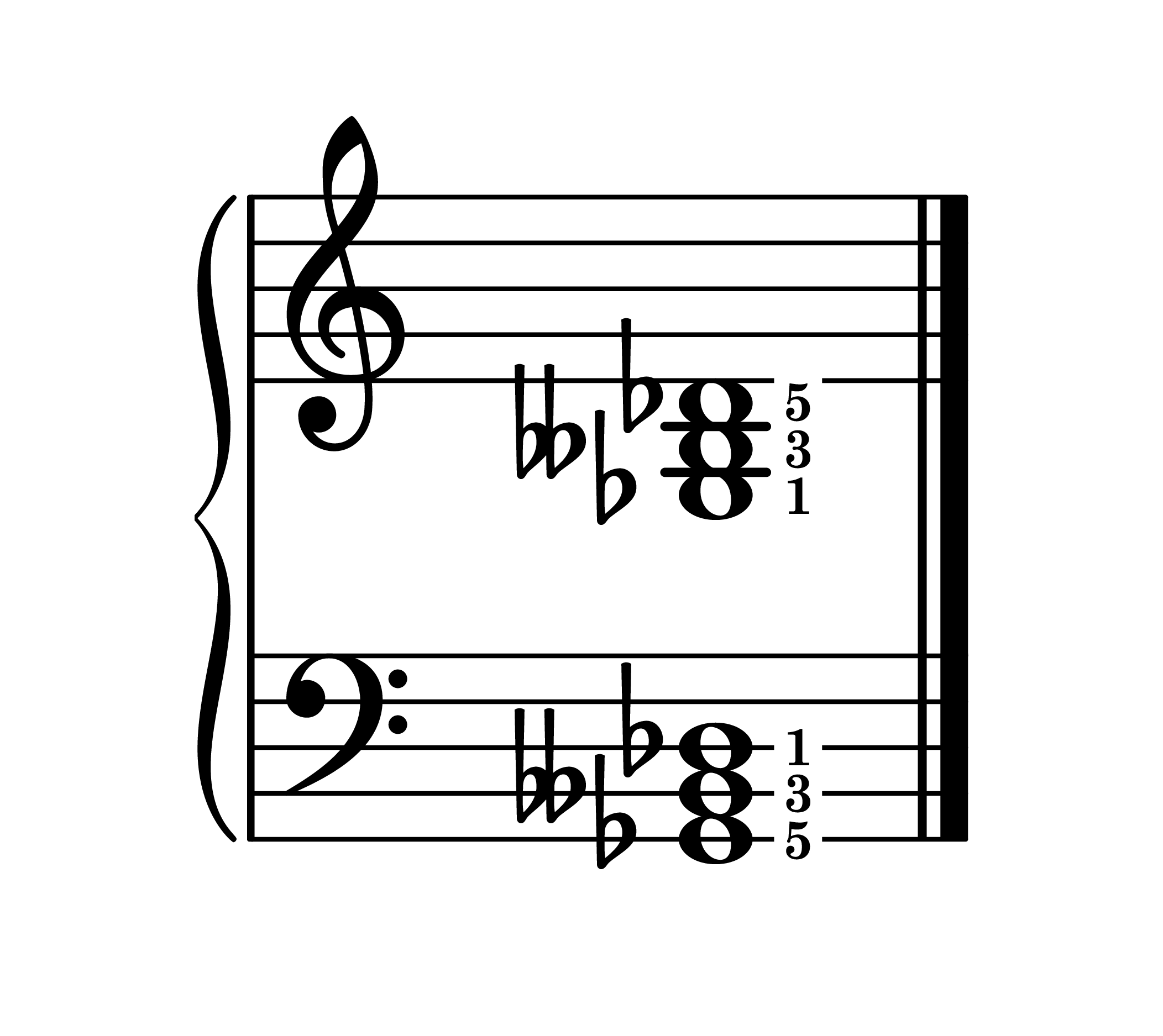
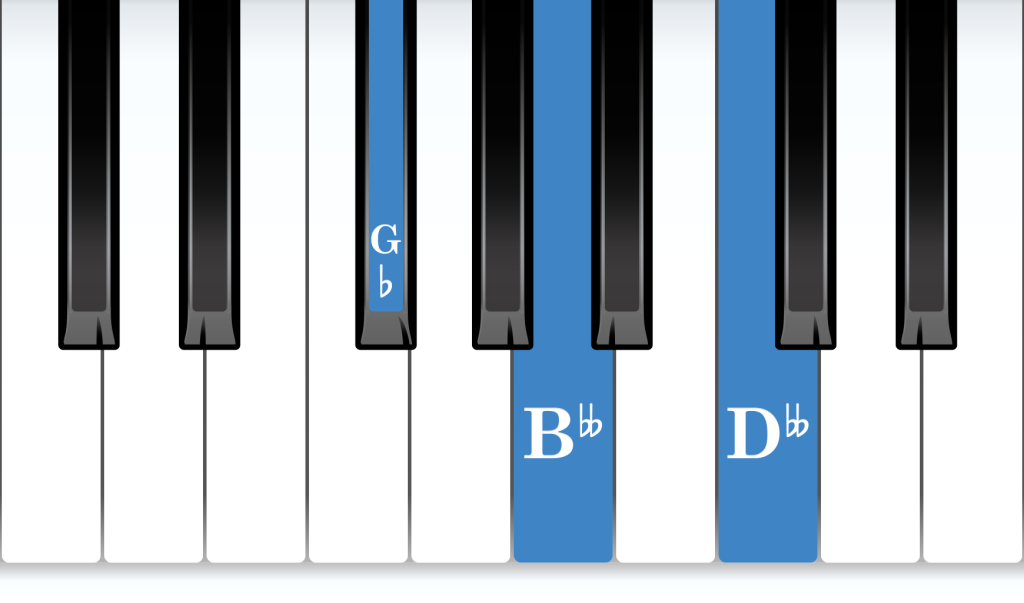
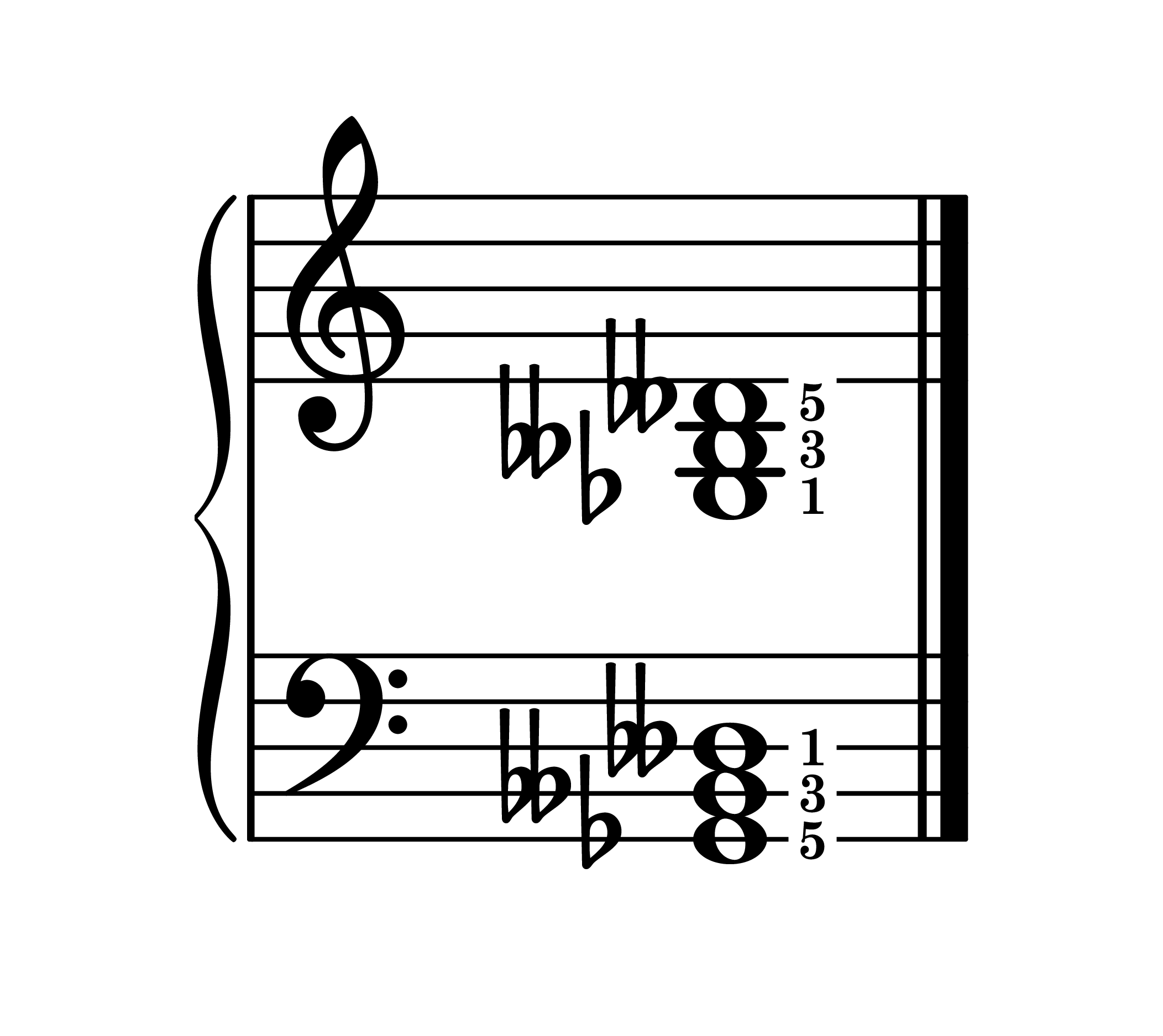
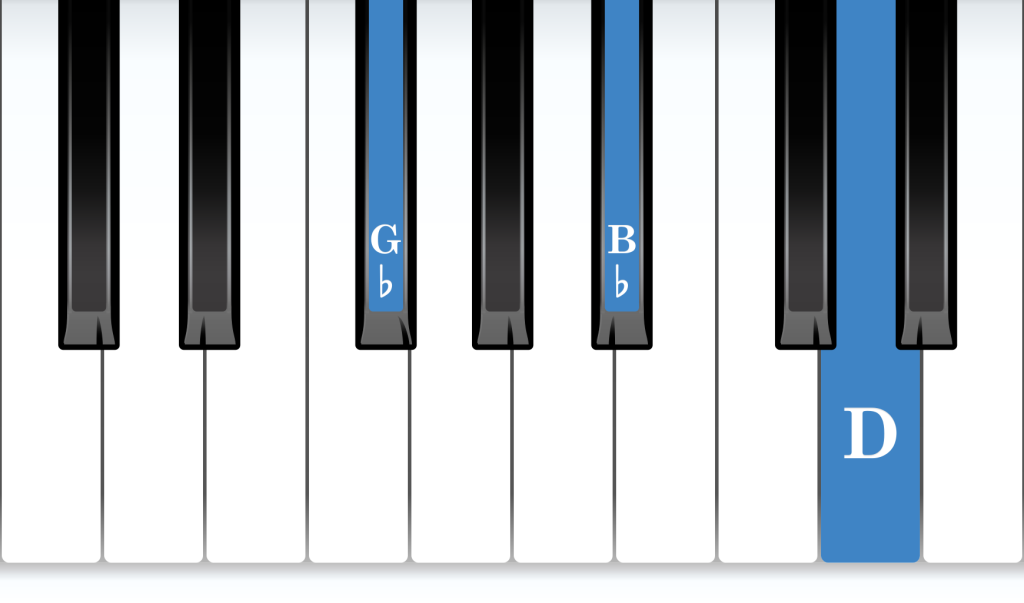
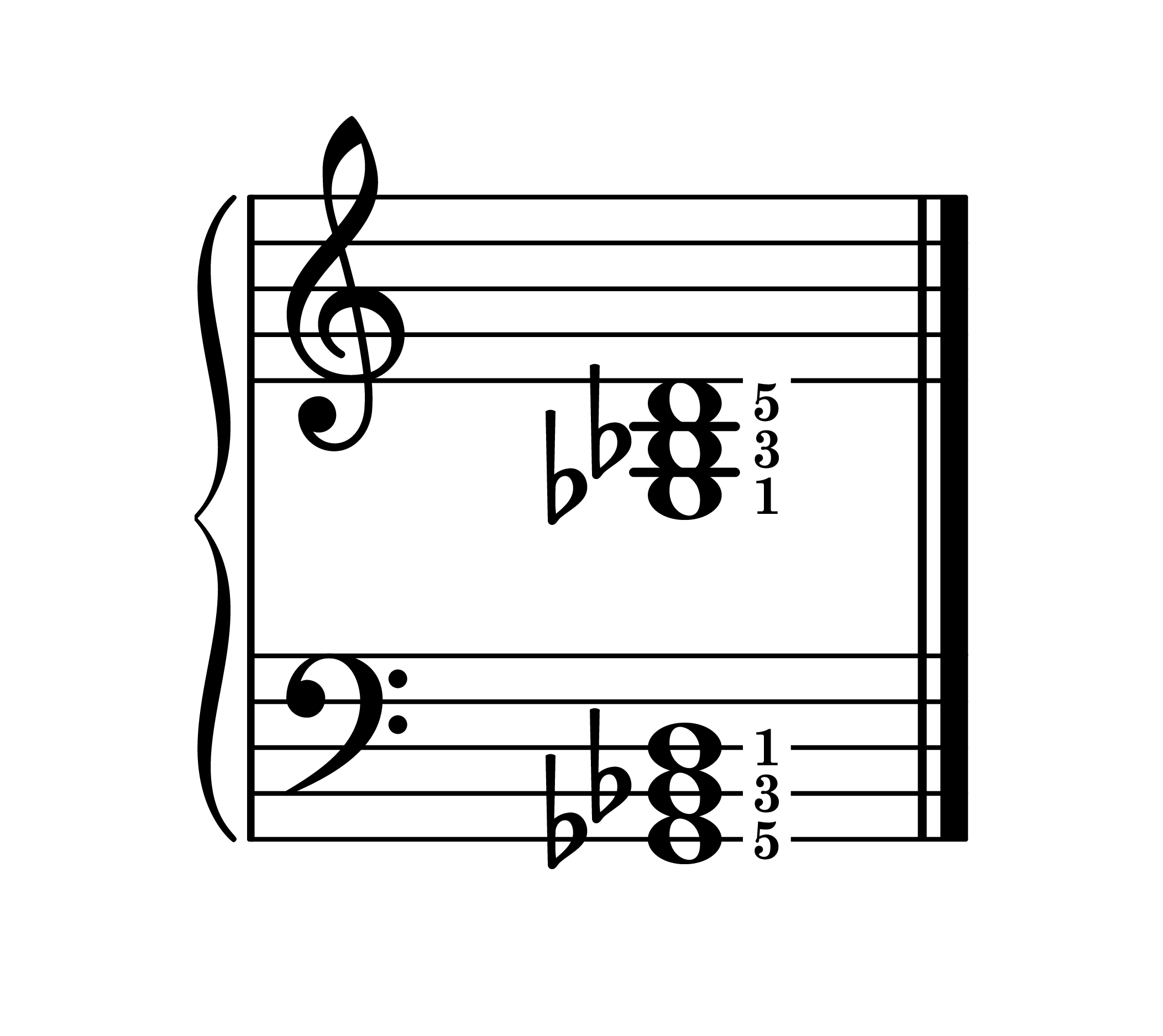
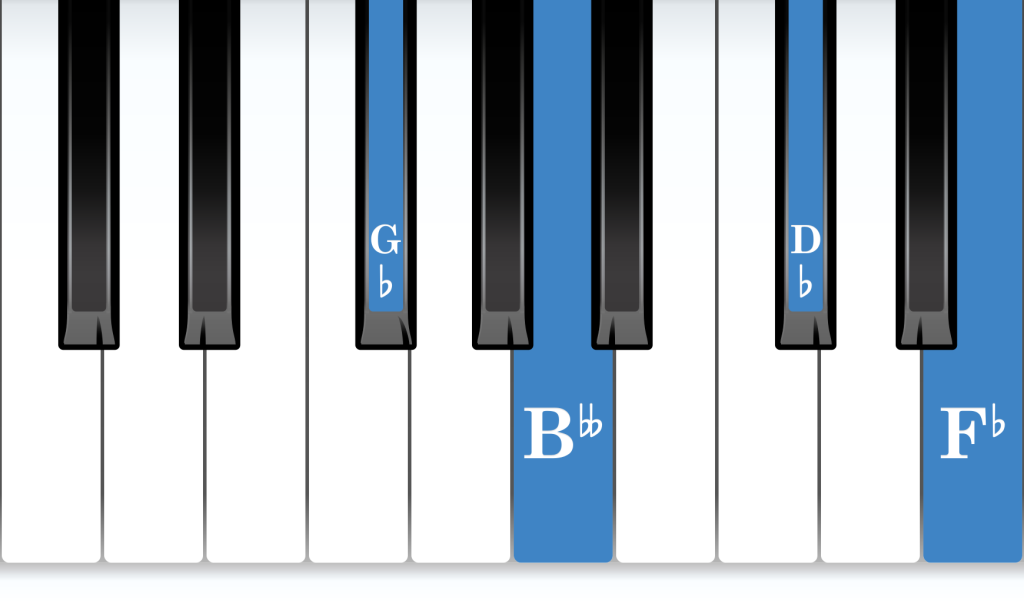
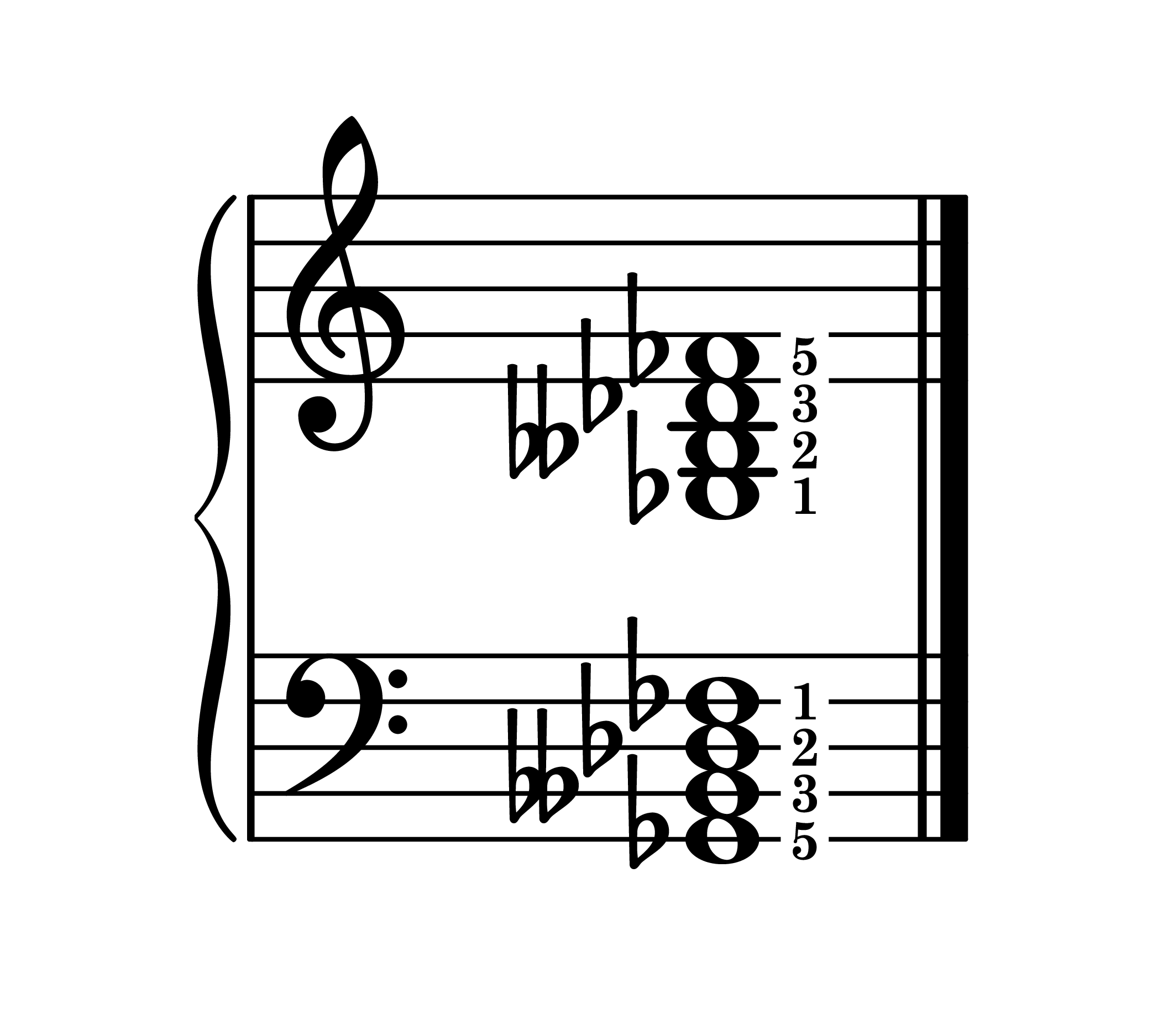
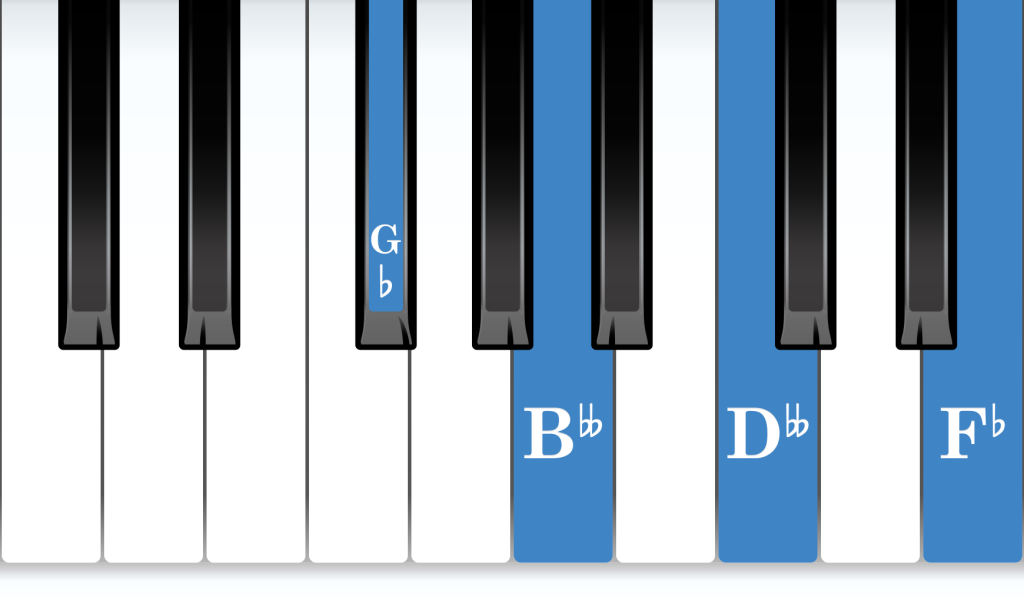
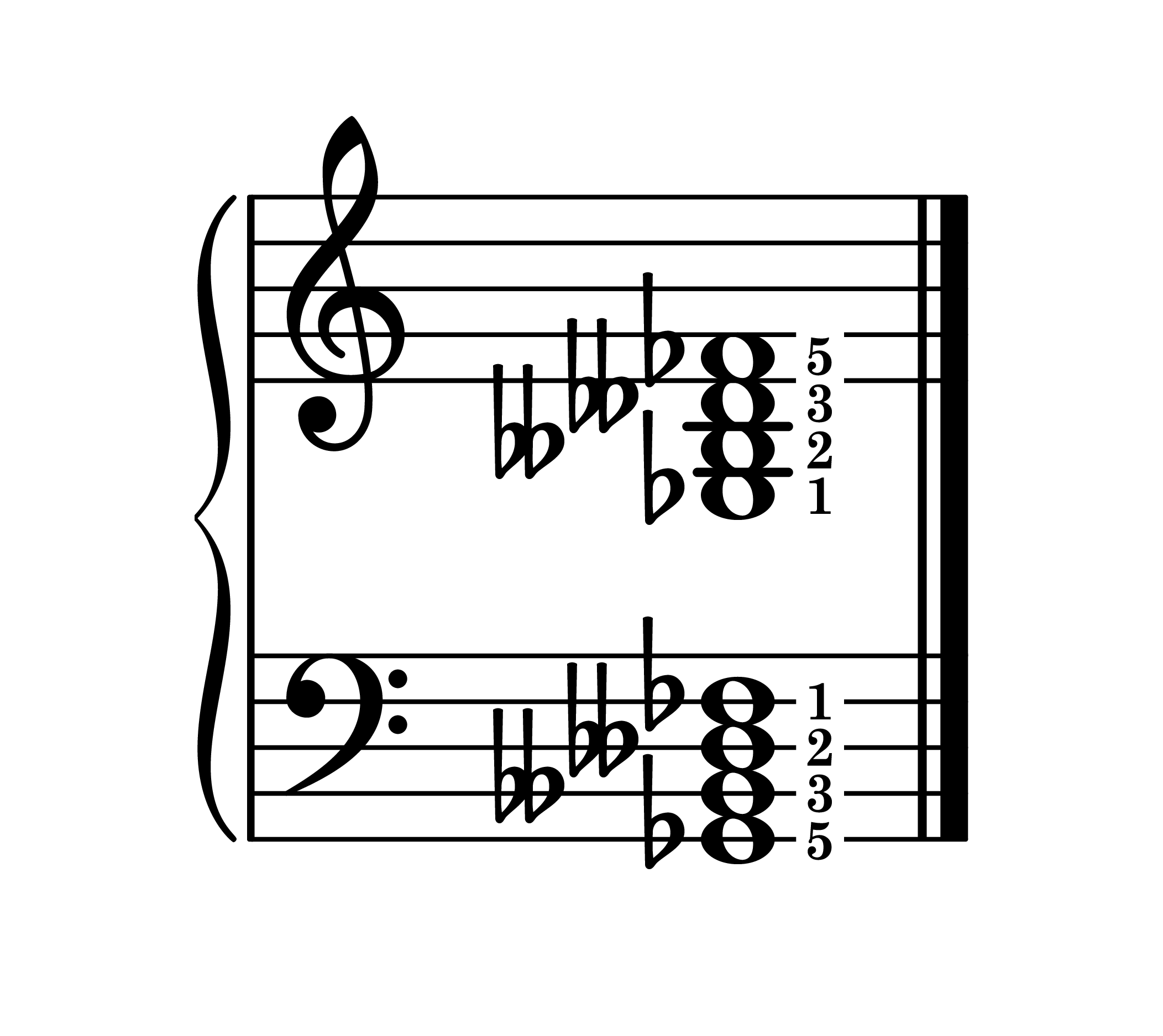
Triads built on G-flat

Four triads can be built on G-flat. Each is three notes stacked in thirds, and they differ only in their third and fifth:
- G-flat major (G♭): G-flat, B-flat, D-flat
- G-flat minor (G♭m): G-flat, B-double-flat, D-flat, with the third lowered to B-double-flat
- G-flat diminished (G♭°): G-flat, B-double-flat, D-double-flat, with the fifth lowered as well, to D-double-flat
- G-flat augmented (G♭+): G-flat, B-flat, D, with the fifth of the major chord raised to D
Try playing them in that order and listening to how a single changed note changes the sound of the whole chord.
Seventh chords built on G-flat

Adding a seventh on top of a triad gives the five seventh chords built on G-flat:
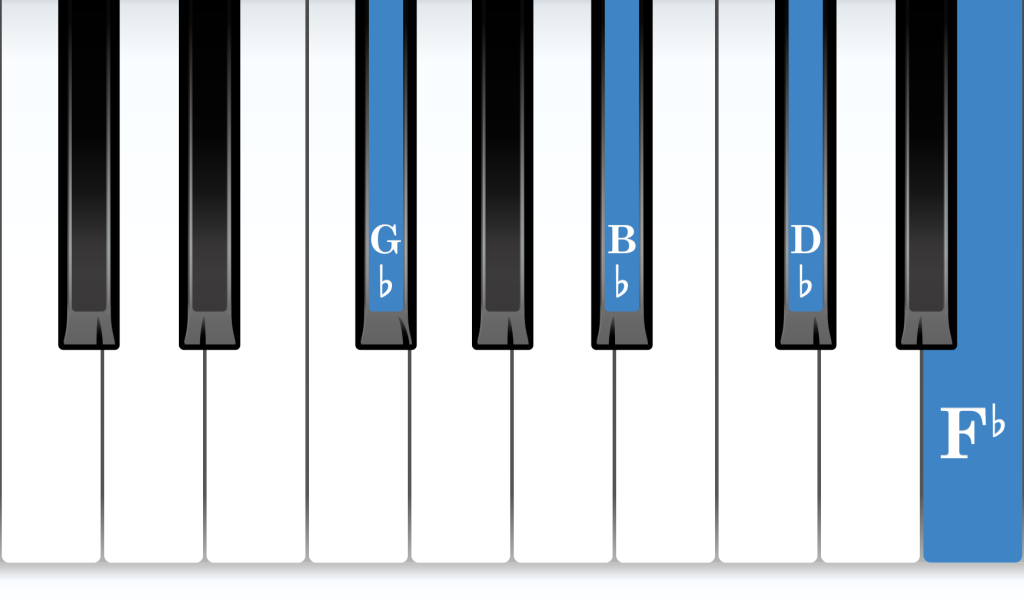
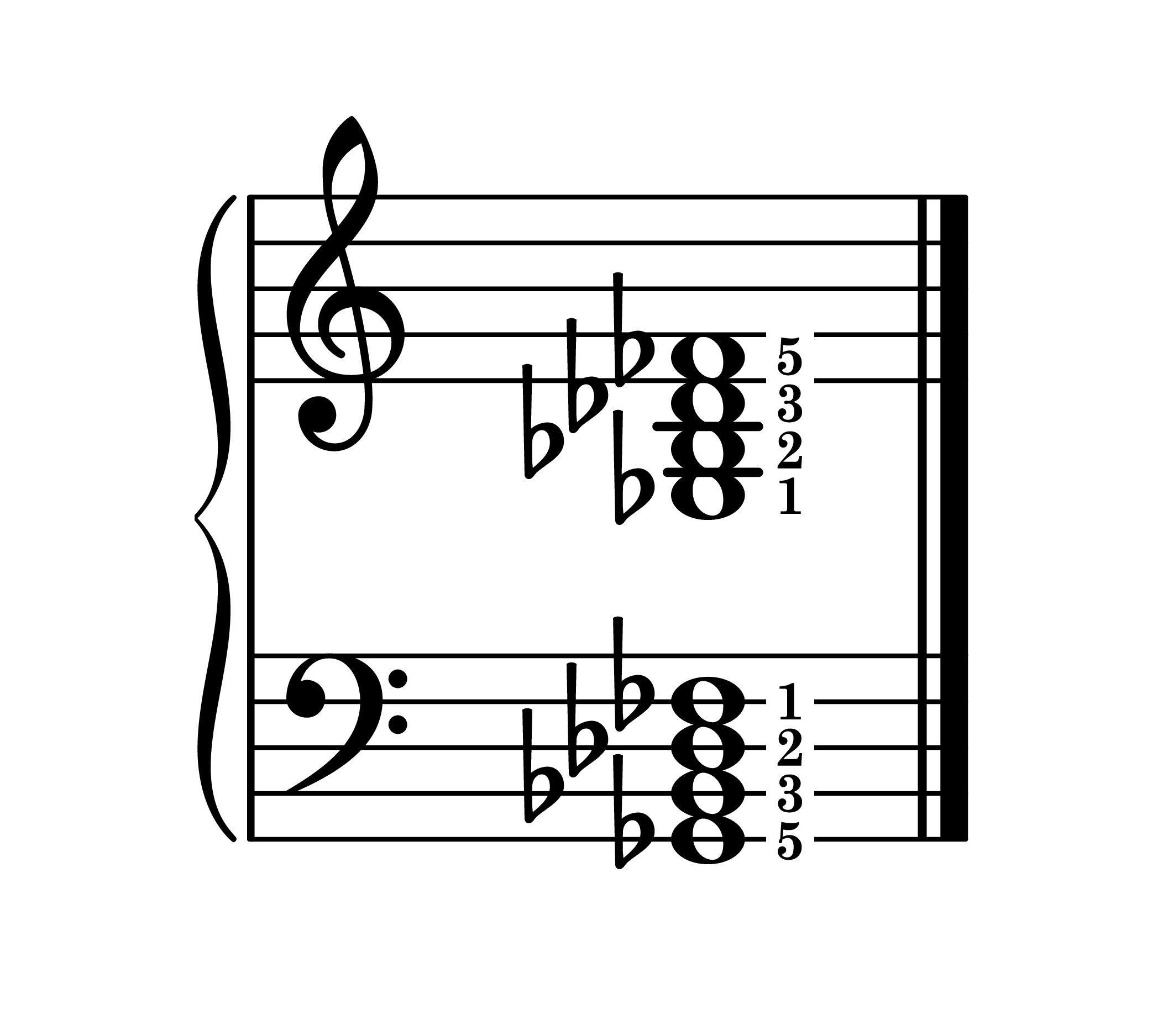
- G-flat dominant 7th (G♭7): the major triad with a minor seventh, G-flat, B-flat, D-flat, F-flat
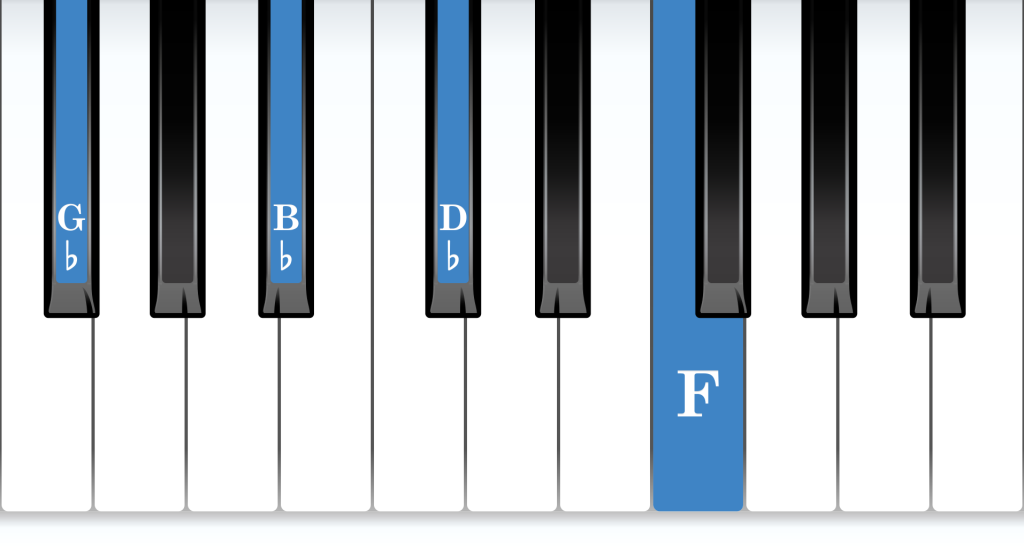
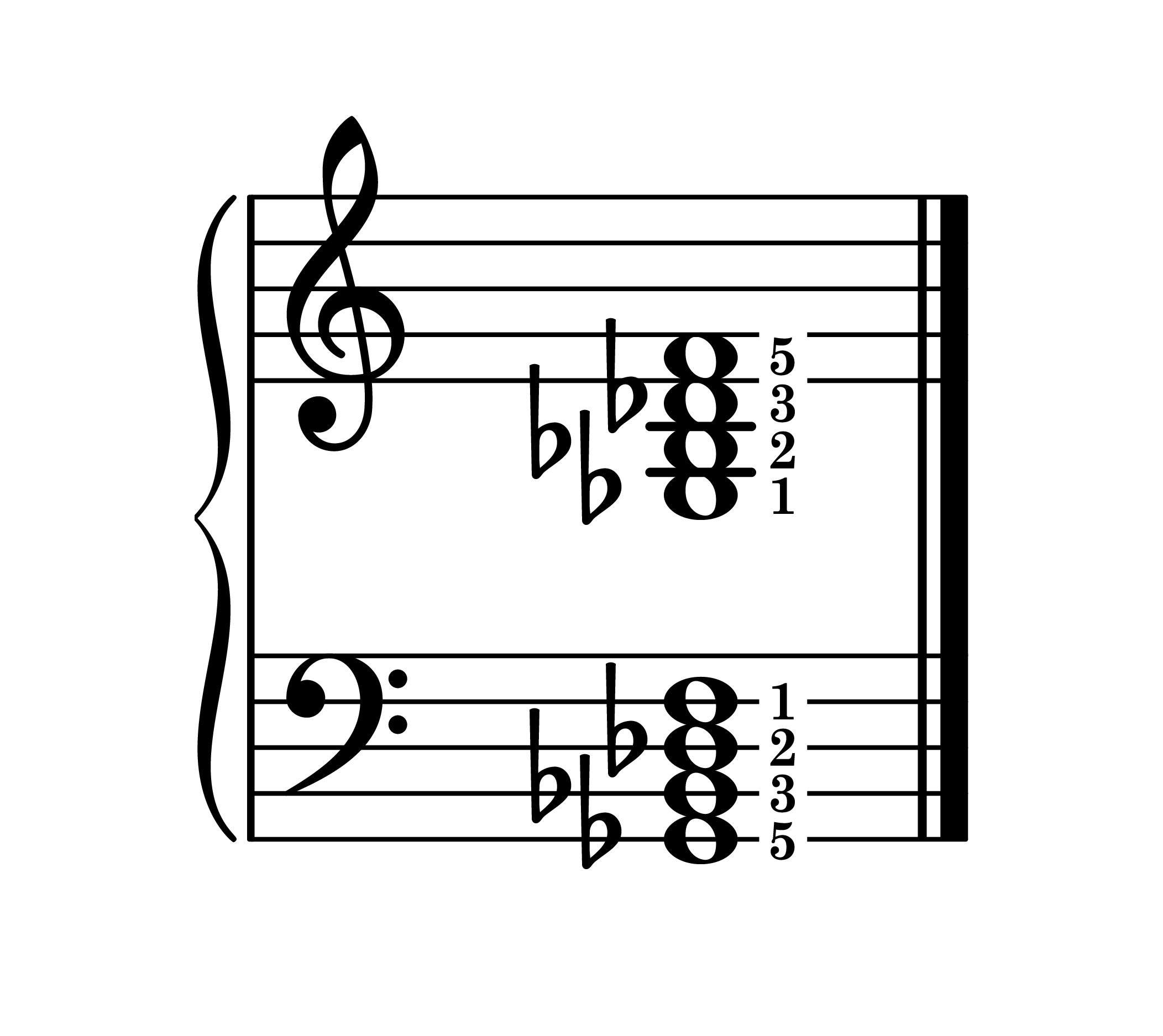
- G-flat major 7th (G♭maj7): the major triad with a major seventh, G-flat, B-flat, D-flat, F
- G-flat minor 7th (G♭m7): the minor triad with a minor seventh, G-flat, B-double-flat, D-flat, F-flat
- G-flat half-diminished 7th (G♭ø7): the diminished triad with a minor seventh, G-flat, B-double-flat, D-double-flat, F-flat
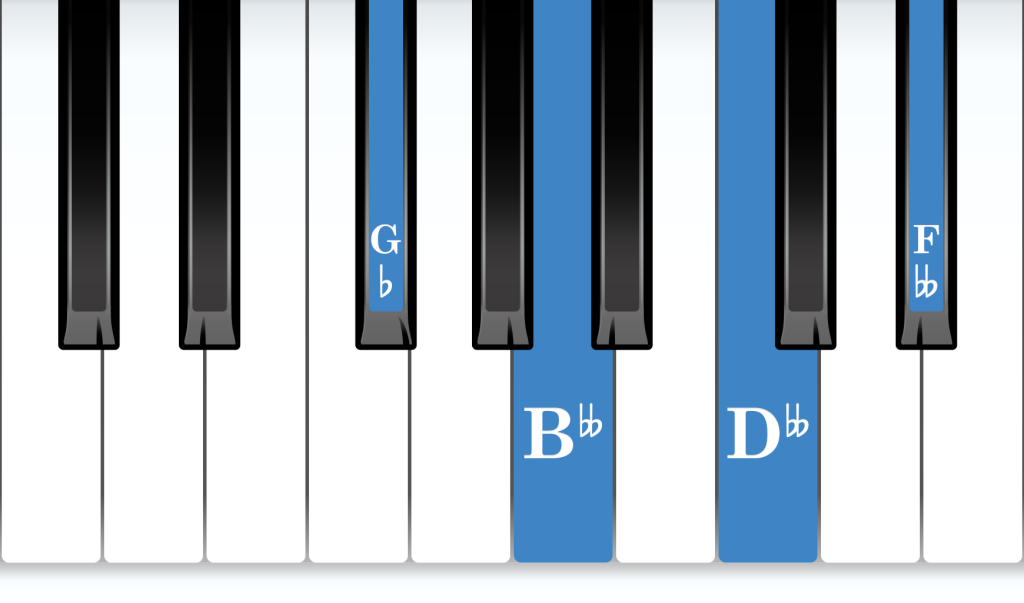
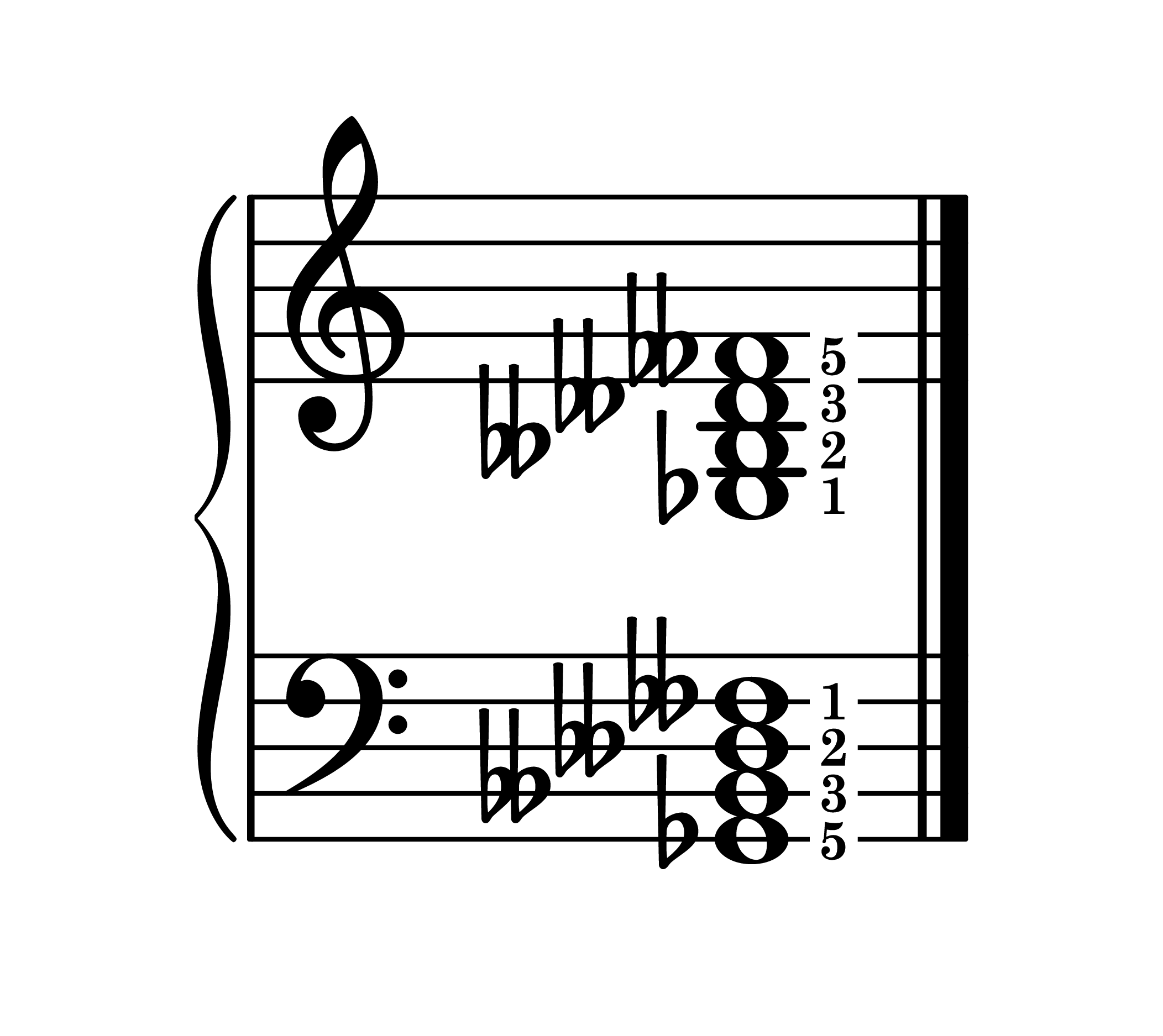
- G-flat diminished 7th (G♭°7): the diminished triad with a diminished seventh, G-flat, B-double-flat, D-double-flat, F-double-flat
A few of these notes have names that may look unusual: B-double-flat is played on A, D-double-flat is played on C, F-flat is played on E, and F-double-flat is played on E-flat. Each chord keeps its notes on every other letter name, which is what makes it read as a stack of thirds on the staff.
Each chord’s own page shows it in every inversion, with fingering, keyboard charts, notation, and audio.
G-flat chords and keys
All of these chords grow from the same root, G-flat. The chords that belong together in a key are a different family, built on each note of the scale; for those, see G-flat major piano chords and F-sharp minor piano chords (on the same keys, spelled from F-sharp).