Questions and answers
No questions on this lesson yet. Be the first to ask one.
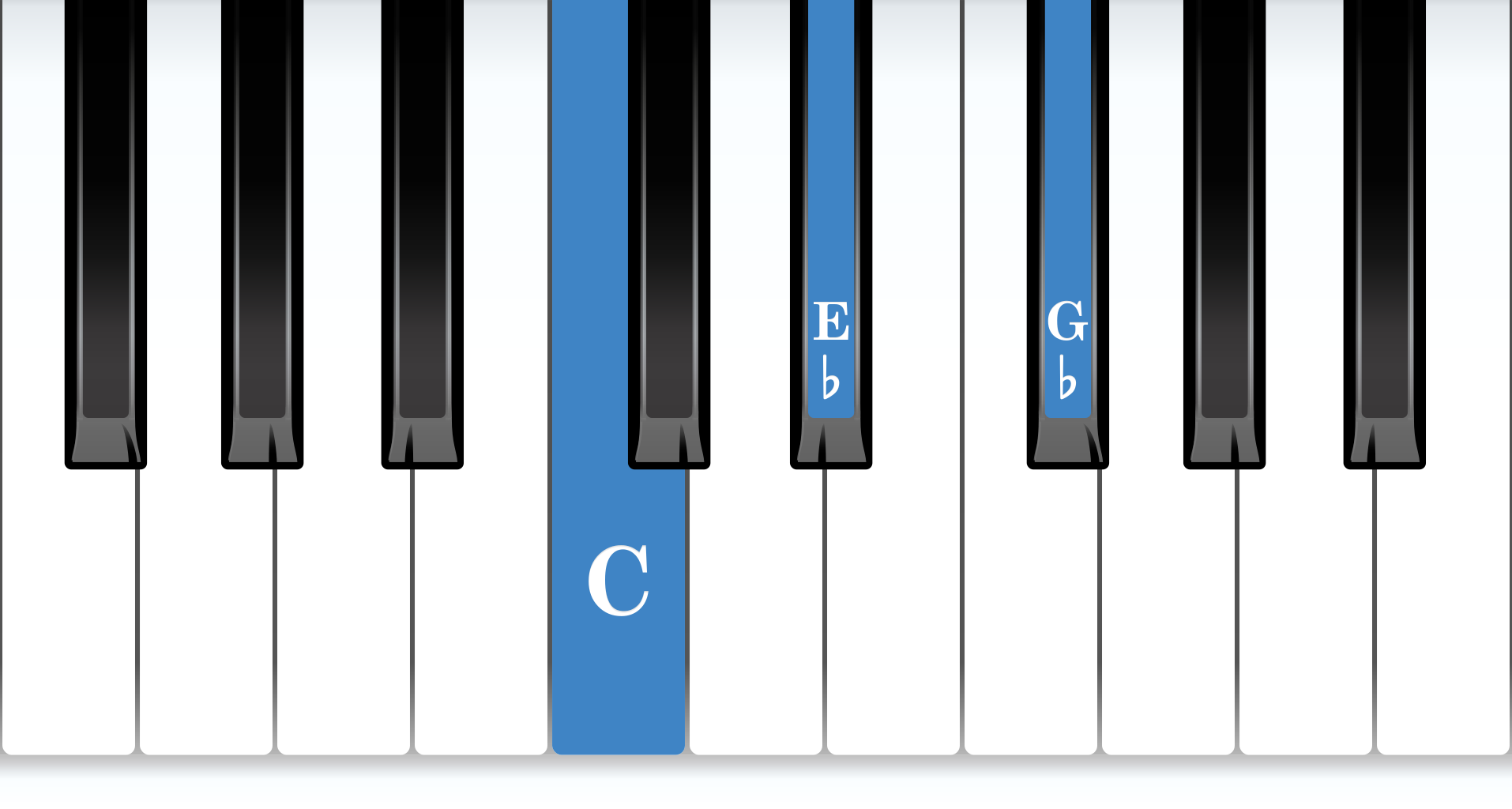
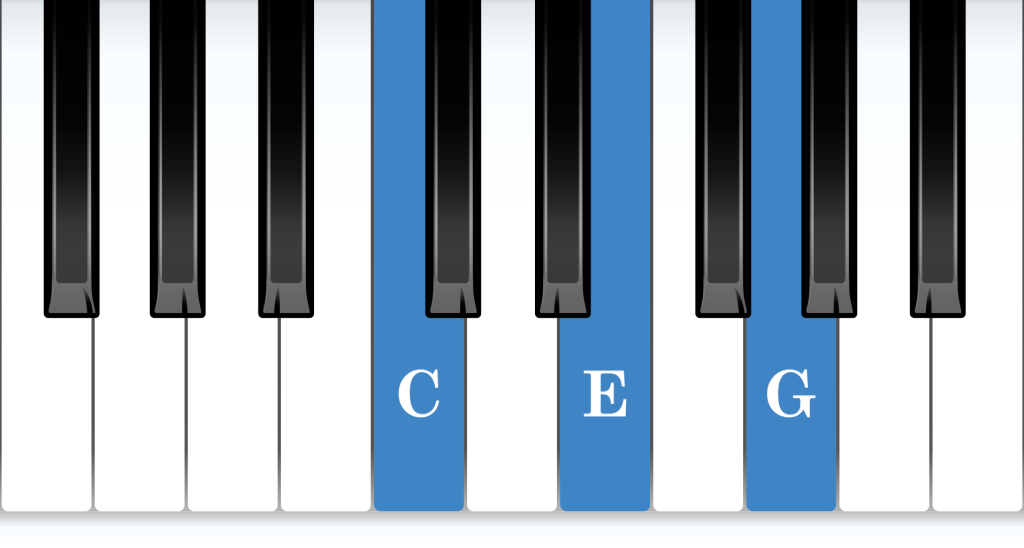
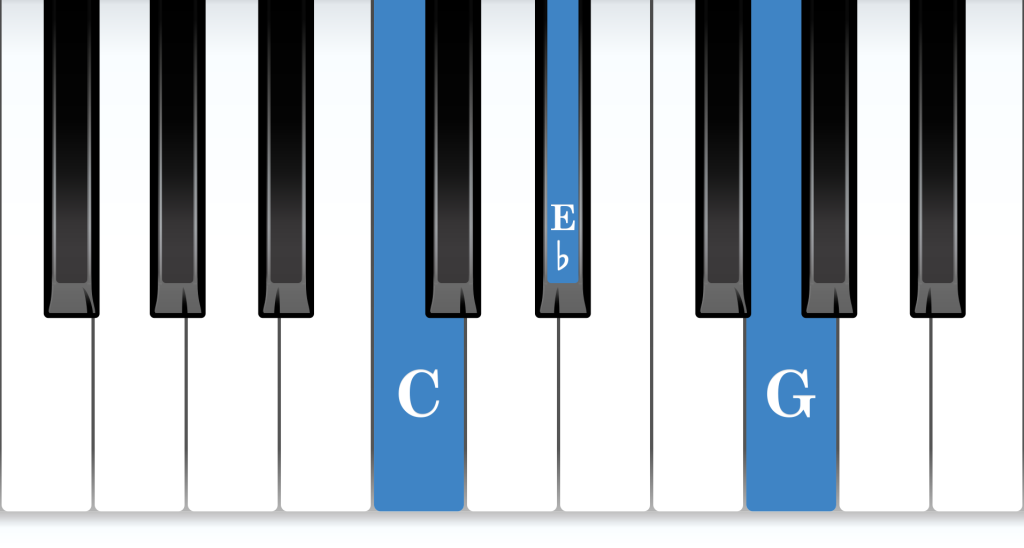
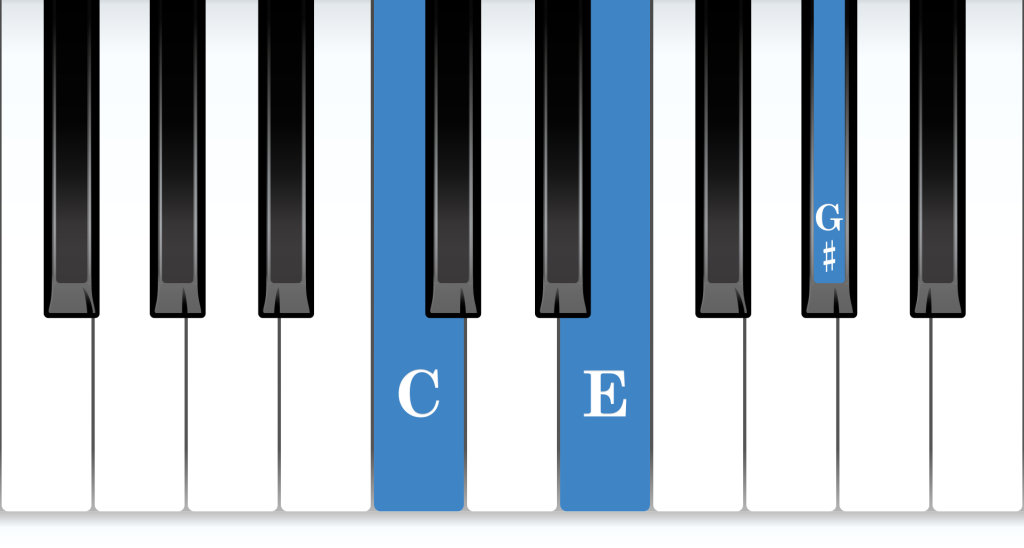
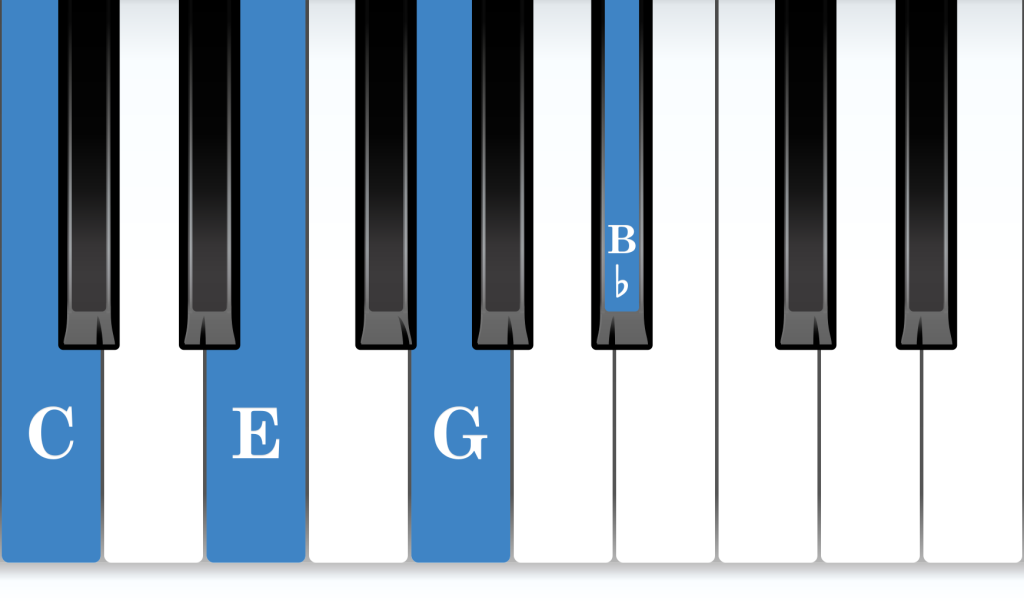
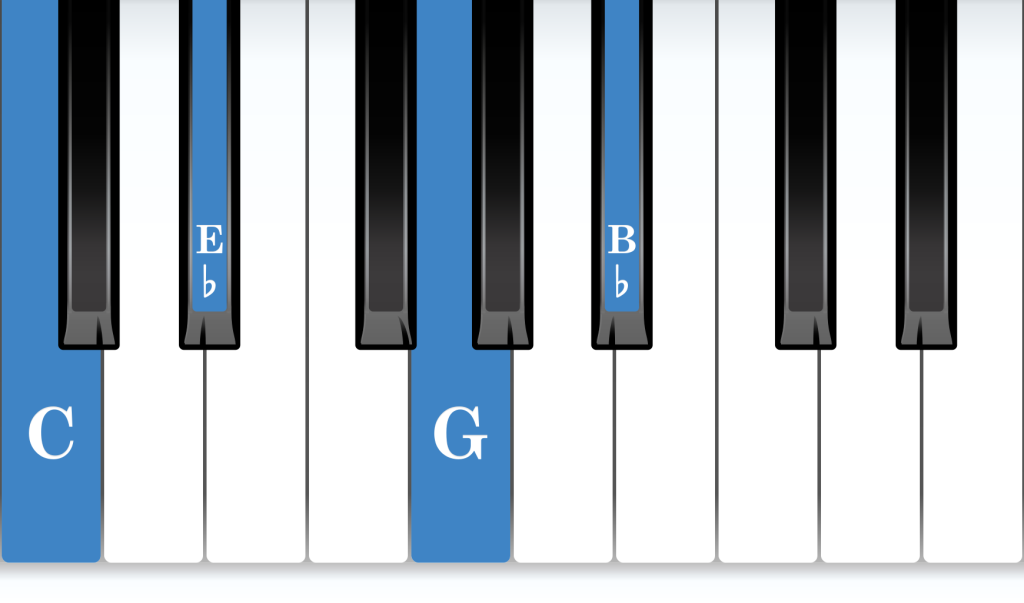
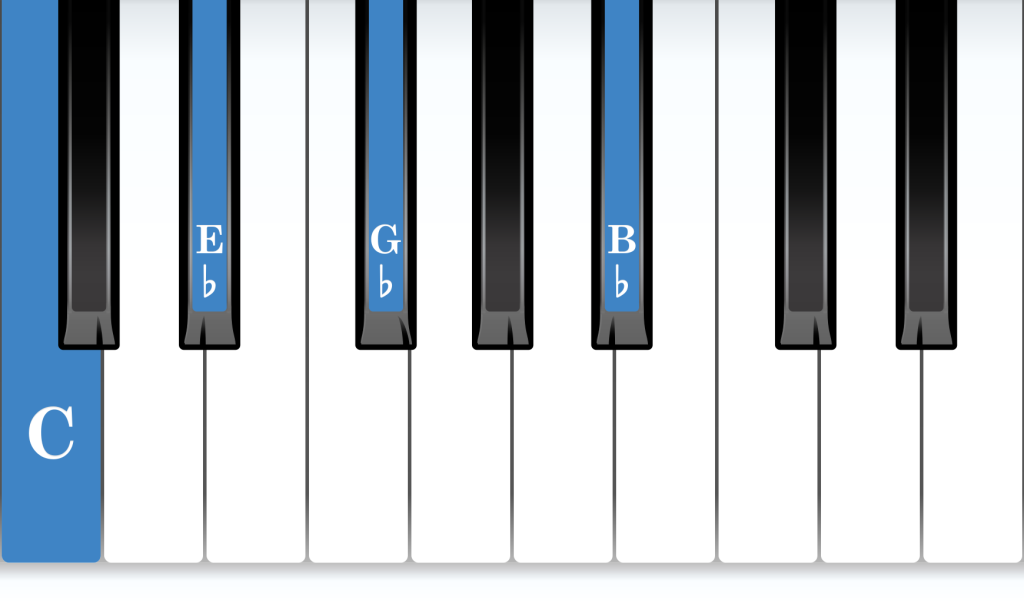
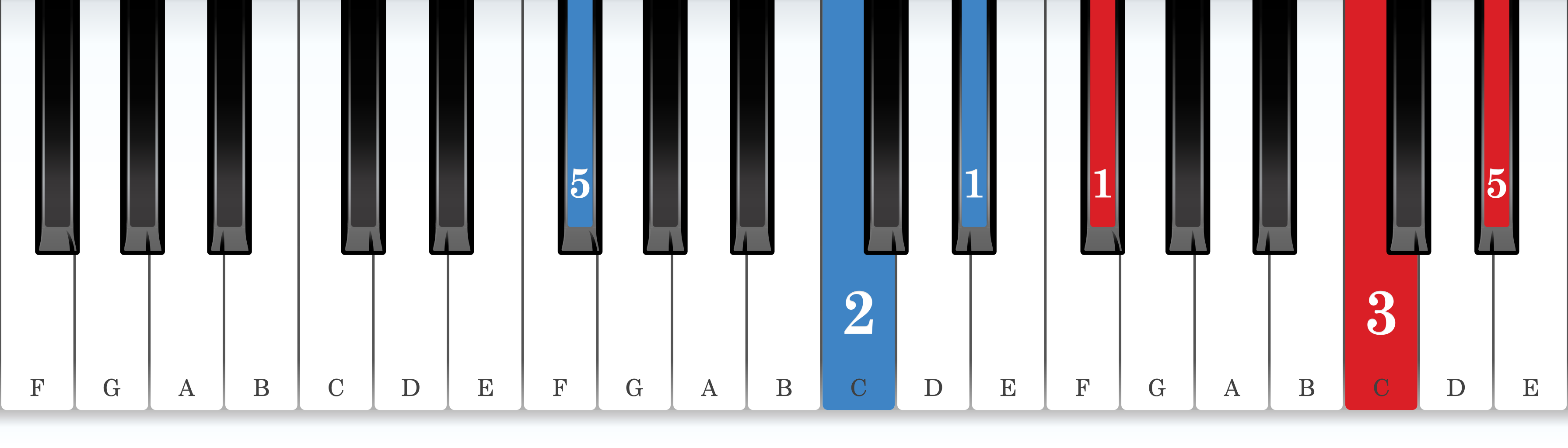
The C Diminished Chord is C, E-flat, and G-flat, with the thumb on the white key and the two upper notes on black keys. The notes sit close together, so the hand stays compact. The sound is tense and unresolved, and we'll usually hear it lean toward a D-flat chord, a half step above.
Let’s go through some charts that will familiarize you with the C Diminished Chord and how to play it in the various forms you will encounter in pieces of music. First, we’ll look at the fundamental chord and its inversions; then, we’ll explore some more complex voicings.
In root position, the notes of the C diminished chord are stacked in thirds with C on the bottom. The appearance on the staff is evenly spaced, as is the feeling of the space in between your fingers while playing.
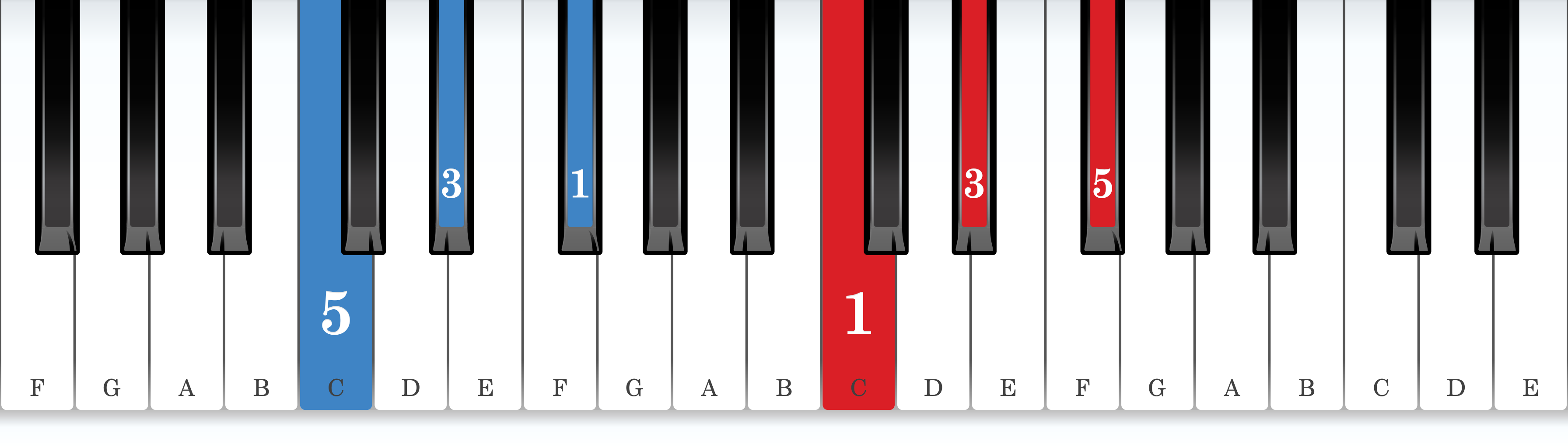
| C Diminished Chord in root position | |
|---|---|
| Note Order | C E♭ G♭ |
| Left Hand Fingering | 5 3 1 |
| Right Hand Fingering | 1 3 5 |
| Chord Symbol | Cdim or C° |
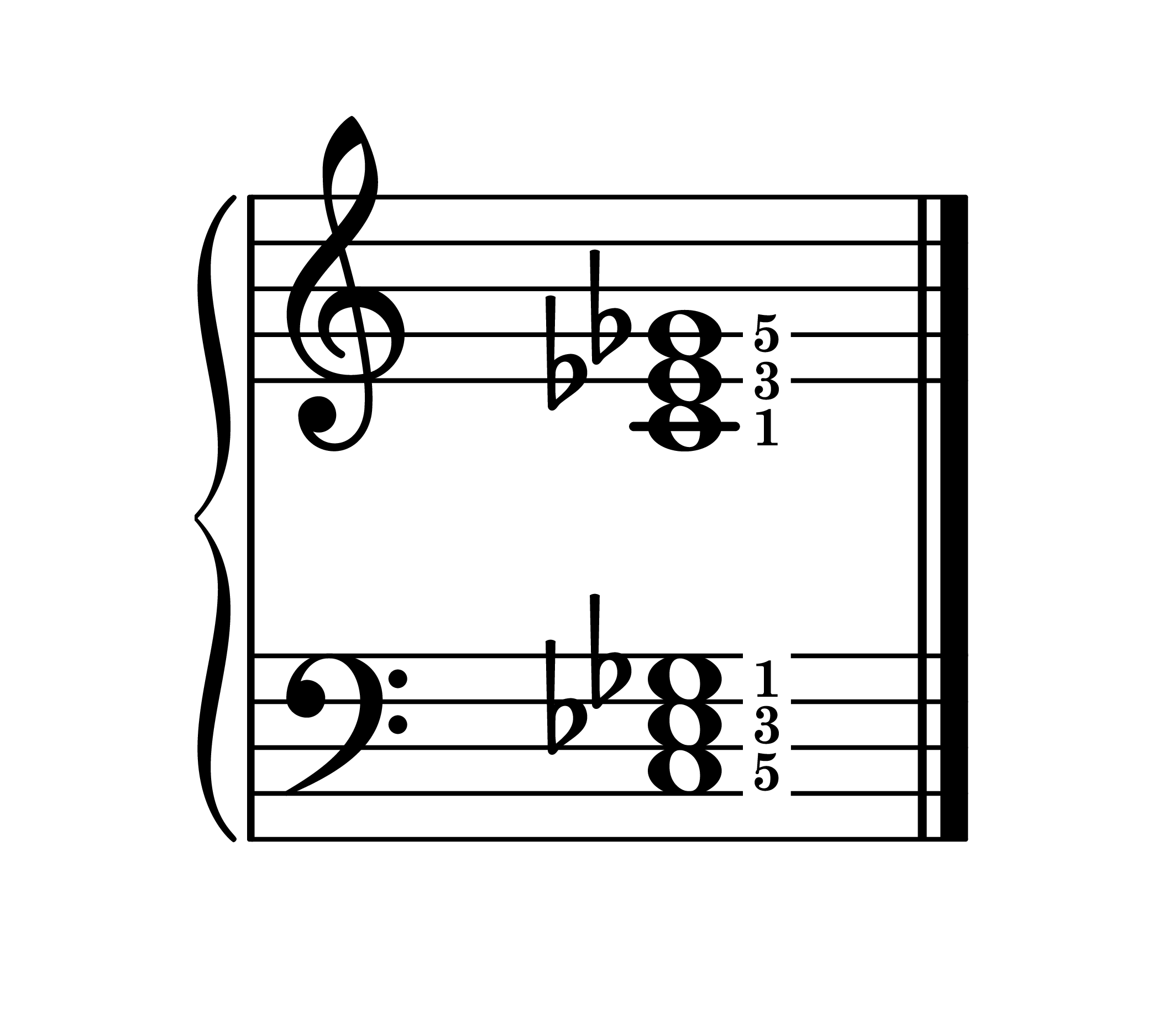
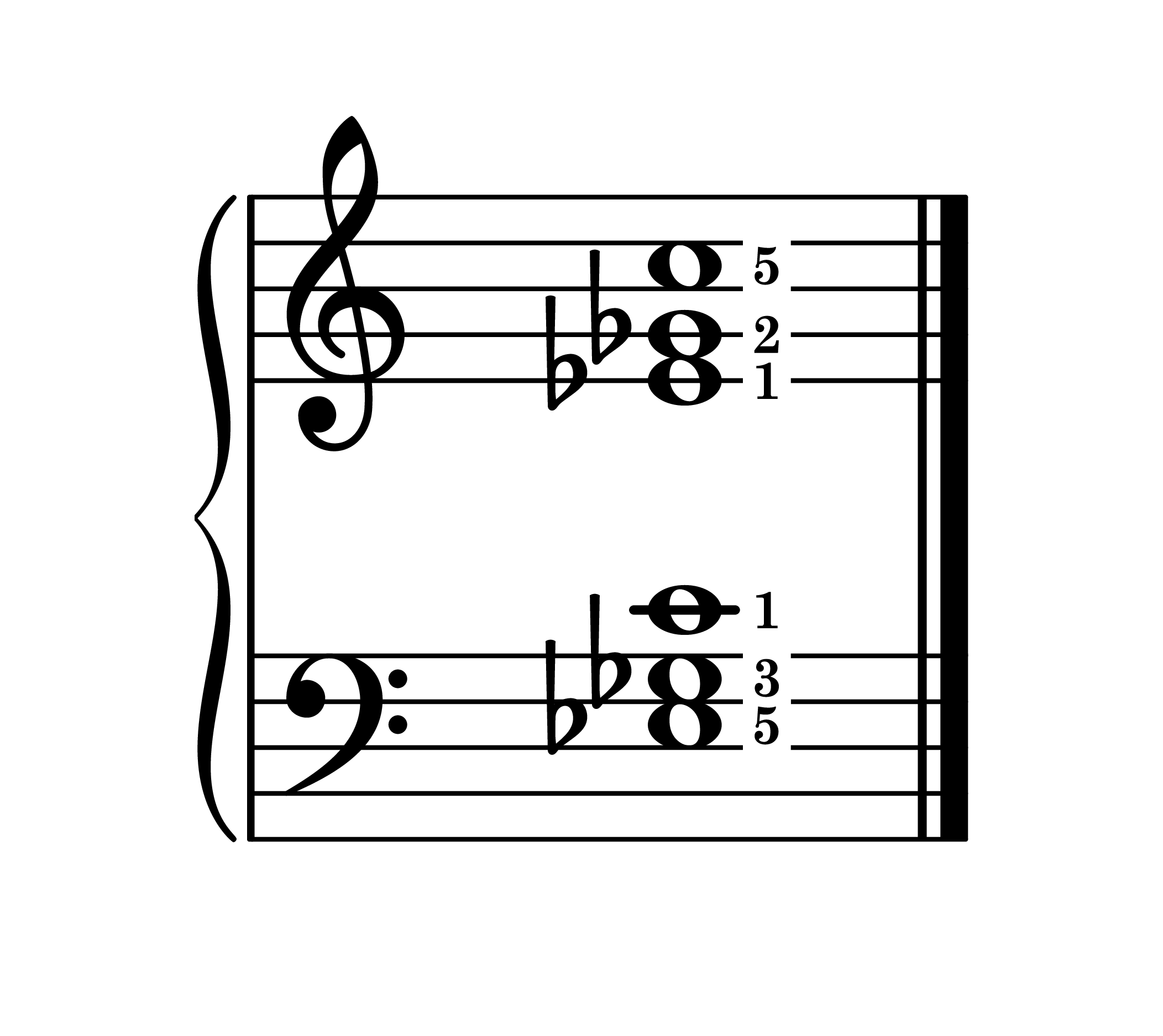
In first inversion, the third of the chord (E♭) becomes the bottom note, and the root (C) jumps up to the top.
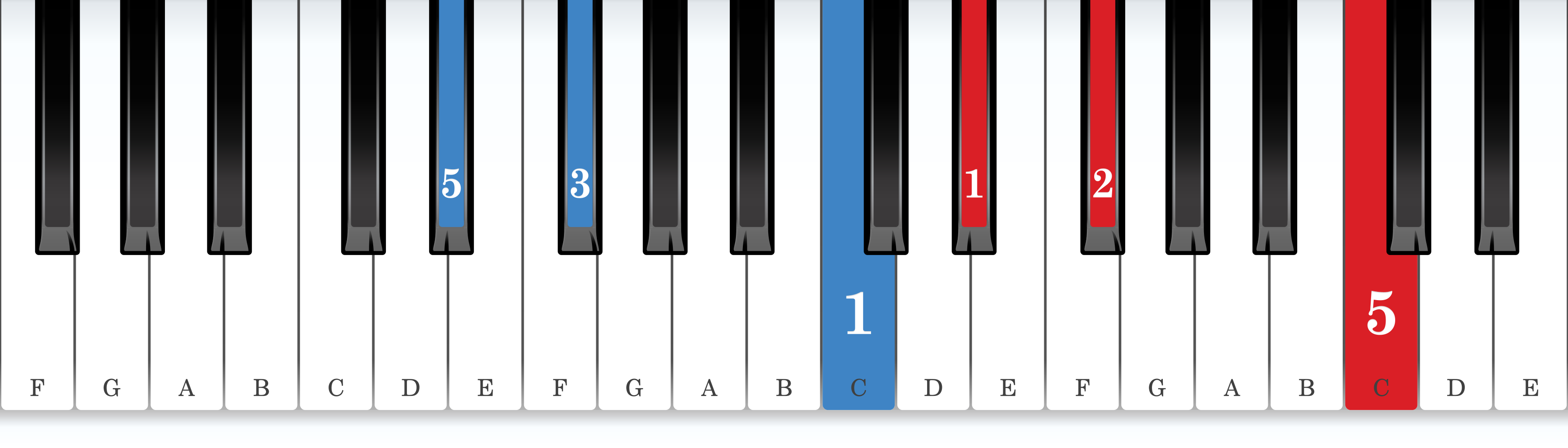
| C Diminished Chord in 1st inversion | |
|---|---|
| Note Order | E♭ G♭ C |
| Left Hand Fingering | 5 3 1 |
| Right Hand Fingering | 1 2 5 |
| Chord Symbol | C°6 or C°/E♭ |
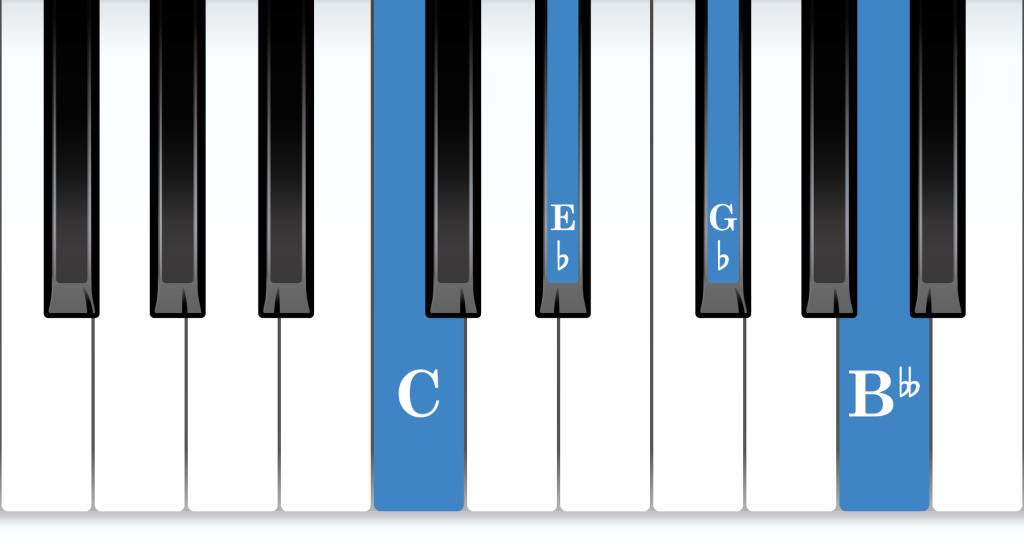
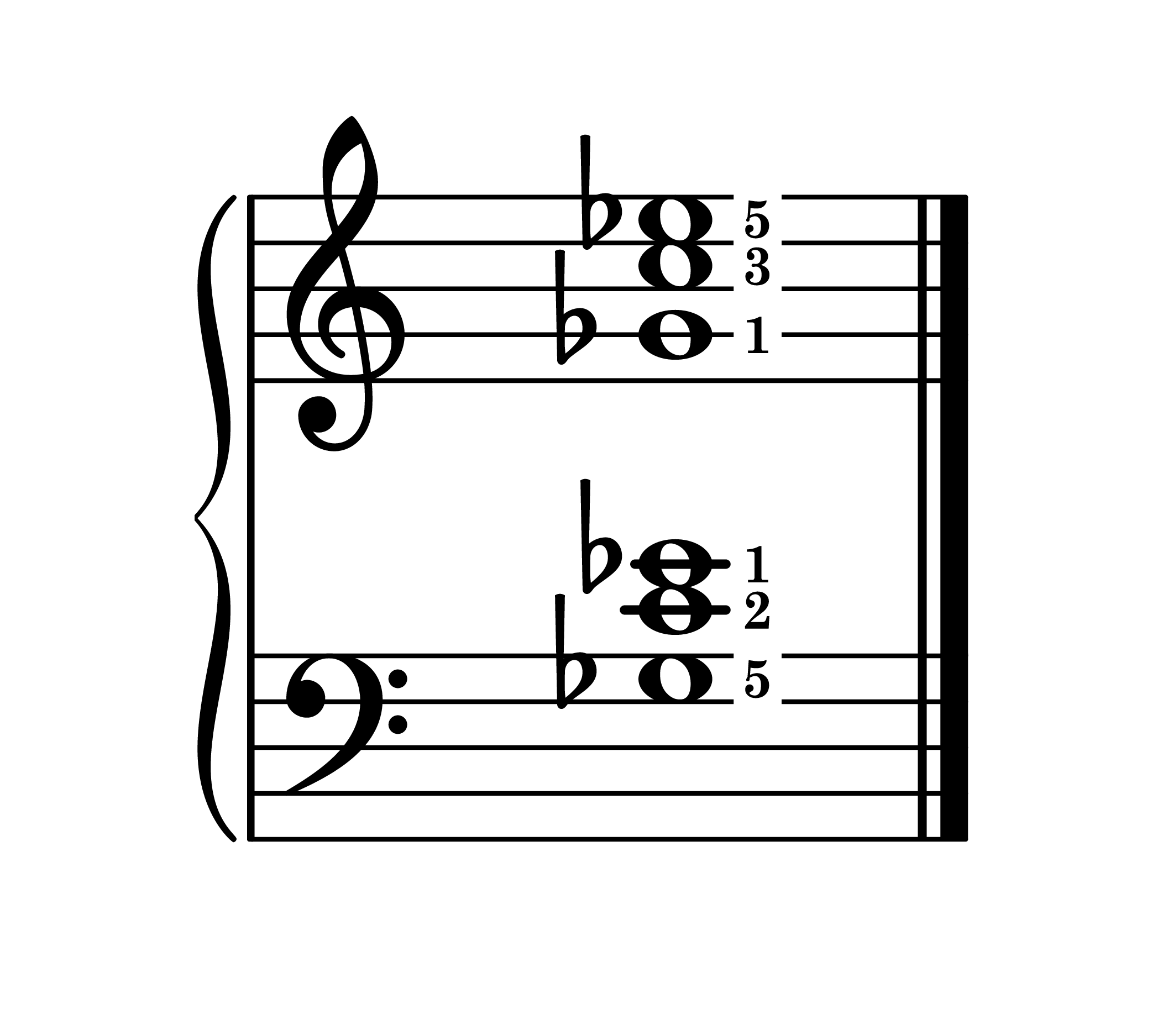
In second inversion, the fifth of the chord (G♭) is on the bottom, and the third of the chord (E♭) goes to the top.
| C Diminished Chord in 2nd inversion | |
|---|---|
| Note Order | G♭ C E♭ |
| Left Hand Fingering | 5 2 1 |
| Right Hand Fingering | 1 3 5 |
| Chord Symbol | C°6/4 or C°/G♭ |
A diminished chord stacks two minor thirds, and the result is tense and unsettled. It is never a place to rest. It behaves like a dominant 7th chord with the root missing, so it wants to move.
The C diminished chord is the leading-tone chord (vii°) in D♭ major. In minor keys, it is the supertonic (ii°) in B♭ minor.
The notes C, E♭, and G♭ are the top three notes of A♭7, so the chord leads to D♭ the way A♭7 does. A common use is as a passing chord over a rising bass line, I – vii°6 – I6: D♭ – C°/E♭ – D♭/F, so the bass walks D♭, E♭, F. Try playing C° and then D♭ and listen to how the tension settles.
No questions on this lesson yet. Be the first to ask one.