
Questions and answers
No questions on this lesson yet. Be the first to ask one.
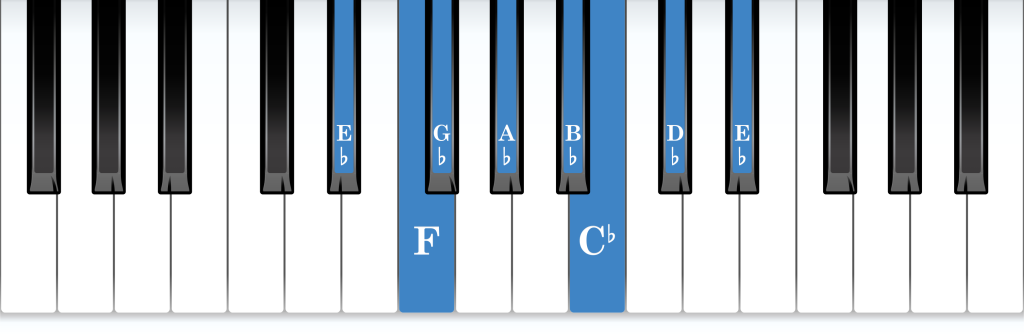
The E-flat Mixolydian mode uses the notes of A-flat major, starting on E-flat: E-flat, F, G, A-flat, B-flat, C, and D-flat. Let’s look at it on the keyboard and on the staff, with fingering for both hands, and hear what sets it apart from E-flat major.
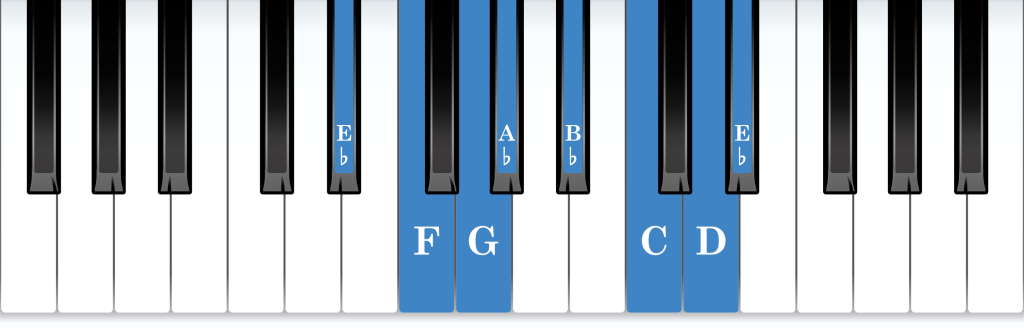
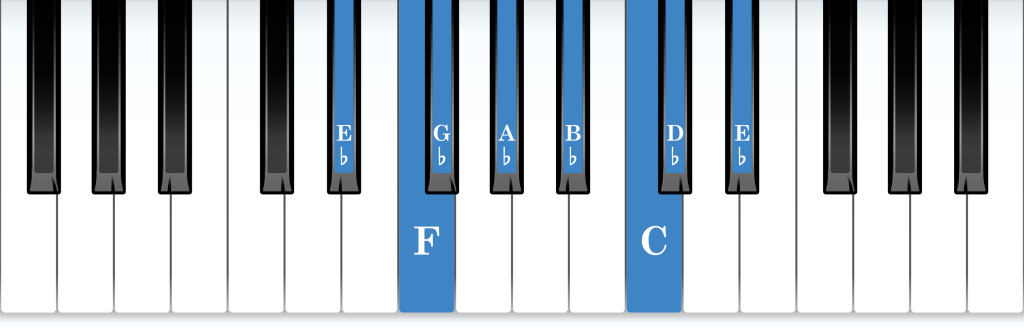
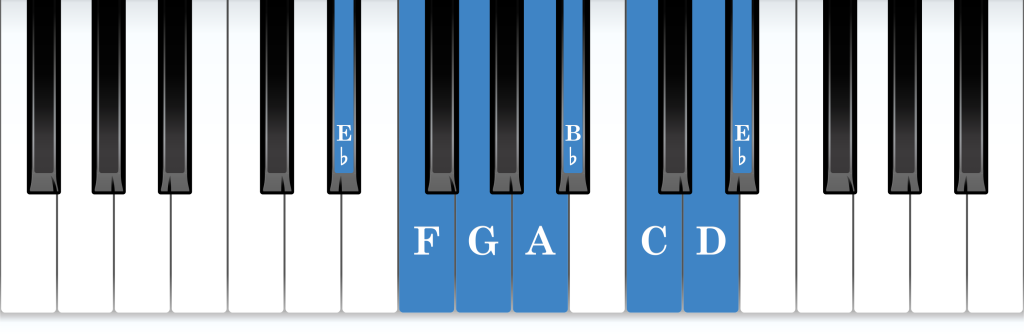
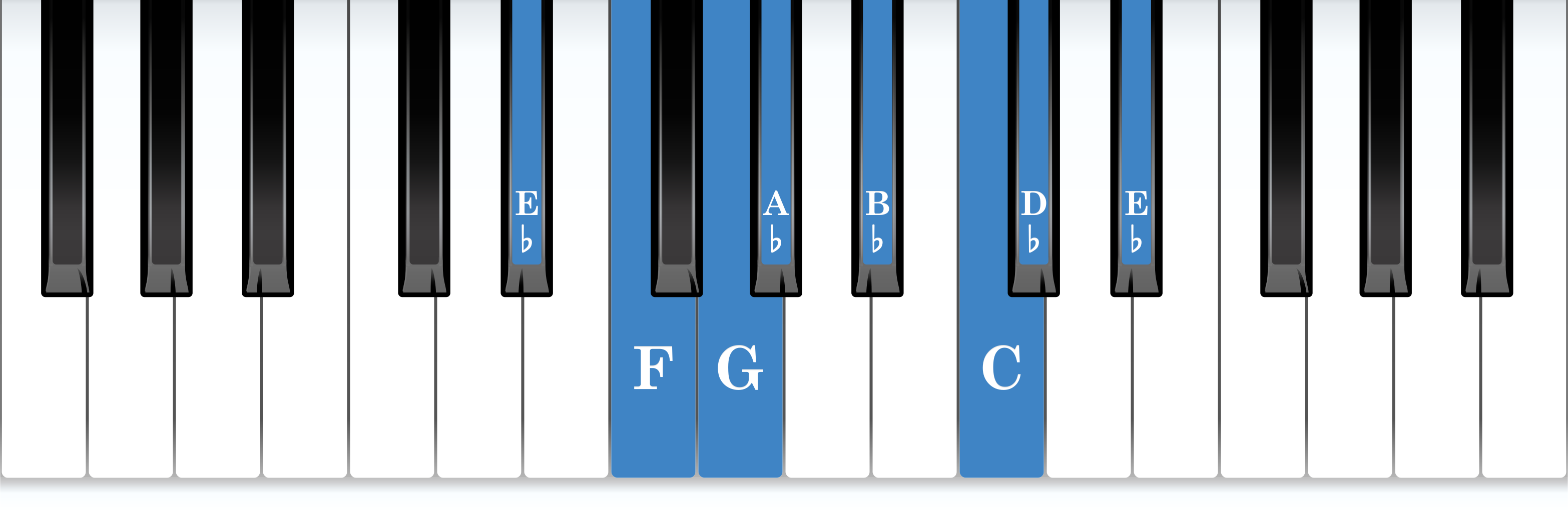
On the keyboard, E-flat Mixolydian uses E-flat, F, G, A-flat, B-flat, C, and D-flat, with E-flat, A-flat, B-flat, and D-flat on black keys, and E-flat again at the top. These seven notes are the A-flat major scale, started on its 5th note. The notes are shared, but the home note is E-flat, and that changes how the scale sounds.
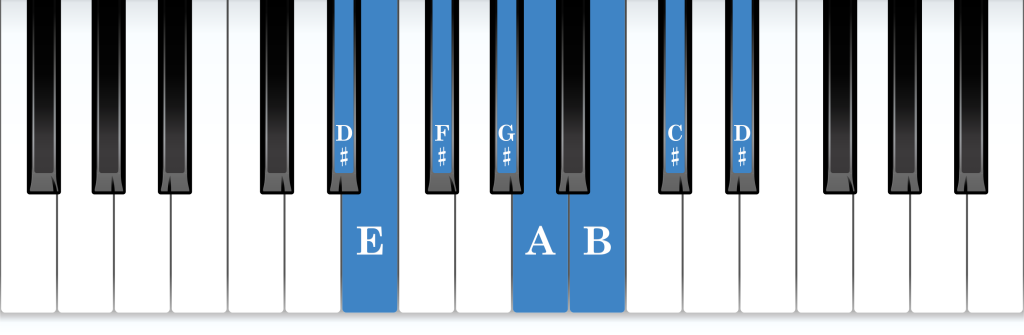
Compared with the E-flat major scale, only one note changes: the 7th is D-flat instead of D. With the 7th a whole step below the tonic rather than a half step, there’s no leading tone pulling upward. The mode is major, but it sounds relaxed and unhurried, with less urgency to resolve.
Its home chord, built on E-flat from the 1st, 3rd and 5th notes, is E-flat major (E-flat, G, and B-flat). Playing that chord before and after the scale helps the ear hear E-flat as home rather than A-flat.
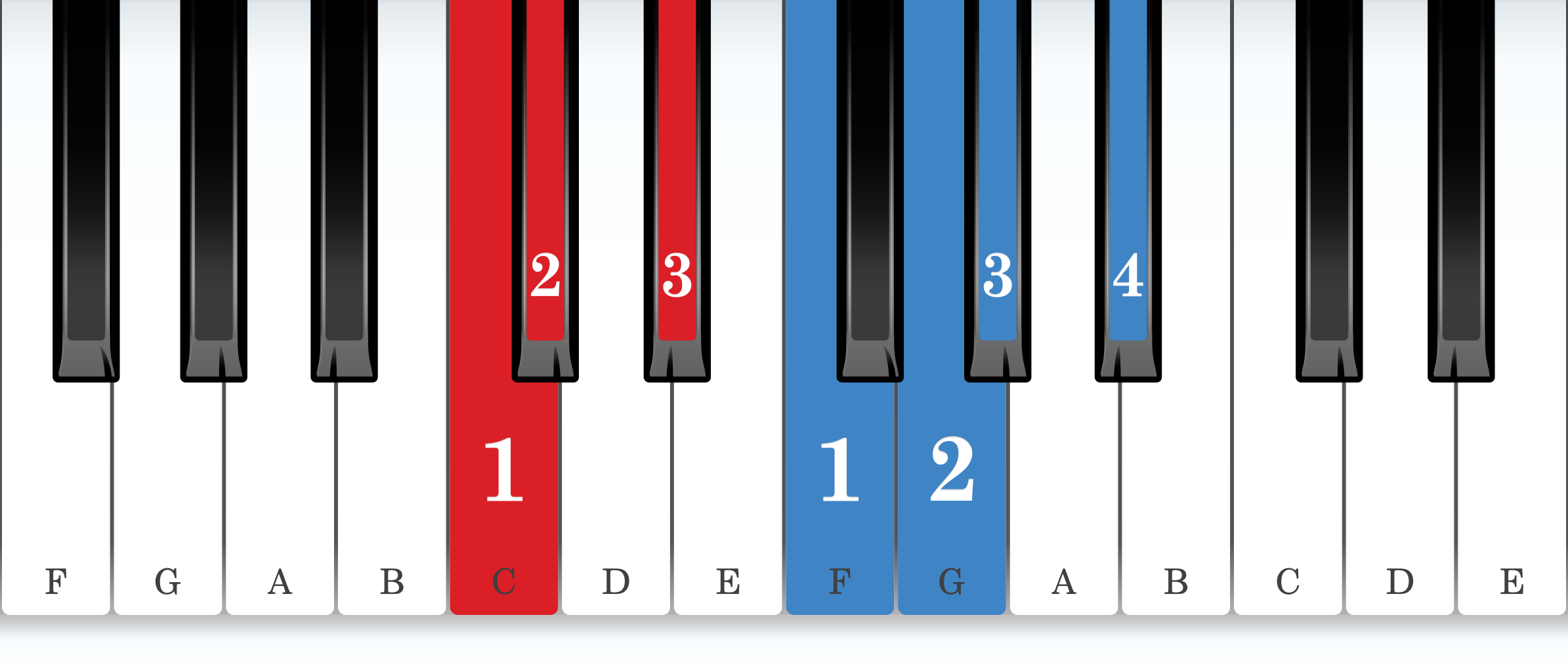
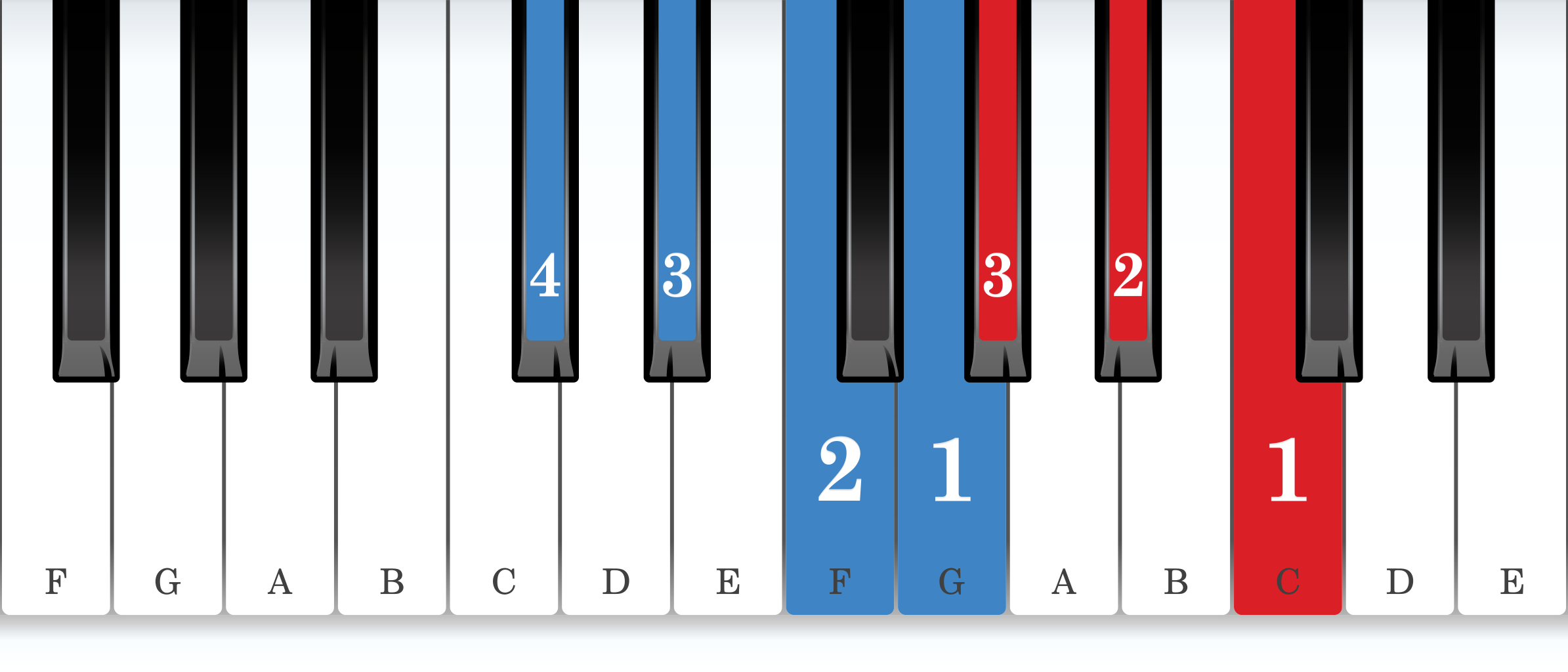
The two charts show the fingering one hand at a time. Each hand covers the seven notes in two positions, a group of three fingers (red) and a group of four (blue); a note in green is an extra note at the end of the scale, outside the two positions.
The right hand starts on E-flat with the 3rd finger. Going up, the thumb passes under to F after the 3rd finger on E-flat and to C after the 4th finger on B-flat. The top E-flat is played with the 3rd finger. This is the fingering of the A-flat major scale on the same notes: the thumb plays the same keys it plays in A-flat major, so it never lands on a black key.
The left hand starts on E-flat with the 3rd finger. Going up, the 3rd finger folds over the thumb from G to A-flat and the 4th finger folds over the thumb from C to D-flat. The top E-flat is played with the 3rd finger. This is the fingering of the A-flat major scale on the same notes: the thumb plays the same keys it plays in A-flat major, so it never lands on a black key.
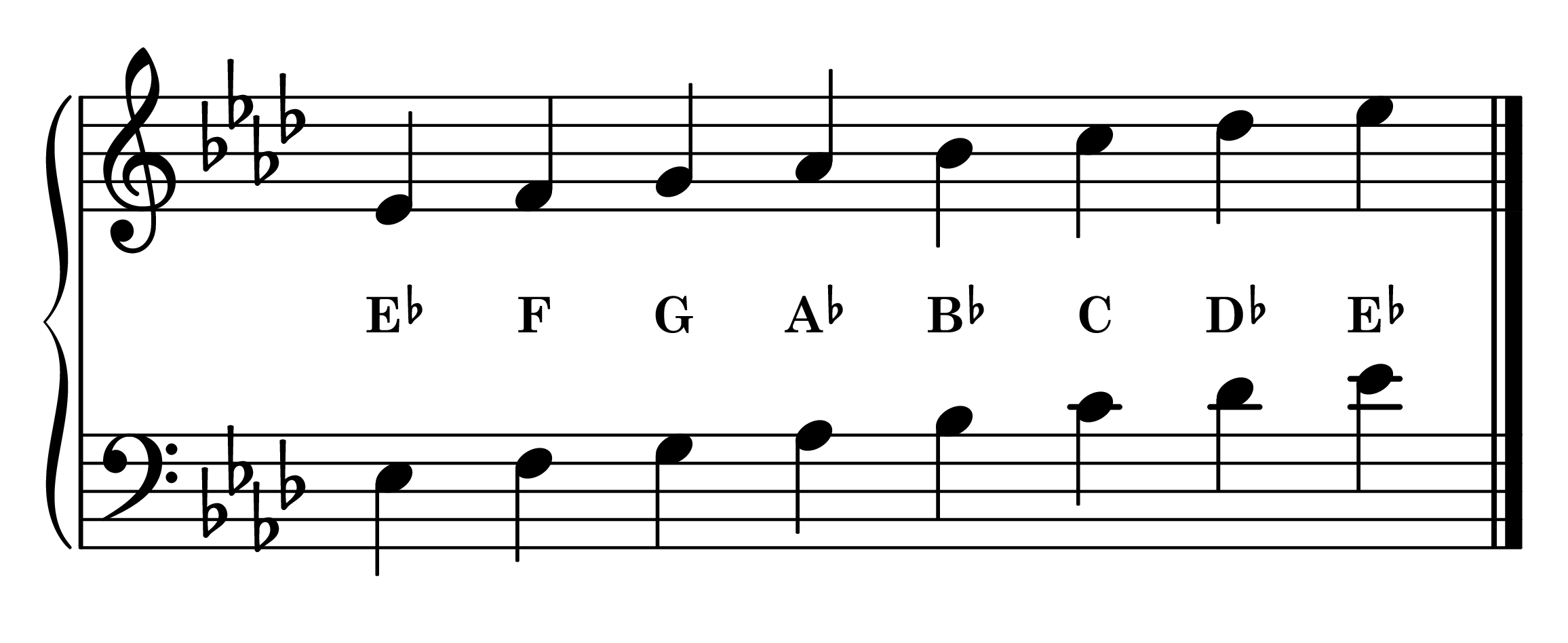
On the staff, the eight notes climb by step from E-flat to E-flat, the right hand in the treble clef and the left hand an octave lower in the bass clef. E-flat Mixolydian is written with the key signature of A-flat major: four flats (B-flat, E-flat, A-flat, and D-flat). The key signature belongs to A-flat major, but here the line begins and ends on E-flat, and that’s what makes it E-flat Mixolydian.
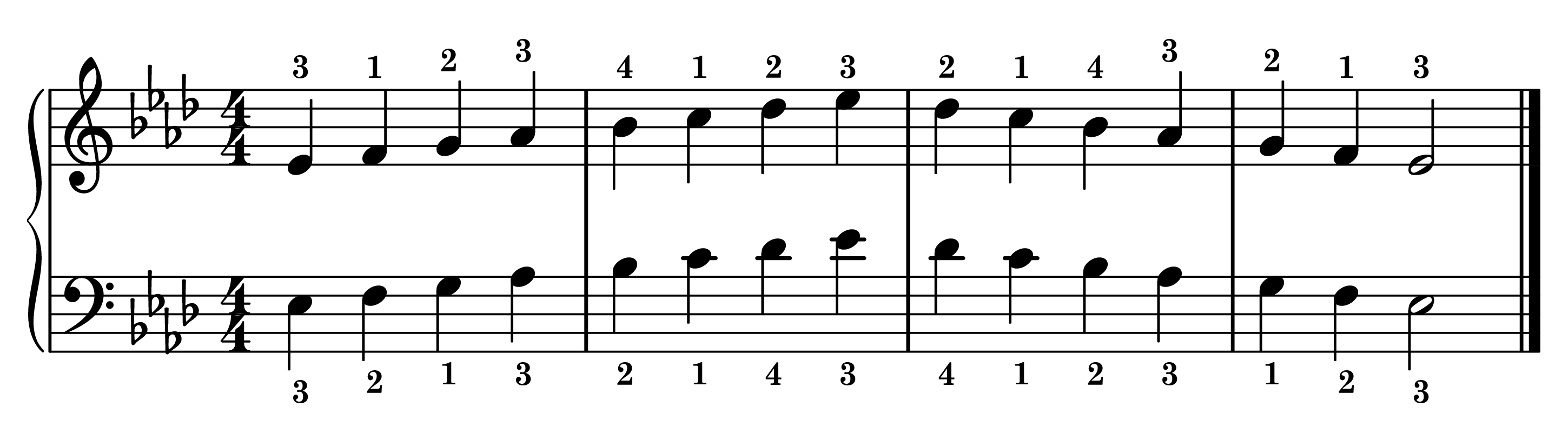
Next, E-flat Mixolydian as we’ll practice it: up one octave and back down, one note per beat, ending on a half note. The fingering for the right hand is written above the notes and for the left hand below.
The fingering is not the difficult part here, since it follows a scale we already know. What tends to go wrong is the ear: the notes of E-flat Mixolydian are familiar from A-flat major, and the scale easily slips back toward A-flat. Let’s work on it in a few stages.
A few things tend to go wrong in E-flat Mixolydian:
Other techniques related to E-flat Mixolydian:
No questions on this lesson yet. Be the first to ask one.