Lesson Steps
    Add a header to begin generating the table of contents

    D-flat Major Piano Arpeggios

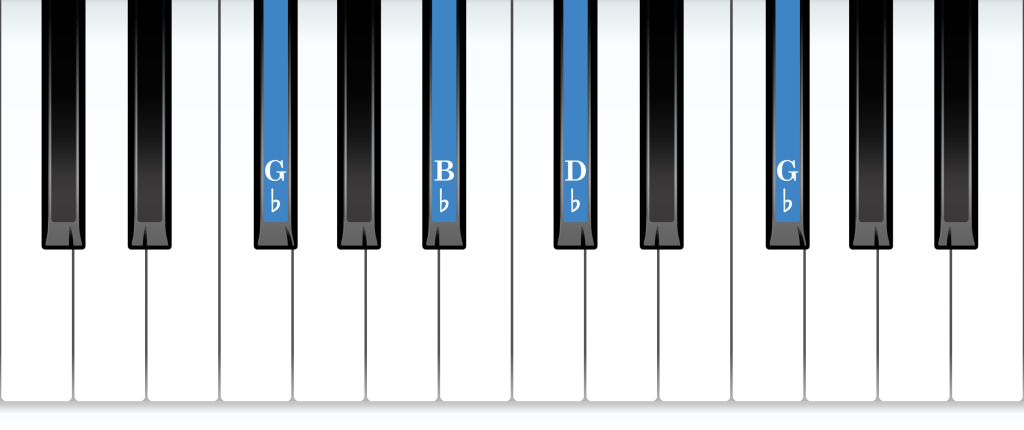
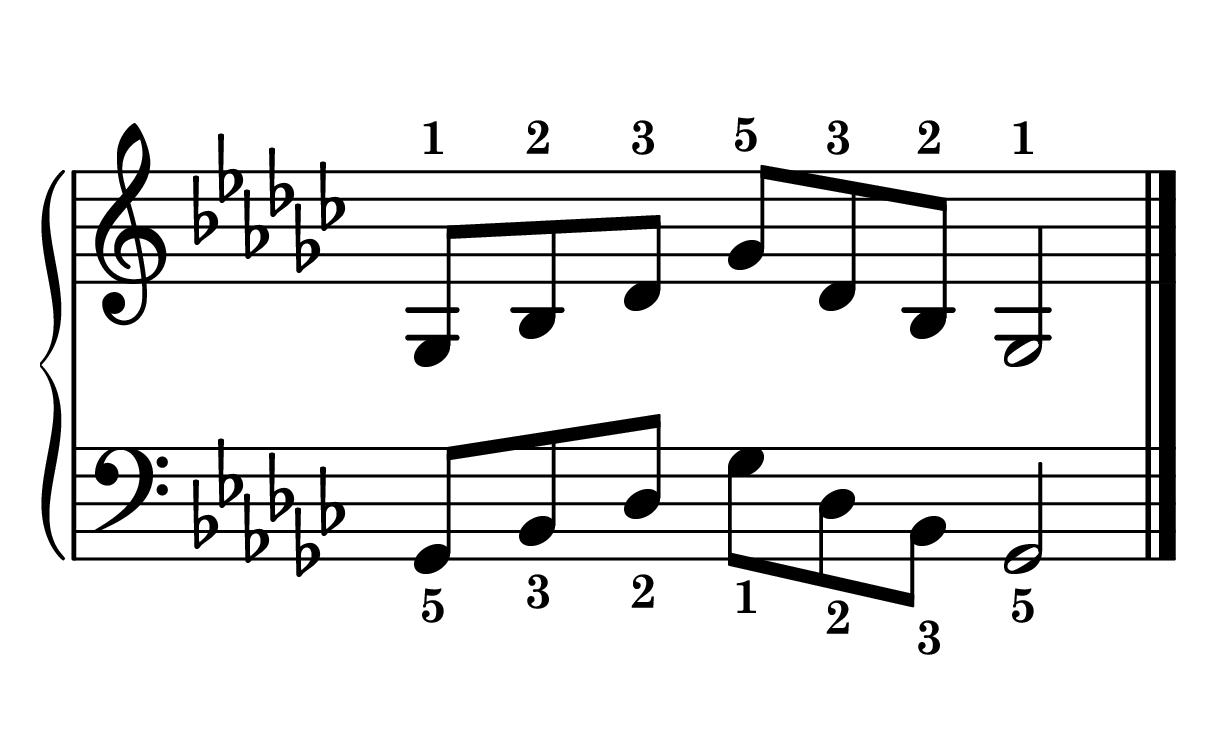
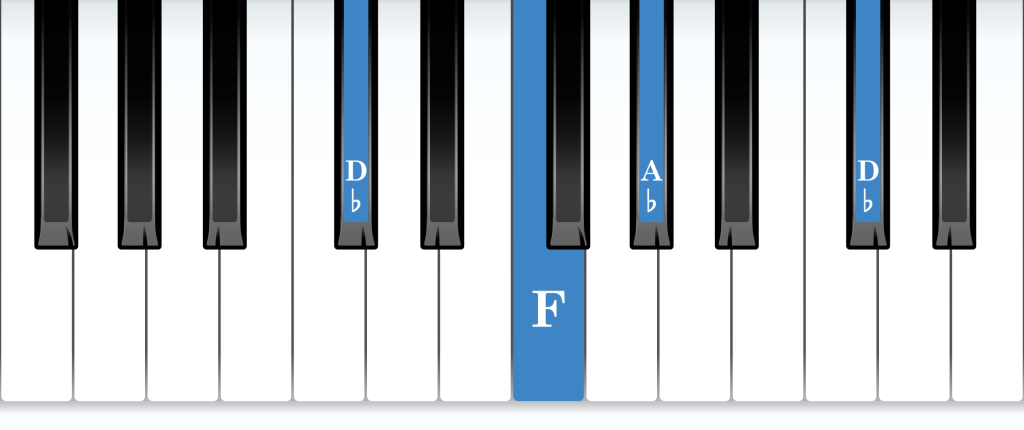
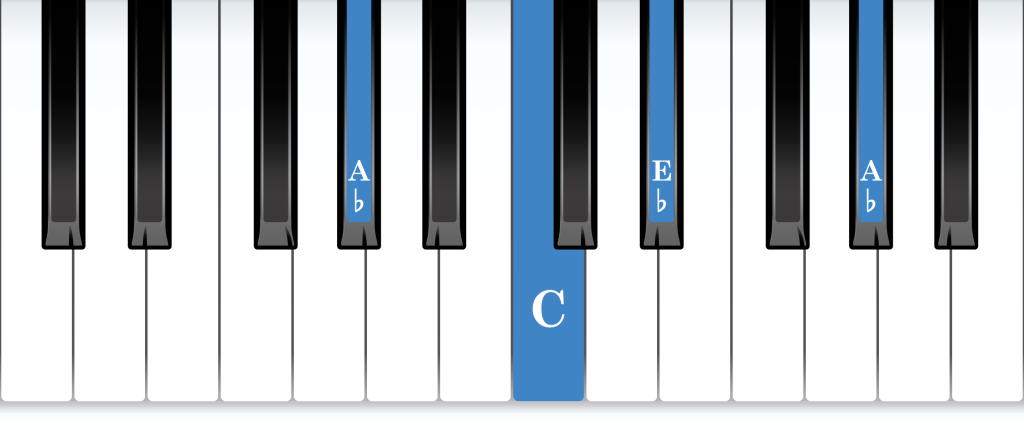
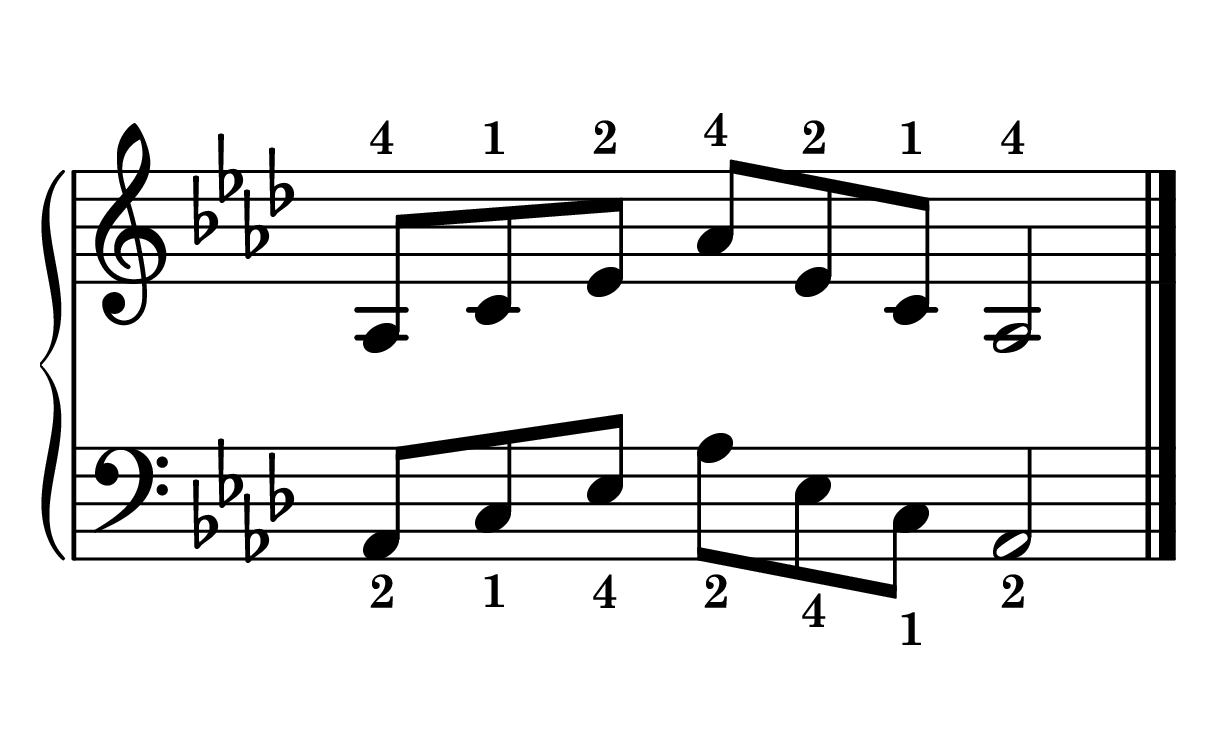
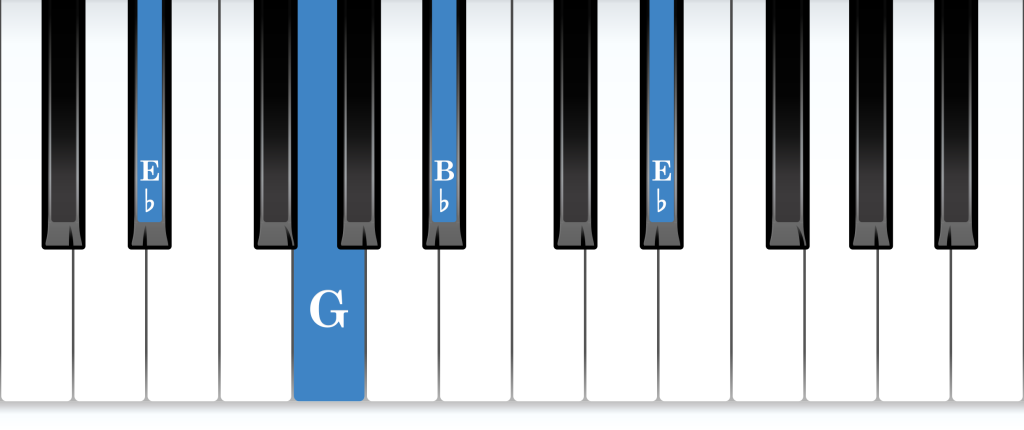
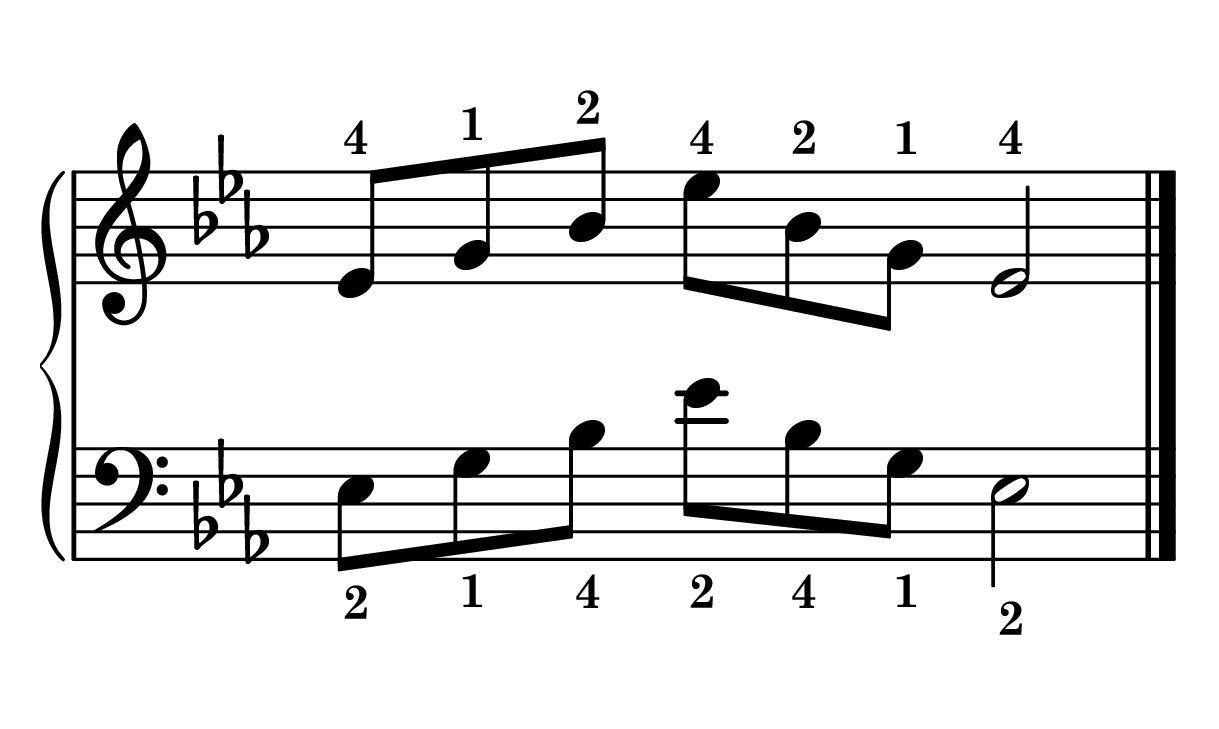
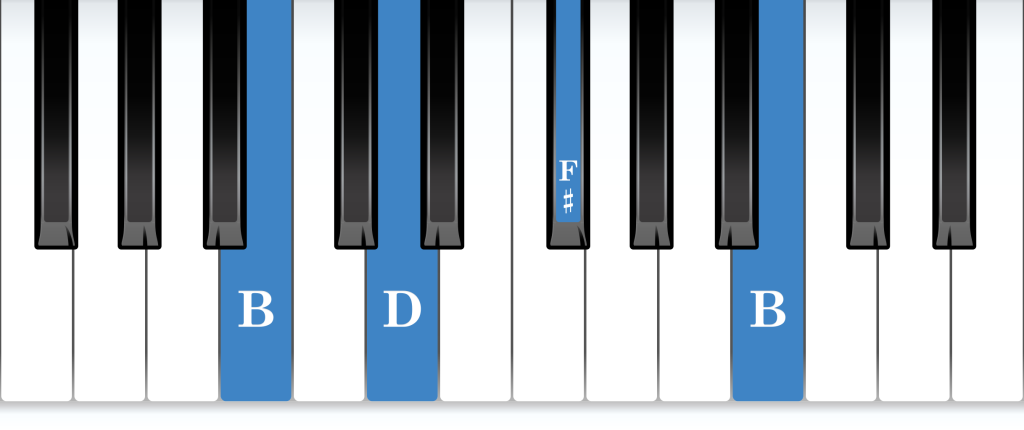
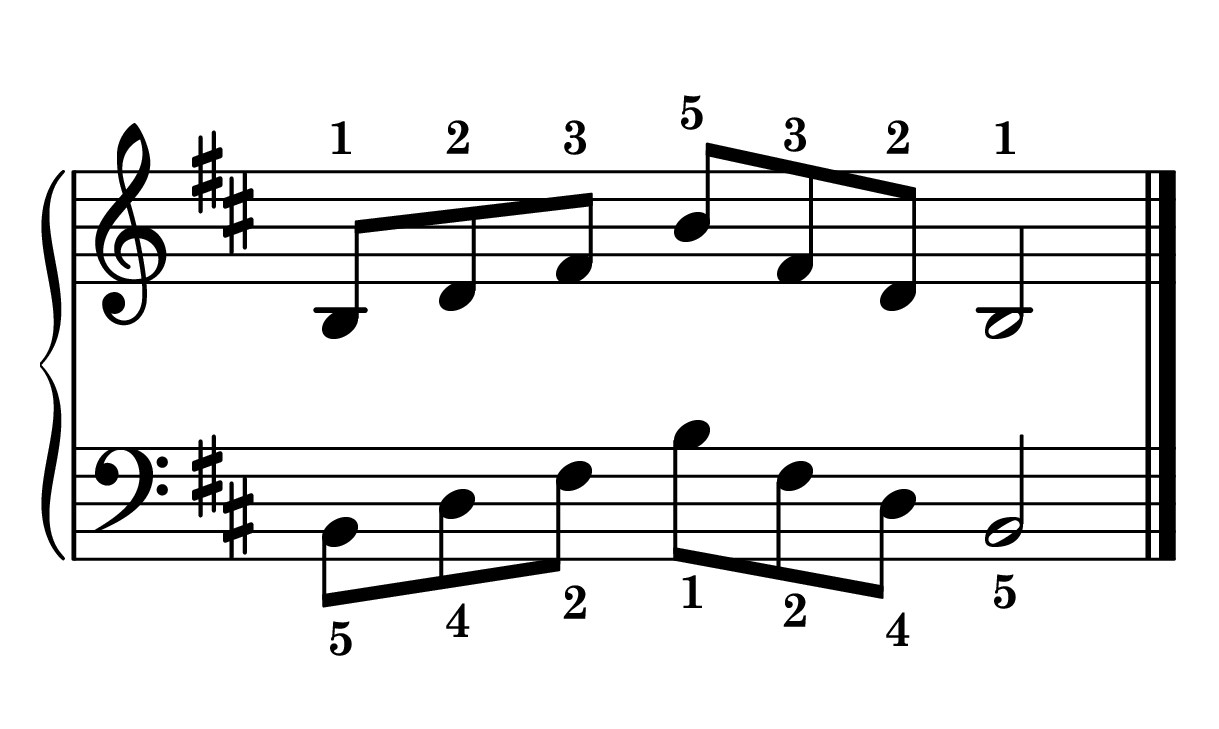
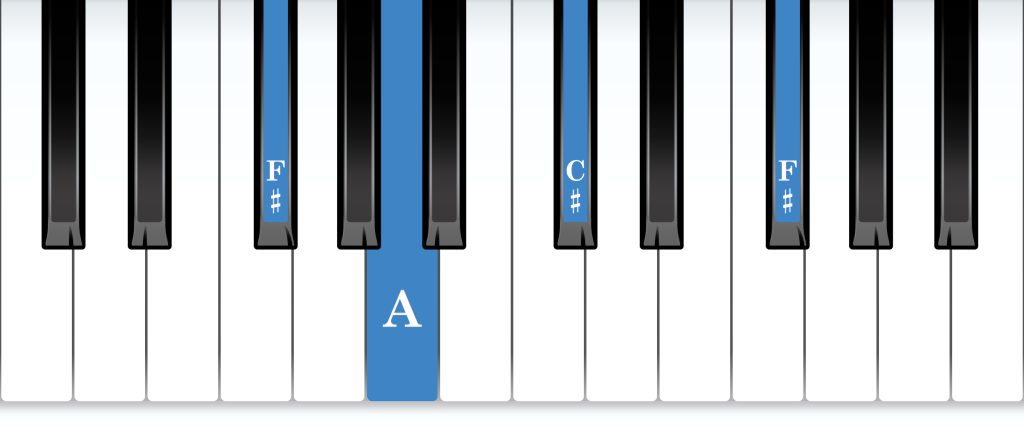
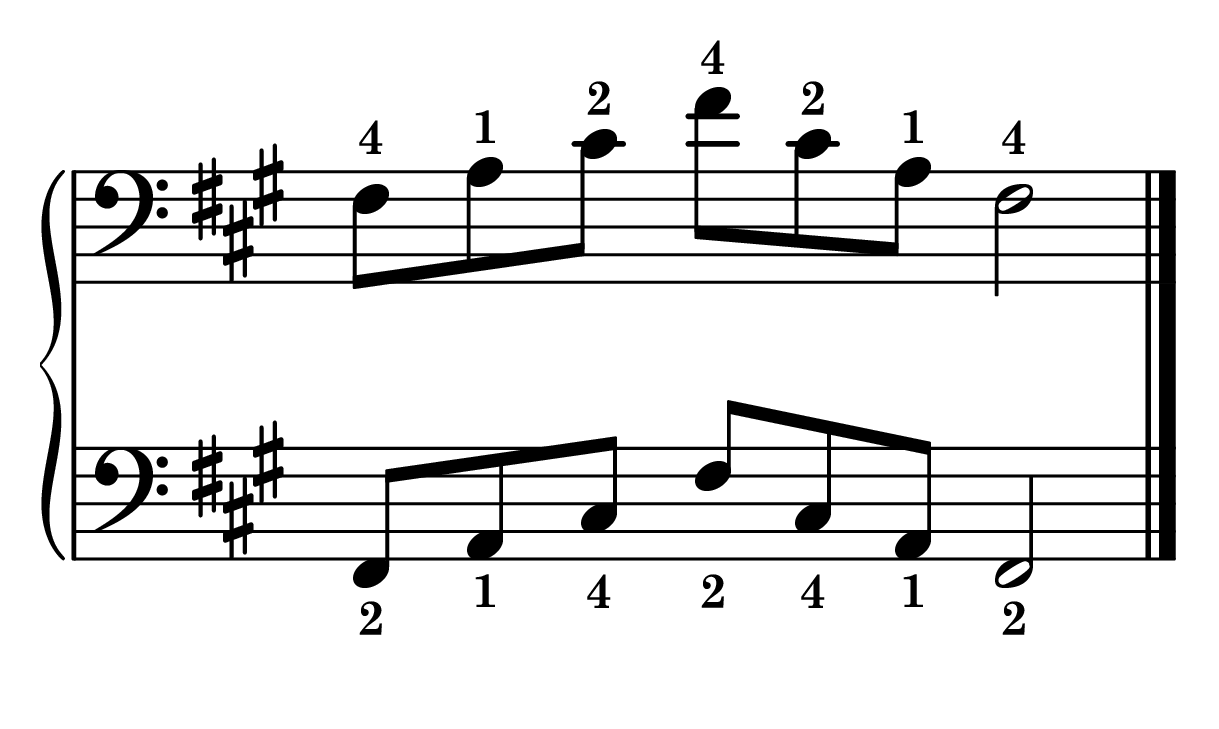
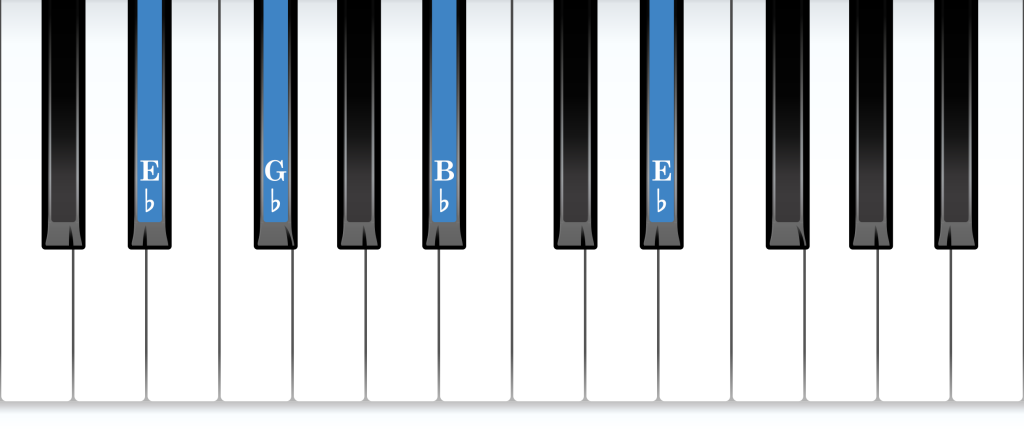
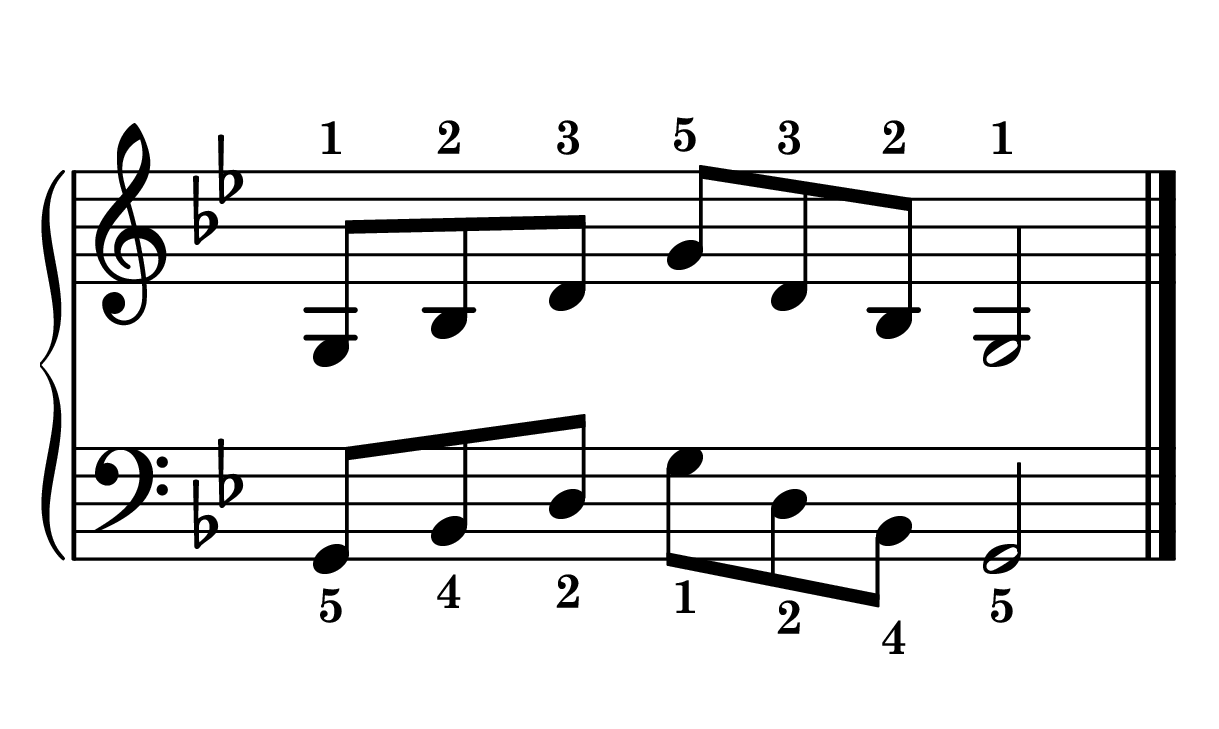
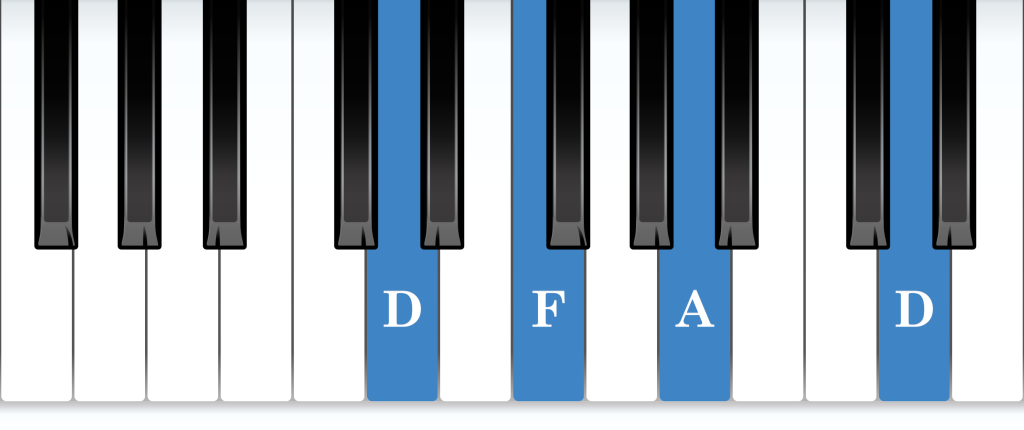
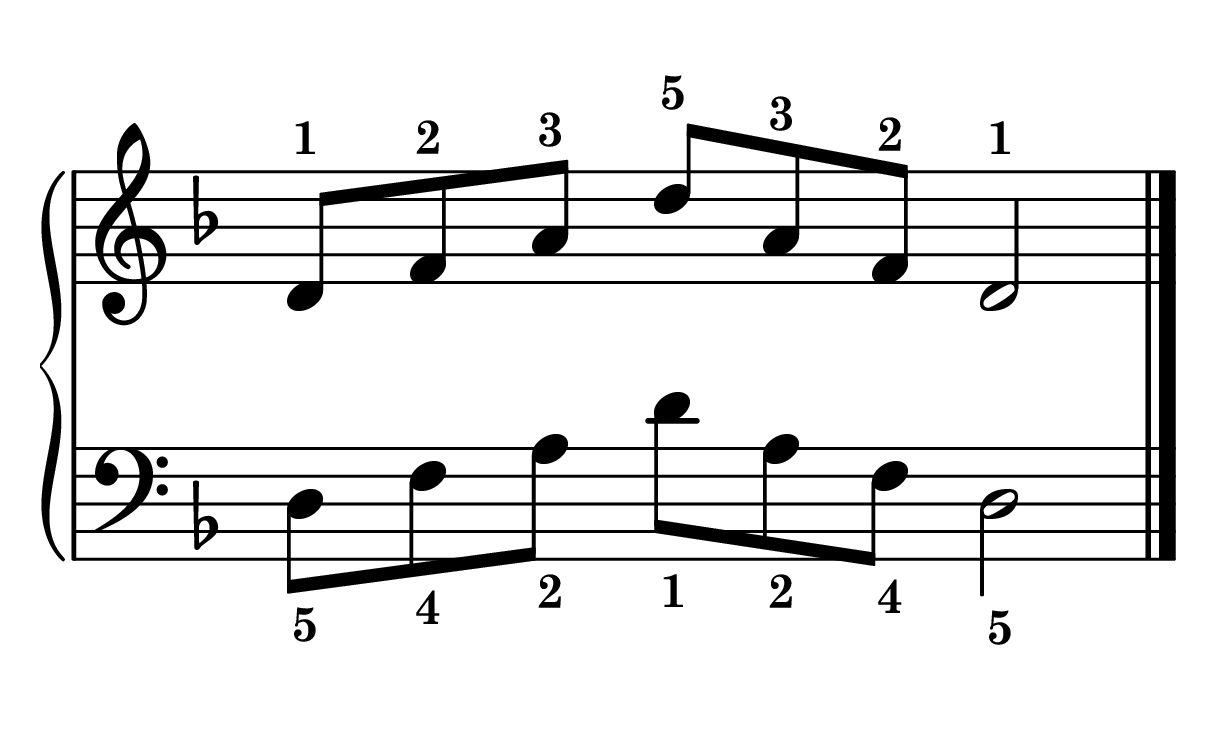
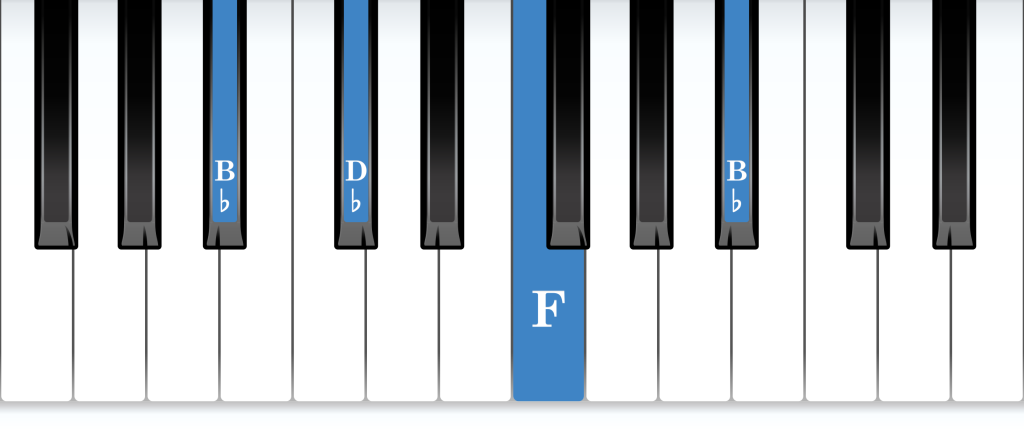
    The D-flat major arpeggio is built from the notes D-flat, F, and A-flat, with F the only white key. Let’s look at it in root position and both inversions, and then extend it over more octaves.

    Lesson Steps
      Add a header to begin generating the table of contents

      D-flat Major arpeggio overview

      The D-flat Major arpeggio in root position

      The D-flat major arpeggio is easier to organize as a chord than as a run of separate notes. Each hand has one shape that it learns once and then carries up or down the keyboard, octave after octave.

      We call that shape the core position: the group of notes that repeats exactly as the arpeggio travels. Once the core position is clear, most of what is left is moving it from one octave to the next.

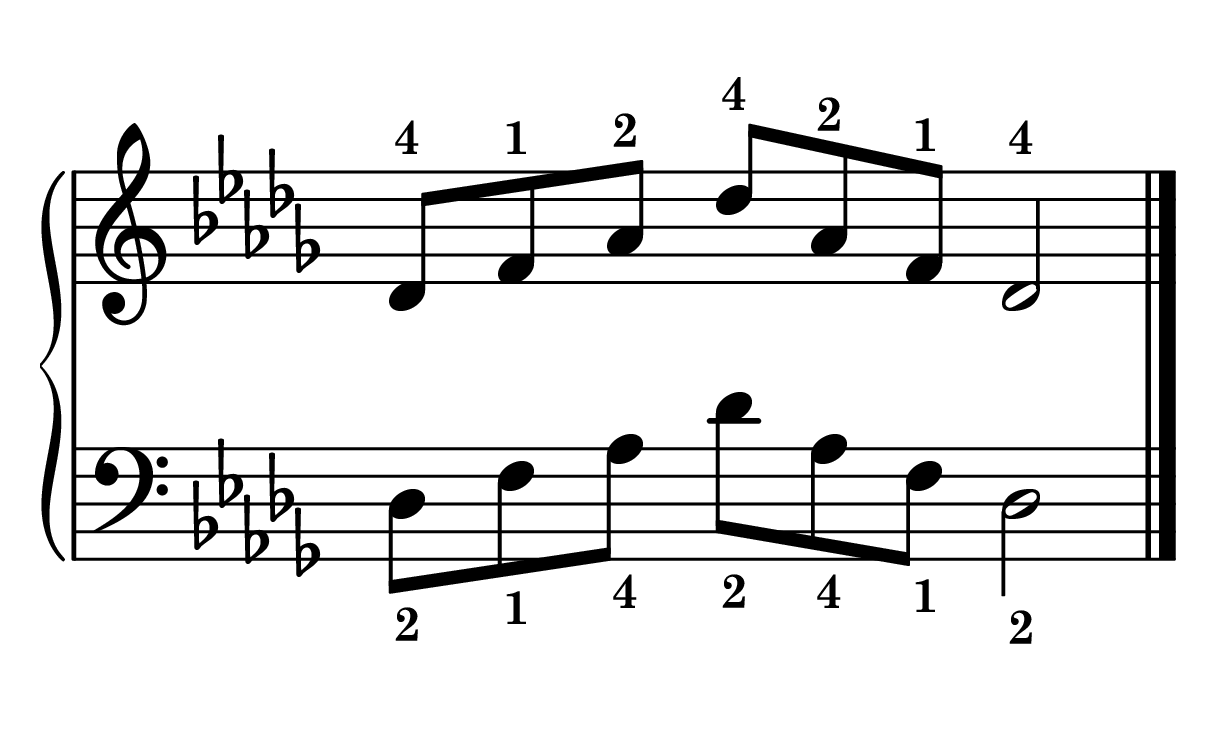
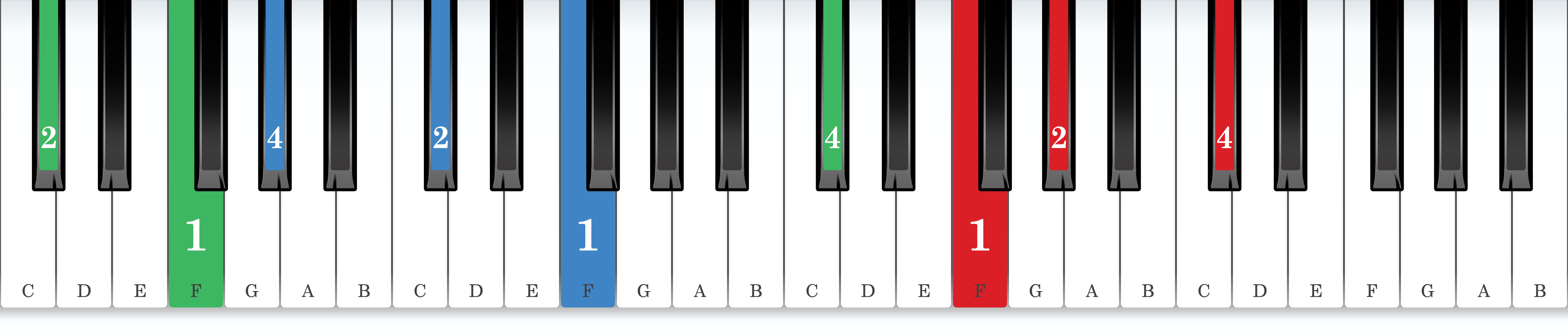
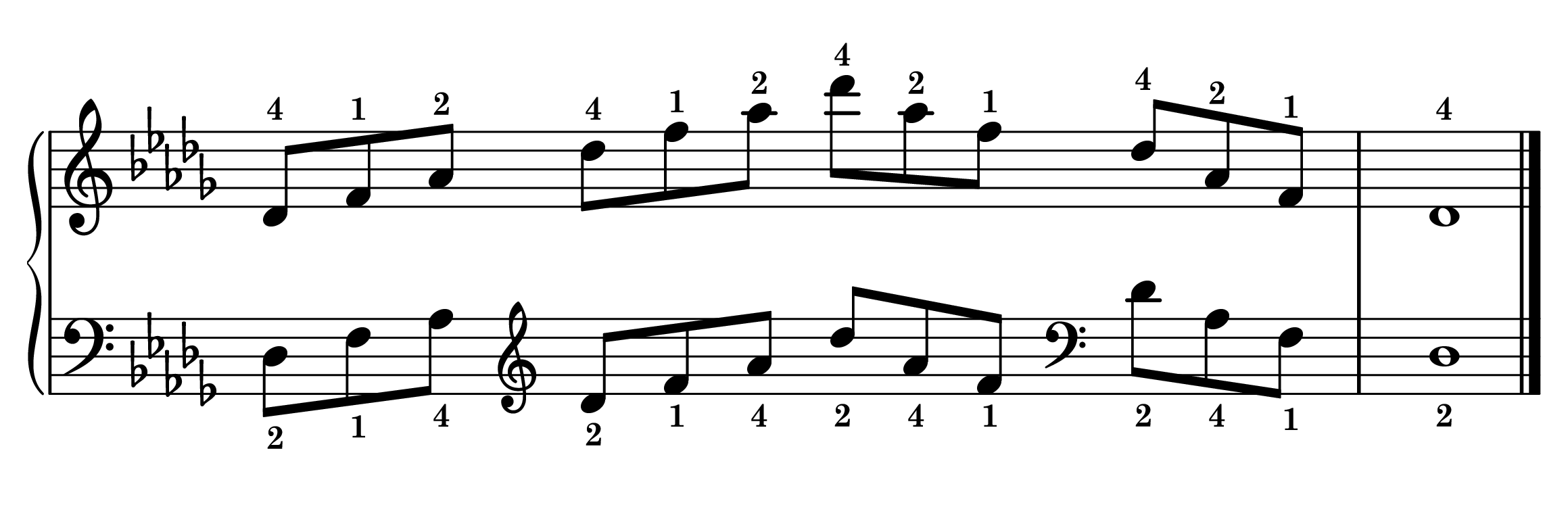
      In root position, the arpeggio starts and ends on D-flat. The core position in the right hand is F-A-flat-D-flat with fingers 1-2-4 (red on the chart below), and in the left hand it is A-flat-D-flat-F with fingers 4-2-1 (blue on the chart). Neither hand starts in its core position. The left hand begins with D-flat and F on fingers 2-1, and the right hand with D-flat on finger 4 (green on the chart): lead-in notes, played with the same fingers they have inside the core position. After them, both hands stay in their core positions. At the top, the right hand turns around on the 4th finger rather than the 5th.
      The D-flat Major arpeggio in first inversion

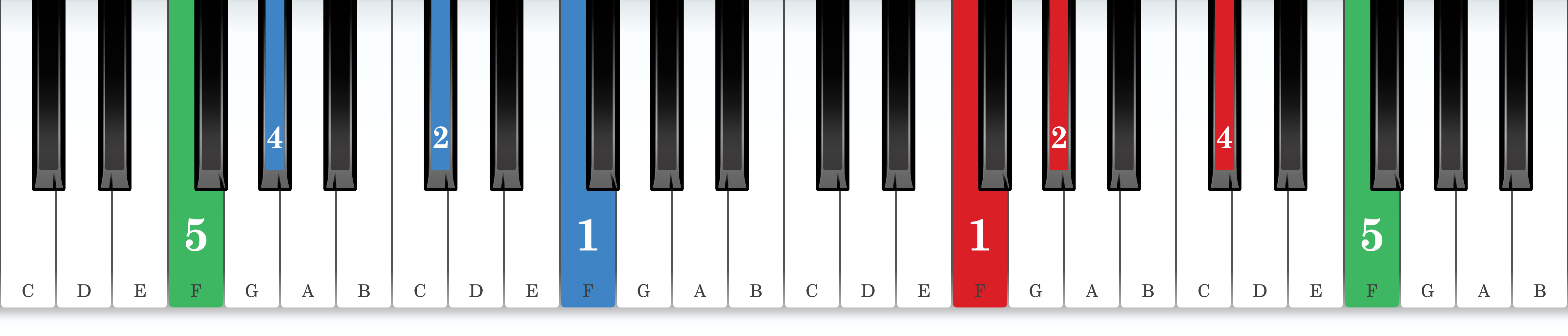
      In first inversion, the arpeggio starts and ends on F, the third of the chord. The core position in the right hand is F-A-flat-D-flat with fingers 1-2-4 (red), and in the left hand it is A-flat-D-flat-F with fingers 4-2-1 (blue). The 5th fingers are the bookends again (green), at the bottom for the left hand and at the top for the right.
      The D-flat Major arpeggio in second inversion

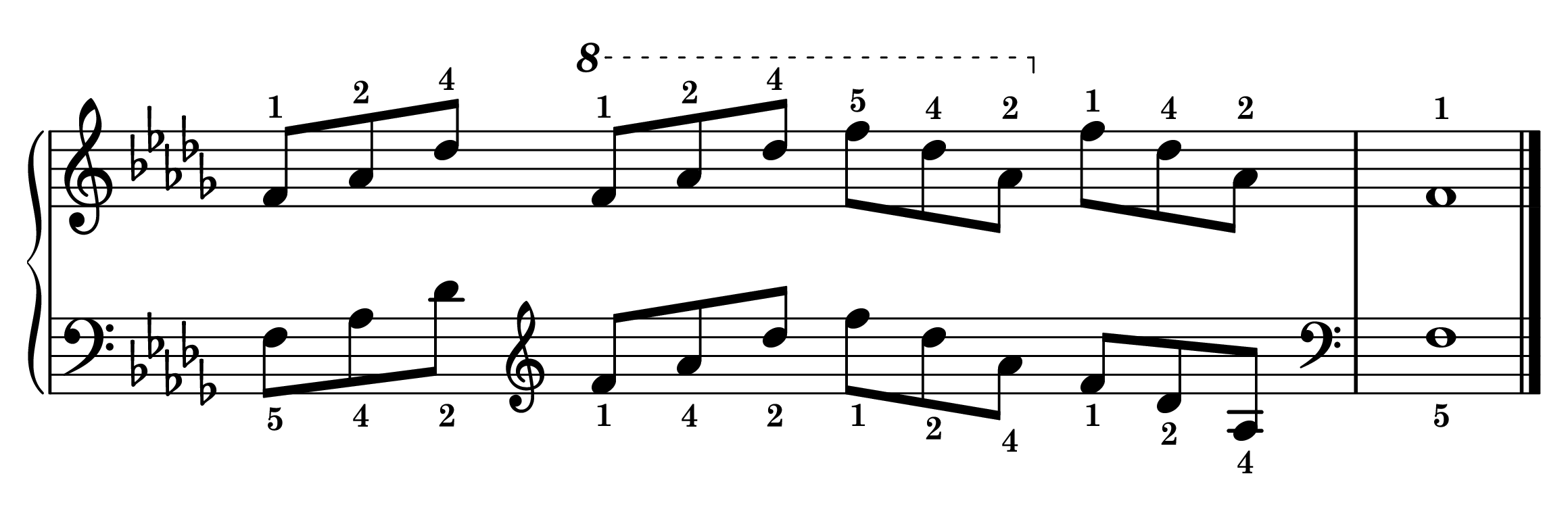
      In second inversion, the arpeggio starts and ends on A-flat, the fifth of the chord. The core position in the right hand is F-A-flat-D-flat with fingers 1-2-4 (red), and in the left hand it is A-flat-D-flat-F with fingers 4-2-1 (blue). The left hand needs no extra note: it starts directly in its core position, with the 4th finger on A-flat. The right hand begins with a lead-in (green): A-flat and D-flat on fingers 2-4, the same fingers those notes have inside the core position. At the top, the right hand turns around on the 2nd finger rather than the 5th.
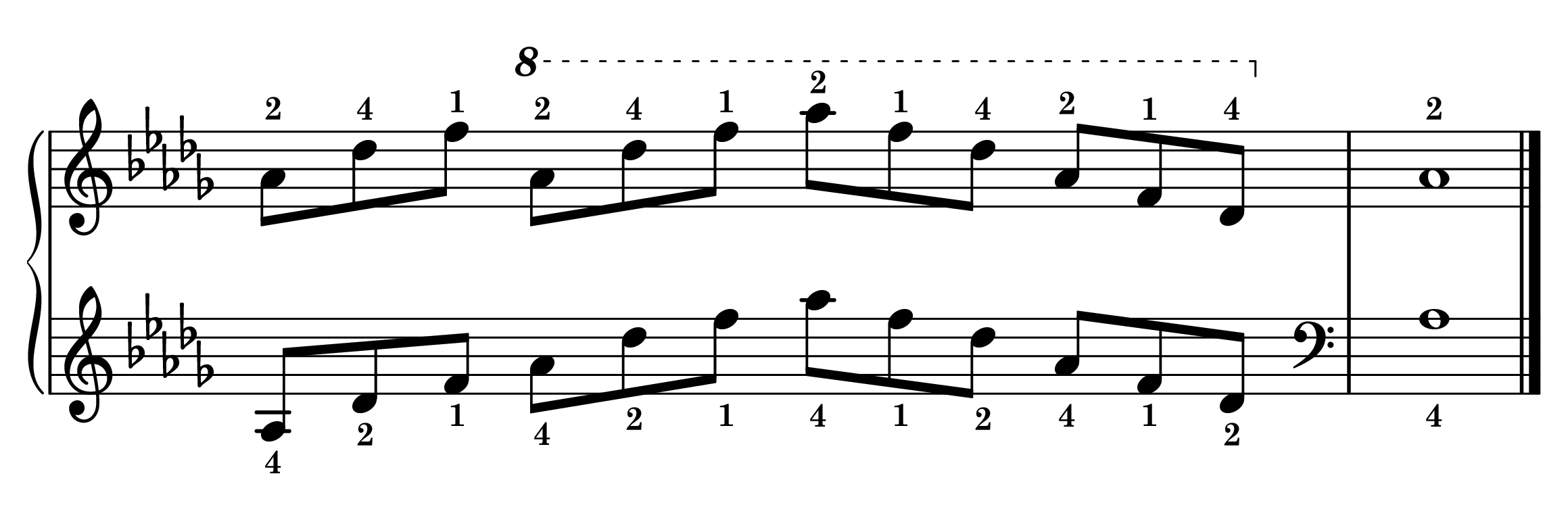
      To practice the core positions, it helps to break the arpeggio into three steps:

      1. Block out the core positions and play them up and down the keyboard in clusters. This makes the arpeggio easy to see as a single unit of notes that repeats up and down the keyboard.
      2. Play up and down the arpeggio one note at a time, but hold the notes down as we go and pause once each core position is fully down. Then aim and hop to the next core position, placing the hand on all of its notes at once.
      3. Play up and down one note at a time, releasing each finger as the next one plays (legato touch), while keeping the core positions in mind as we travel up and down the piano.

      Expand the D-flat Major arpeggio to more octaves

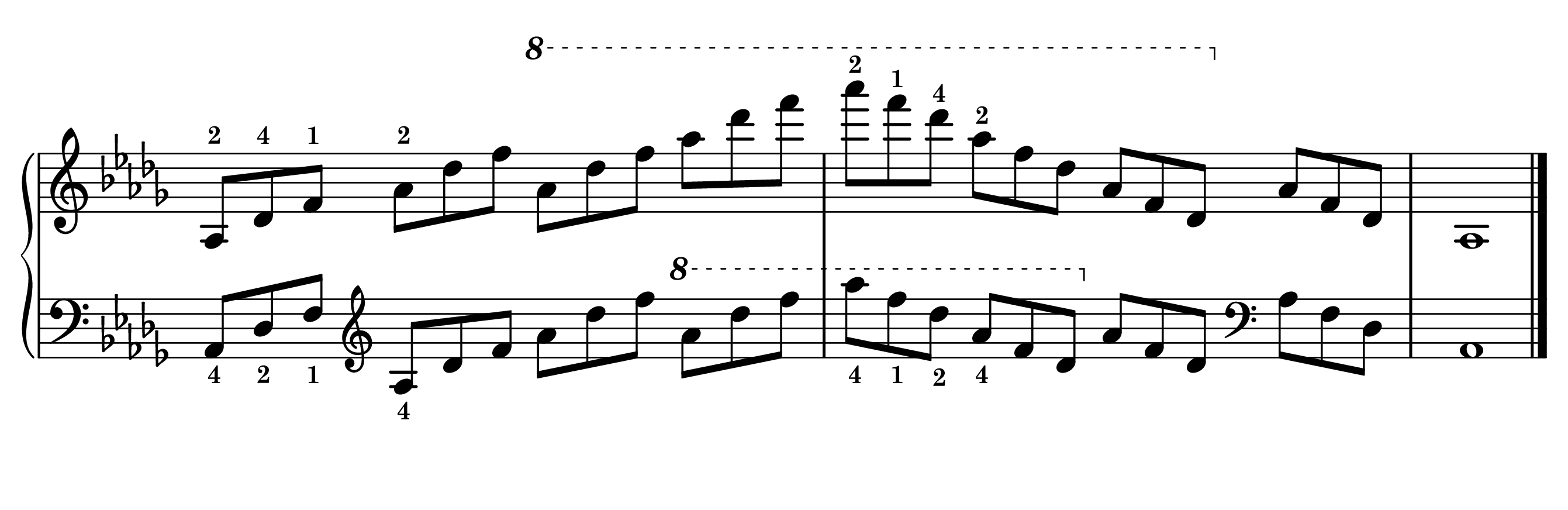
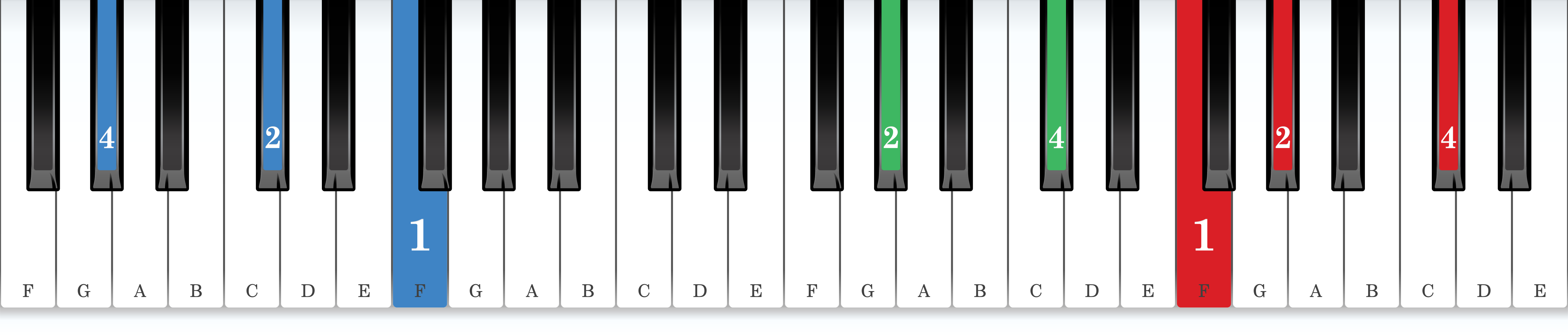
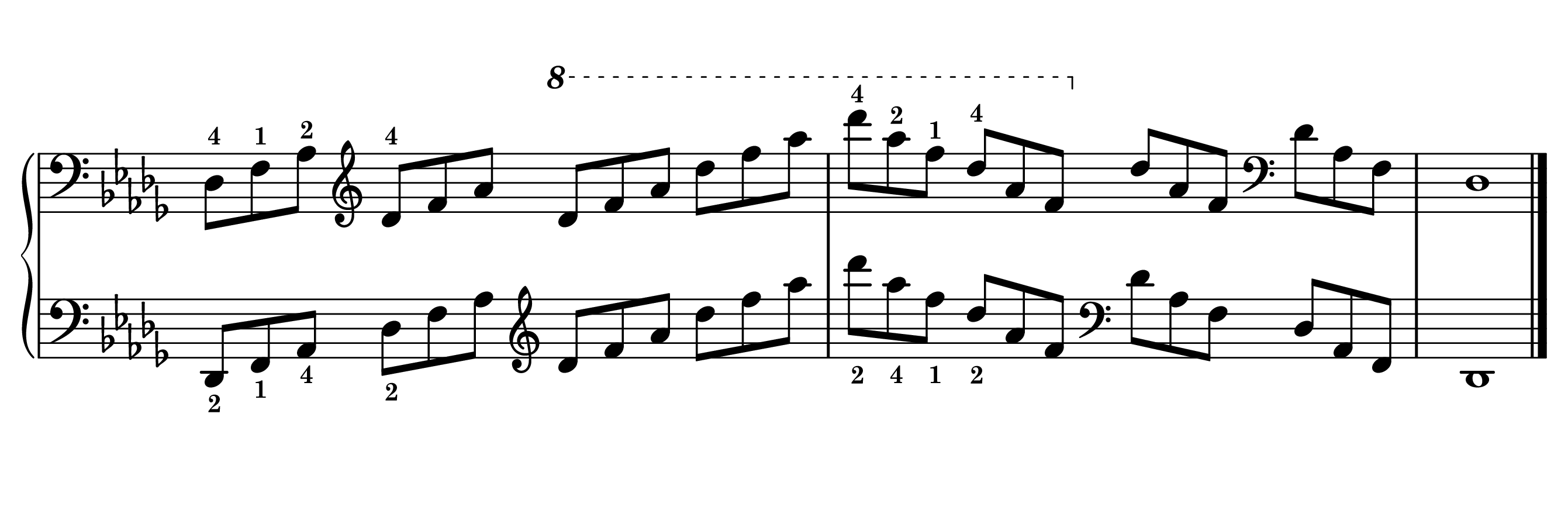
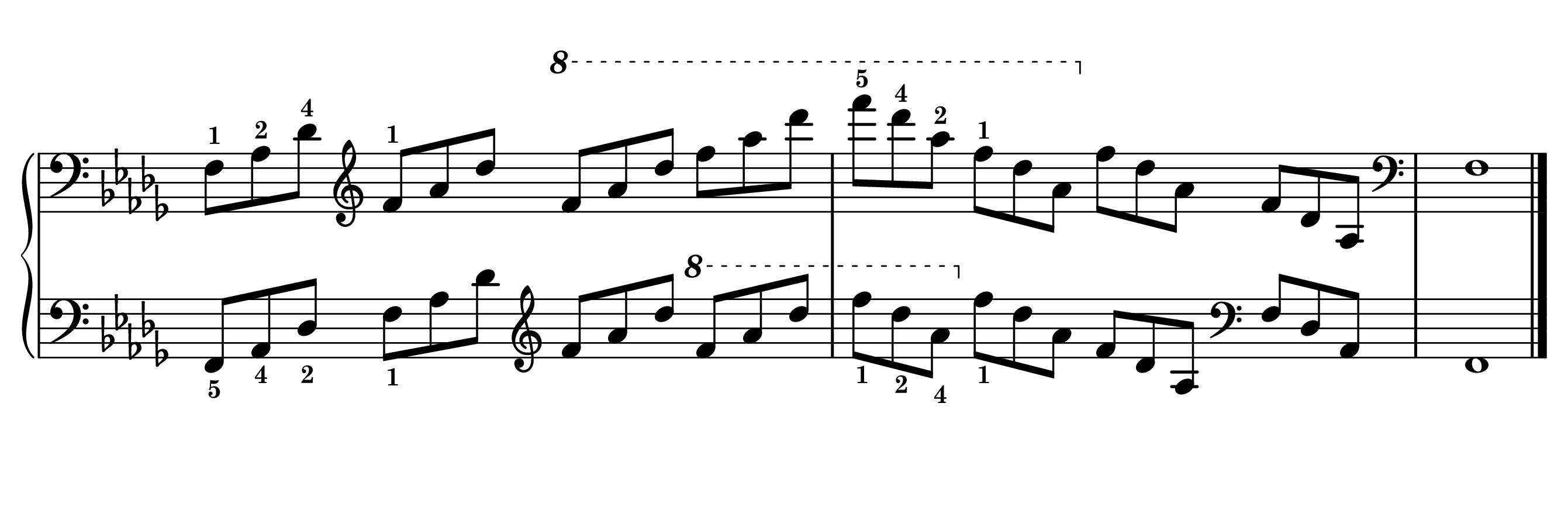
      Extending the D-flat major arpeggio to four octaves doesn’t change any of the fingering. We start one octave lower, finish one octave higher, and the core positions simply repeat in between. If two octaves already feel reliable, the longer version is mostly a matter of keeping the arm moving with the hand. The green notes appear only at the very beginning and the very end; everything in between is the core position. On the four-octave staff, the fingering is written only where the hand moves to a new position.
      Avoid common mistakes in the D-flat Major arpeggio

      A few mistakes and challenges belong especially to the D-flat major arpeggio:

      • One white key: F is the only white key in the D-flat major arpeggio, so it is where the thumbs land in every position change. The black keys around it are higher and further back, which means the hand has to sit further in than usual and the thumb has to reach slightly down and out to F. Keeping the wrist level as the thumb passes under stops the hand from twisting.
      • Starting fingers: In root position, the arpeggio does not start with the right-hand thumb and the left-hand 5th finger: the right hand begins on D-flat with the 4th finger and the left hand with the 2nd. The same happens in second inversion. Out of habit, the hand tends to reach for the thumb anyway, and then the whole fingering is shifted by one note. Placing both hands on their first notes deliberately, before playing anything, prevents that.
      • Overshooting or undershooting notes: When the hand moves to the next octave, it’s easy to misjudge the distance and land a key off. Aiming for the whole next core position, rather than the single next note, gives the hand a bigger target and makes the landing more reliable.

      Other techniques related to D-flat major piano arpeggios:

      Questions and answers

      No questions on this lesson yet. Be the first to ask one.
      Explore More Piano Arpeggios

      Continue learning with our full library of piano arpeggio lessons

      Browse Major Arpeggios

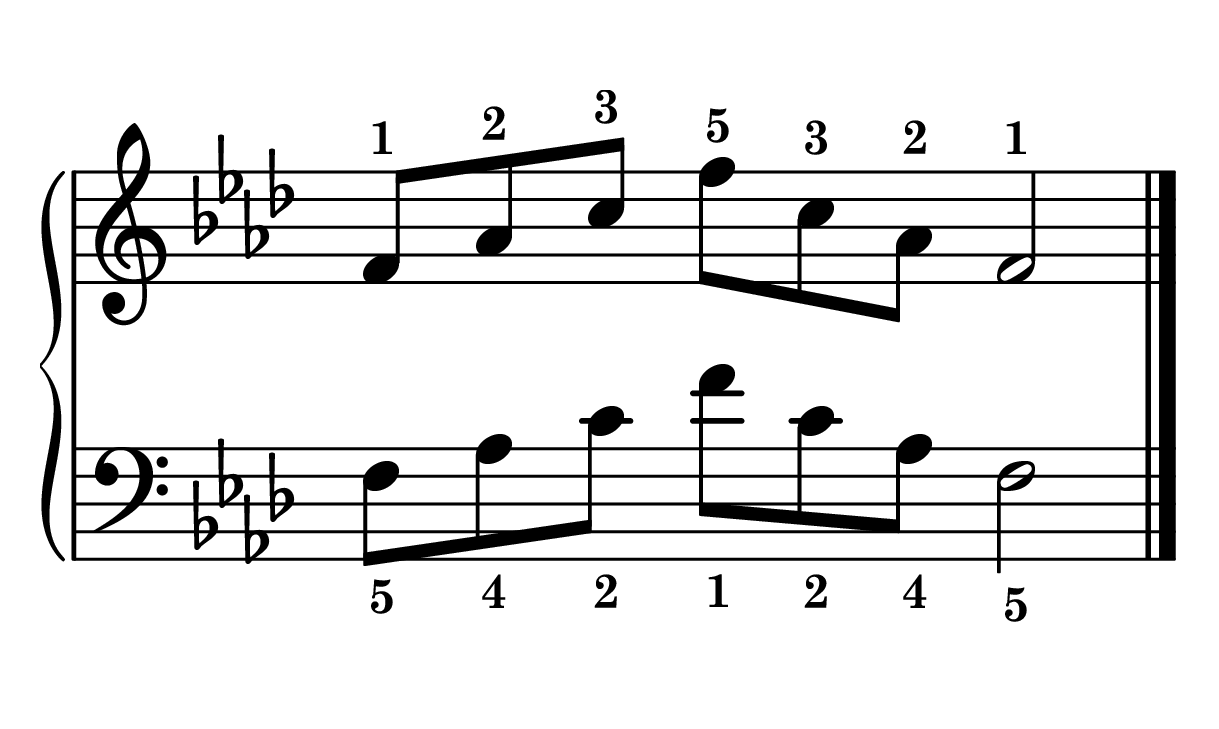
      1. C Major Arpeggios
        C major arpeggio piano notes diagram
        C major arpeggio piano in root position in one octave notes on staff with fingering
        Learn how to play arpeggios in the key of C Major
      2. G Major Arpeggios

        G major arpeggio piano notes diagram
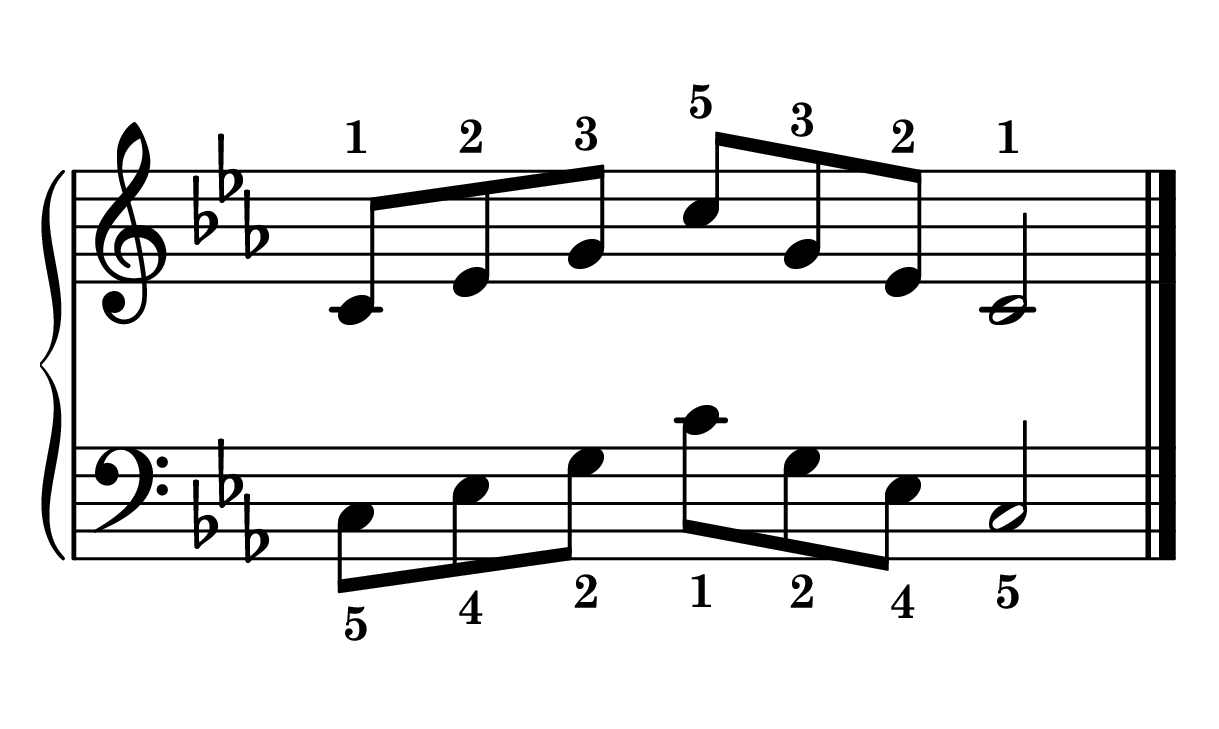
        G major arpeggio piano in root position in one octave notes on staff with fingering
        Learn how to play arpeggios in the key of G Major
      3. D Major Arpeggios

        D major arpeggio piano notes diagram
        D major arpeggio piano in root position in one octave notes on staff with fingering
        Learn how to play arpeggios in the key of D Major
      4. A Major Arpeggios

        A major arpeggio piano notes diagram
        A major arpeggio piano in root position in one octave notes on staff with fingering
        Learn how to play arpeggios in the key of A Major
      5. E Major Arpeggios

        E major arpeggio piano notes diagram
        E major arpeggio piano in root position in one octave notes on staff with fingering
        Learn how to play arpeggios in the key of E Major
      6. B Major Arpeggios

        B major arpeggio piano notes diagram
        B major arpeggio piano in root position in one octave notes on staff with fingering
        Learn how to play arpeggios in the key of B Major
      7. G-flat Major Arpeggios

        G-flat major arpeggio piano notes diagram
        G-flat major arpeggio piano in root position in one octave notes on staff with fingering
        Learn how to play arpeggios in the key of G-flat Major
      8. D-flat Major Arpeggios

        D-flat major arpeggio piano notes diagram
        D-flat major arpeggio piano in root position in one octave notes on staff with fingering
        Learn how to play arpeggios in the key of D-flat Major
      9. A-flat Major Arpeggios

        A-flat major arpeggio piano notes diagram
        A-flat major arpeggio piano in root position in one octave notes on staff with fingering
        Learn how to play arpeggios in the key of A-flat Major
      10. E-flat Major Arpeggios

        E-flat major arpeggio piano notes diagram
        E-flat major arpeggio piano in root position in one octave notes on staff with fingering
        Learn how to play arpeggios in the key of E-flat Major
      11. B-flat Major Arpeggios

        B-flat major arpeggio piano notes diagram
        B-flat major arpeggio piano in root position in one octave notes on staff with fingering
        Learn how to play arpeggios in the key of B-flat Major
      12. F Major Arpeggios

        F major arpeggio piano notes diagram
        F major arpeggio piano in root position in one octave notes on staff with fingering
        Learn how to play arpeggios in the key of F Major

      Browse Minor Arpeggios

      A Minor Arpeggios

      A minor arpeggio piano notes diagram
      A minor arpeggio piano in root position in one octave notes on staff with fingering
      Learn how to play arpeggios in the key of A Minor

      E Minor Arpeggios

      E minor arpeggio piano notes diagram
      E minor arpeggio piano in root position in one octave notes on staff with fingering
      Learn how to play arpeggios in the key of E Minor

      B Minor Arpeggios

      B minor arpeggio piano notes diagram
      B minor arpeggio piano in root position in one octave notes on staff with fingering
      Learn how to play arpeggios in the key of B Minor

      F-sharp Minor Arpeggios

      F-sharp minor arpeggio piano notes diagram
      F-sharp minor arpeggio piano in root position in one octave notes on staff with fingering
      Learn how to play arpeggios in the key of F-sharp Minor

      C-sharp Minor Arpeggios

      C-sharp minor arpeggio piano notes diagram
      C-sharp minor arpeggio piano in root position in one octave notes on staff with fingering
      Learn how to play arpeggios in the key of C-sharp Minor

      G-sharp Minor Arpeggios

      G-sharp minor arpeggio piano notes diagram
      G-sharp minor arpeggio piano in root position in one octave notes on staff with fingering
      Learn how to play arpeggios in the key of G-sharp Minor

      E-flat Minor Arpeggios

      E-flat minor arpeggio piano notes diagram
      E-flat minor arpeggio piano in root position in one octave notes on staff with fingering
      Learn how to play arpeggios in the key of E-flat Minor

      B-flat Minor Arpeggios

      B-flat minor arpeggio piano notes diagram
      B-flat minor arpeggio piano in root position in one octave notes on staff with fingering
      Learn how to play arpeggios in the key of B-flat Minor

      F Minor Arpeggios

      F minor arpeggio piano notes diagram
      F minor arpeggio piano in root position in one octave notes on staff with fingering
      Learn how to play arpeggios in the key of F Minor

      C Minor Arpeggios

      C minor arpeggio piano notes diagram
      C minor arpeggio piano in root position in one octave notes on staff with fingering
      Learn how to play arpeggios in the key of C Minor

      G Minor Arpeggios

      G minor arpeggio piano notes diagram
      G minor arpeggio piano in root position in one octave notes on staff with fingering
      Learn how to play arpeggios in the key of G Minor

      D Minor Arpeggios

      D minor arpeggio piano notes diagram
      D minor arpeggio piano in root position in one octave notes on staff with fingering
      Learn how to play arpeggios in the key of D Minor
      Scroll to Top

      Ask a question about this lesson

      Questions go straight to Loren. Answers are posted at the bottom of the lesson.

      Your email is only used to reply and is never shown on the site.