Questions and answers
No questions on this lesson yet. Be the first to ask one.
The D major scale has two black keys, F-sharp and C-sharp, one in each half of the scale. It uses the same fingering as C and G major, so once that pattern feels reliable, D major mostly asks the hand to move a little further into the keys to reach the two sharps.
| D Major Scale Overview | |
|---|---|
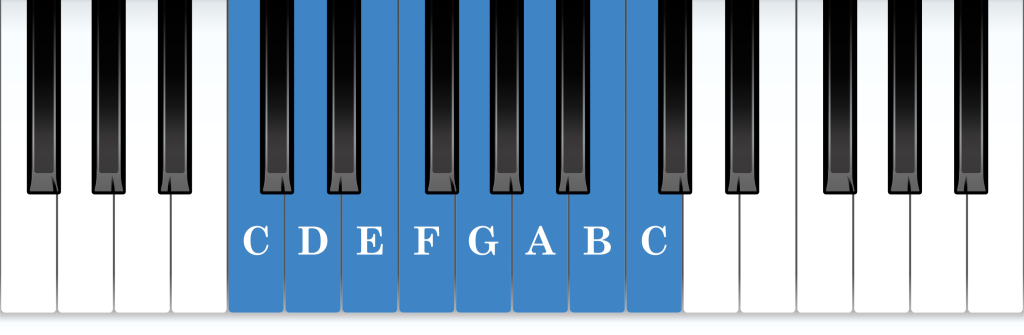
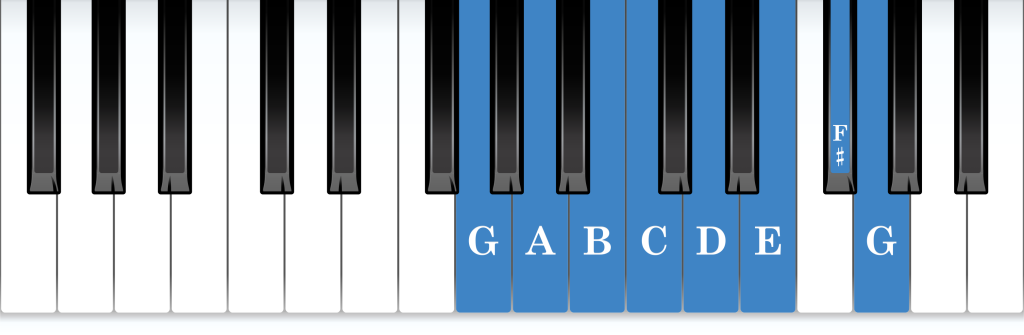
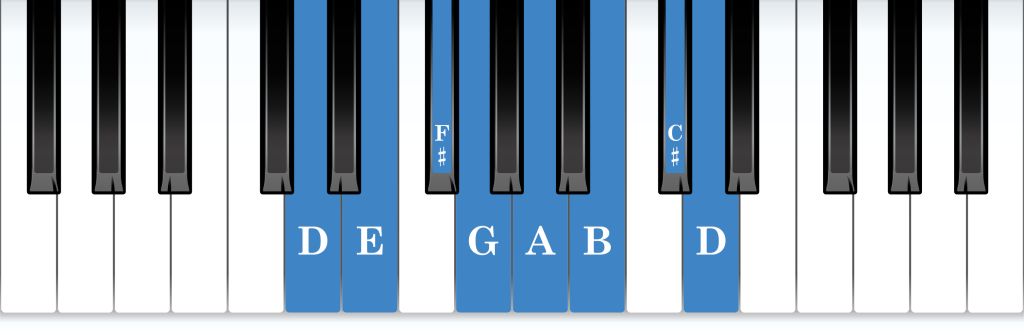
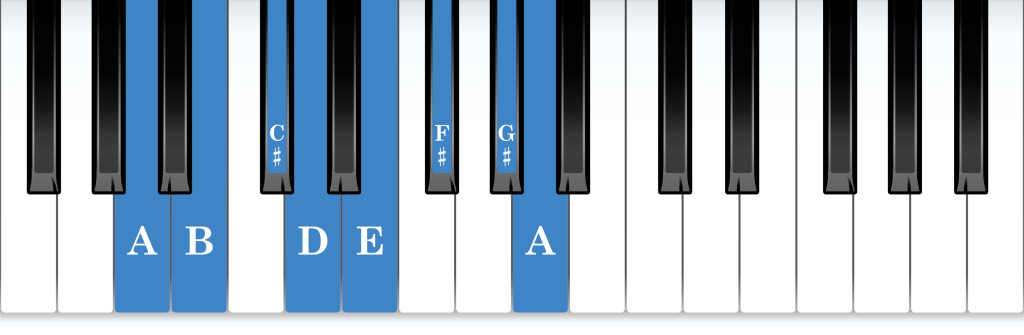
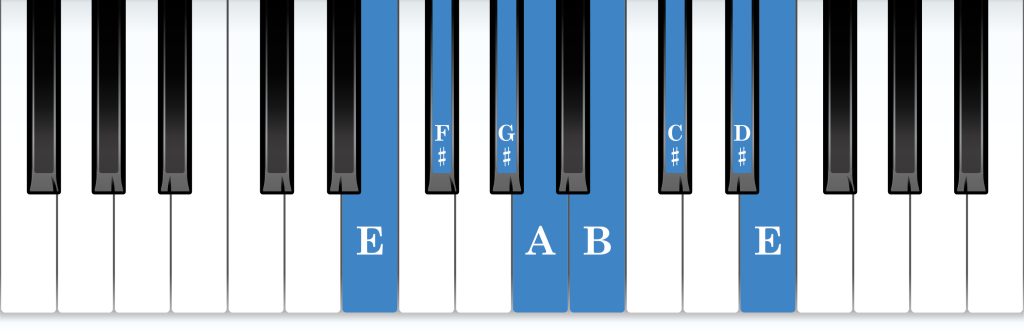
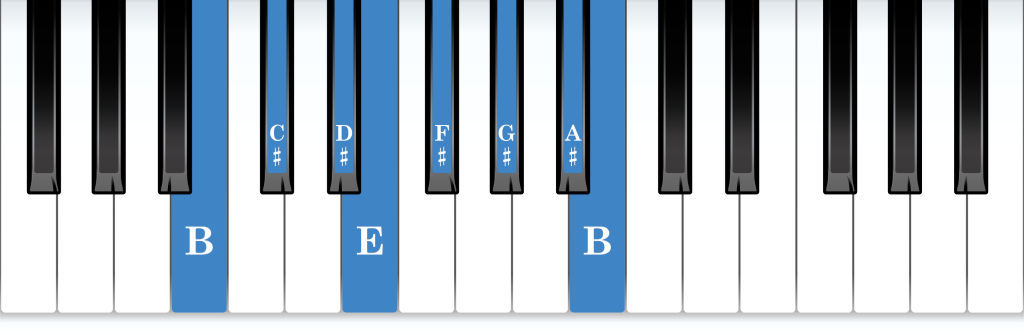
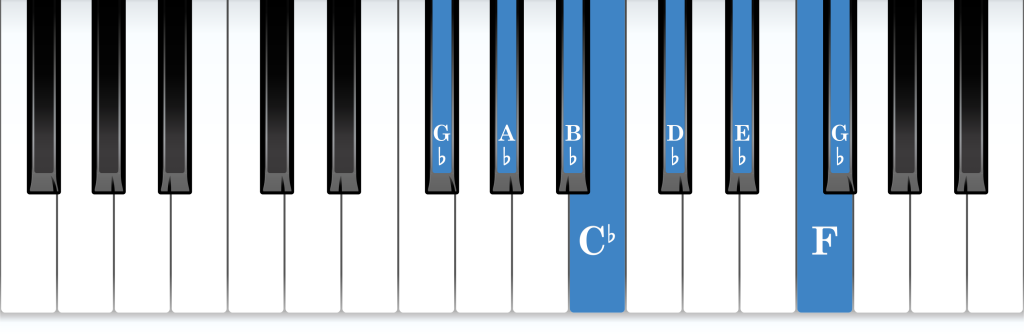
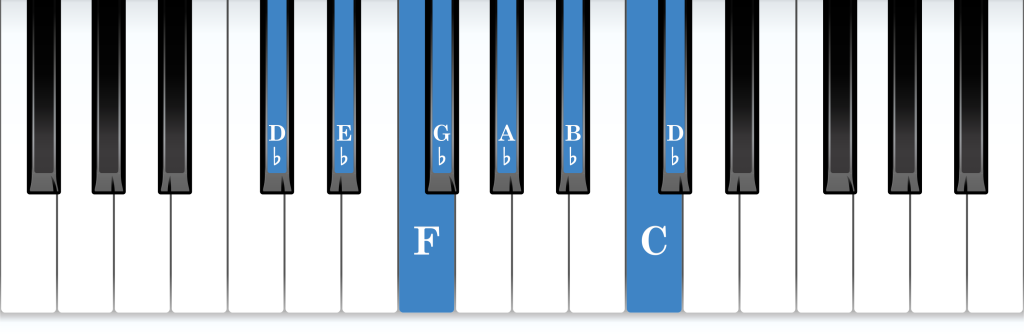
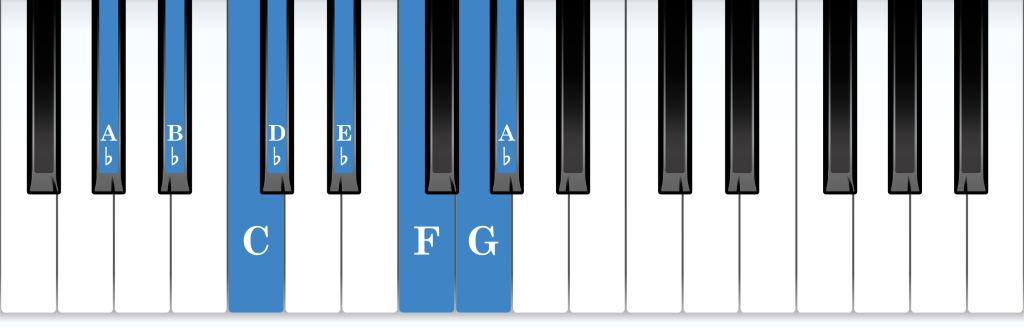
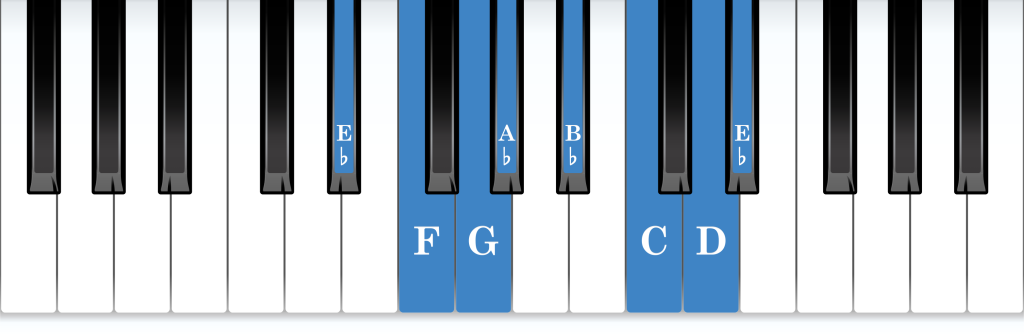
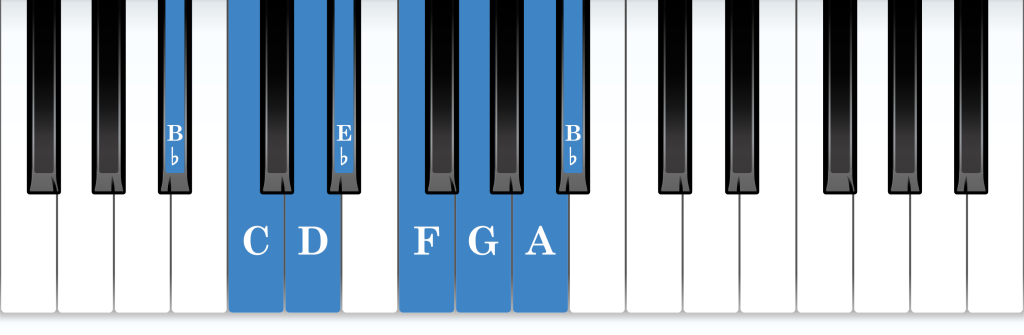
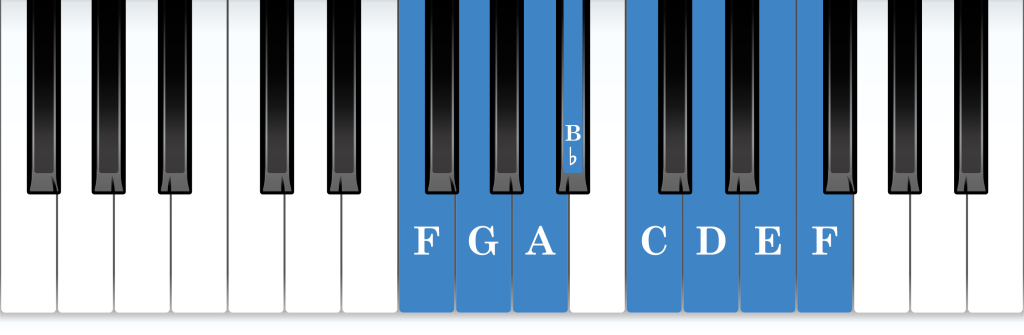
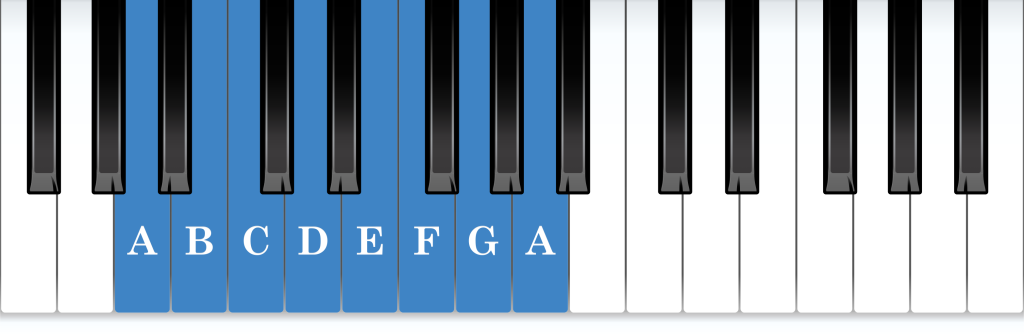
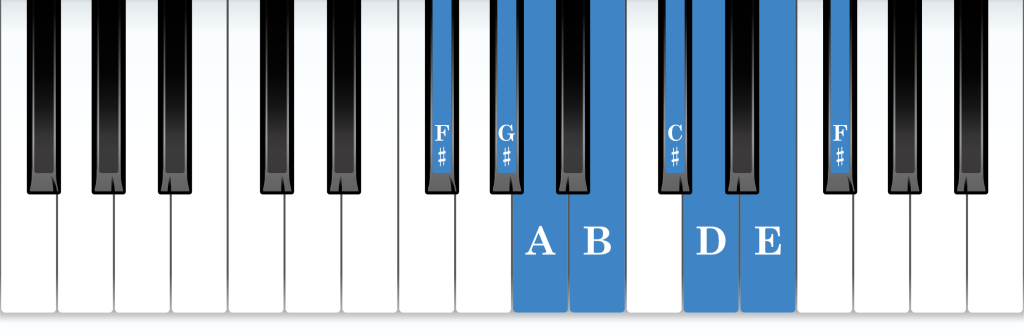
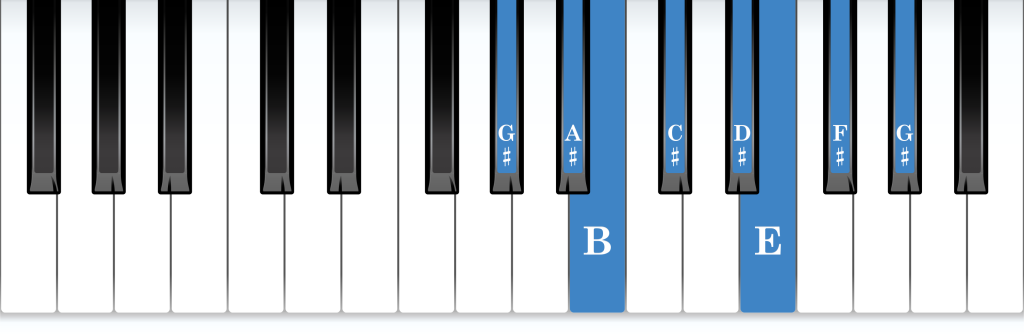
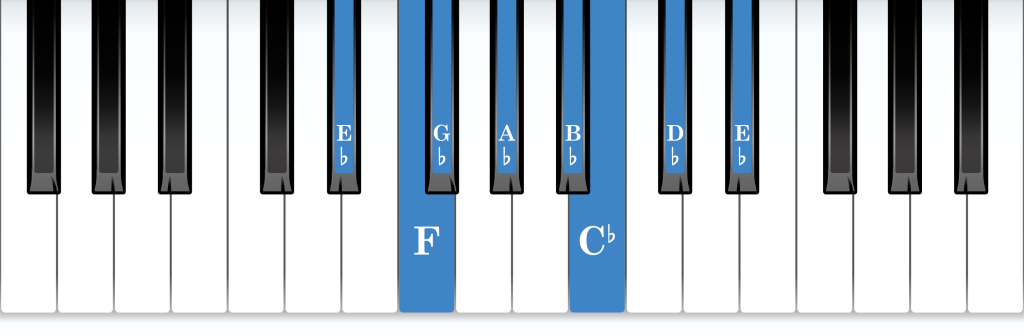
| Keyboard Layout | 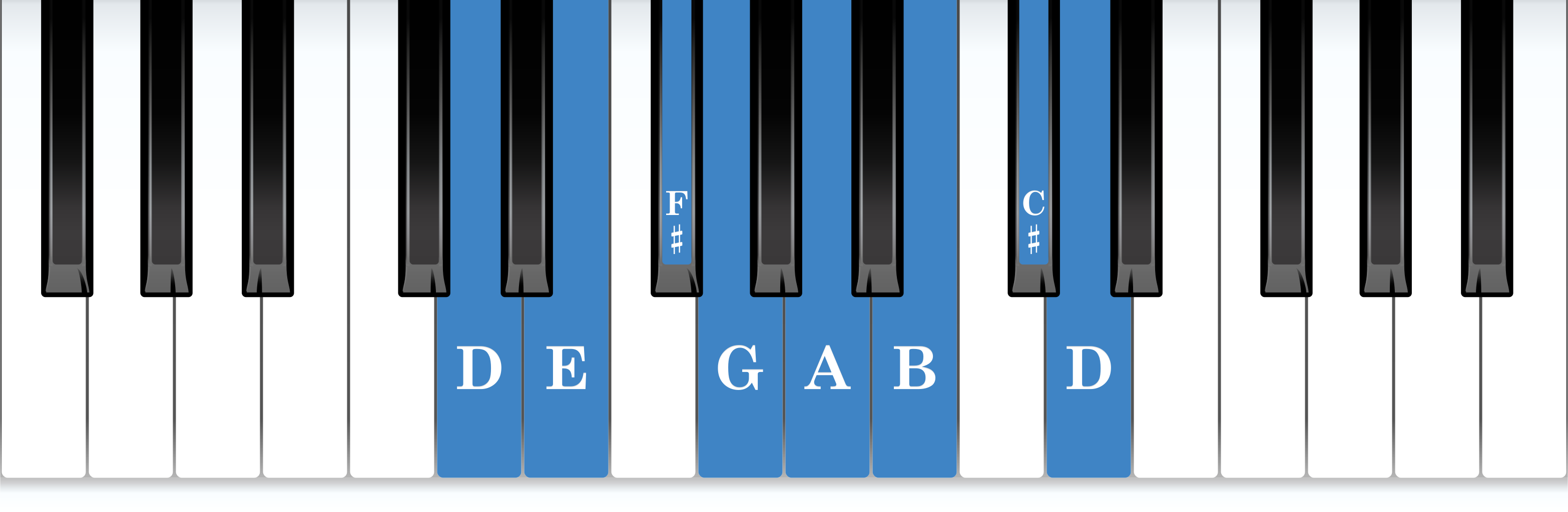 |
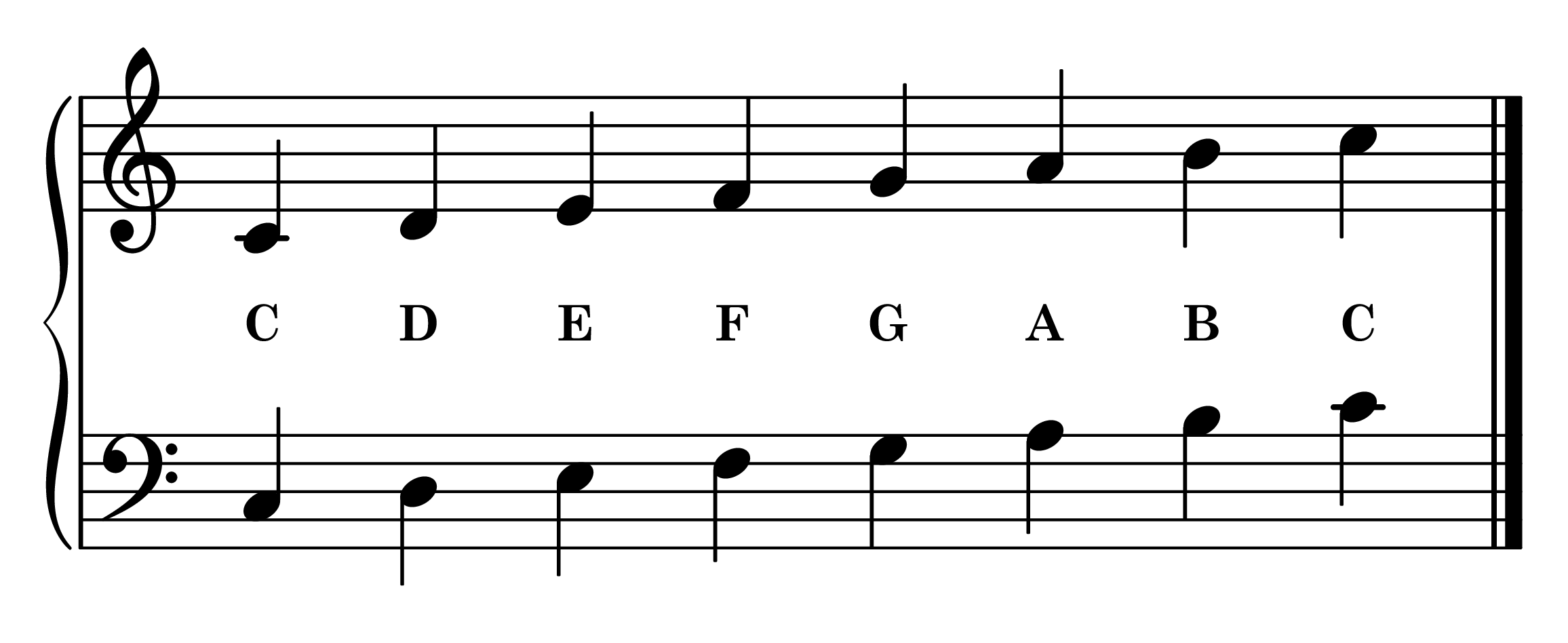
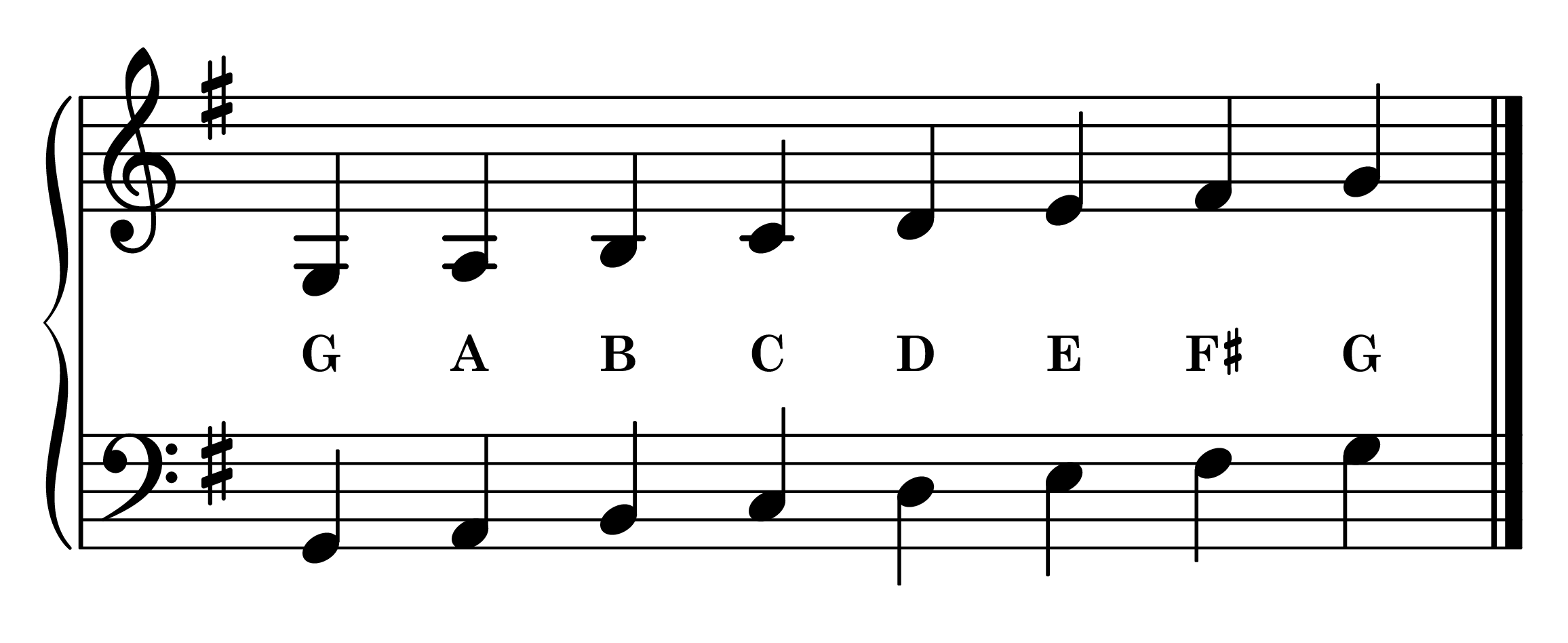
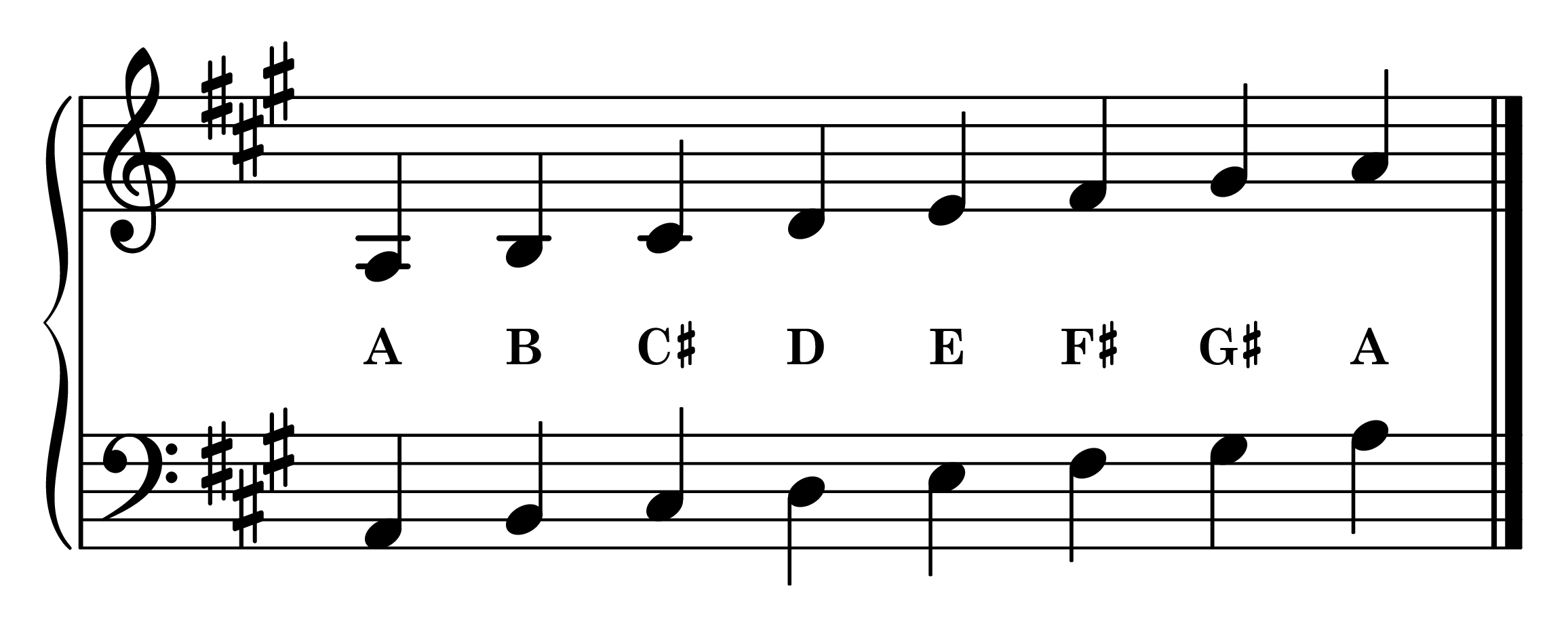
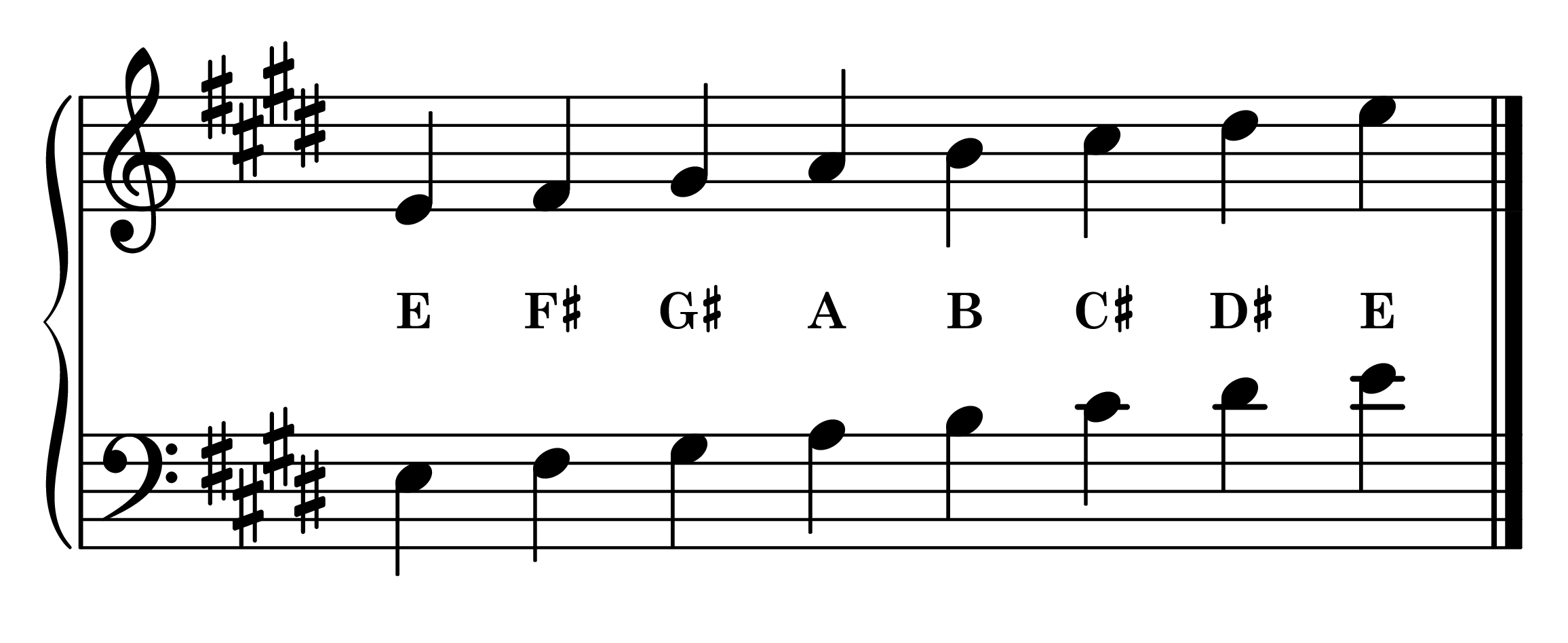
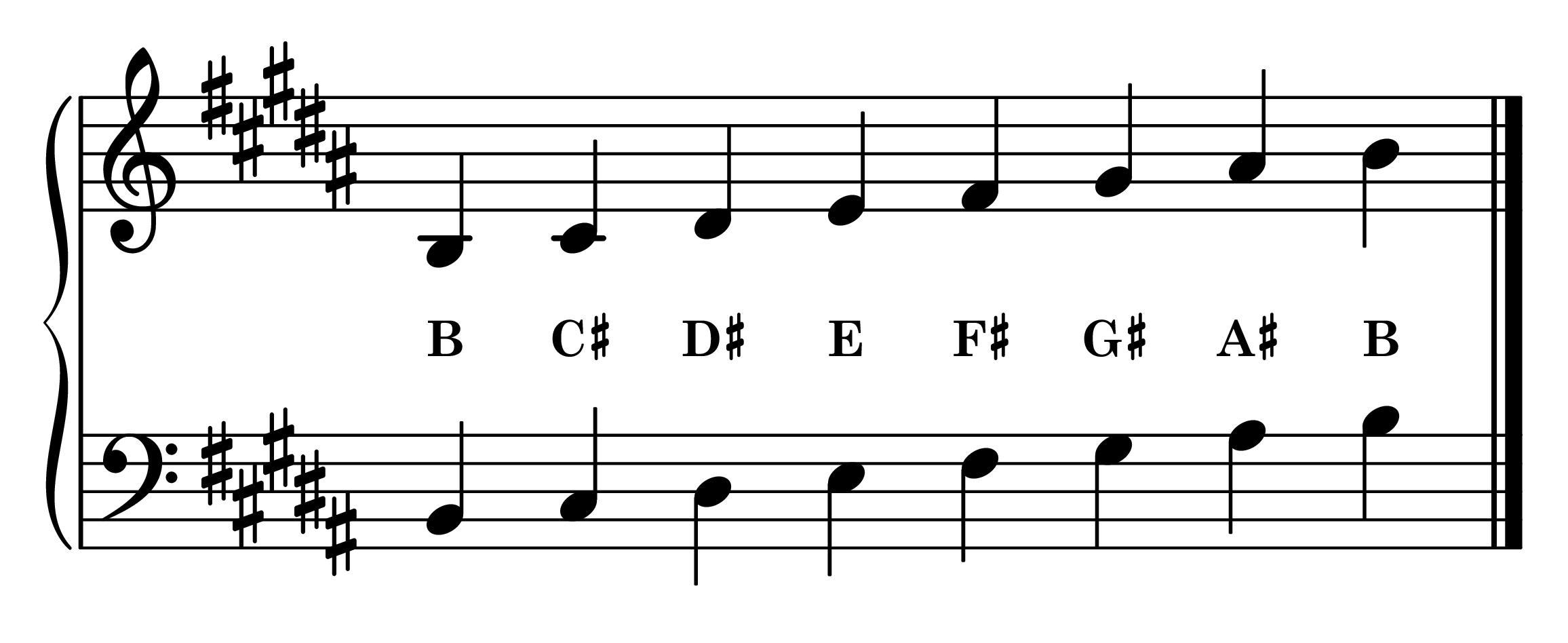
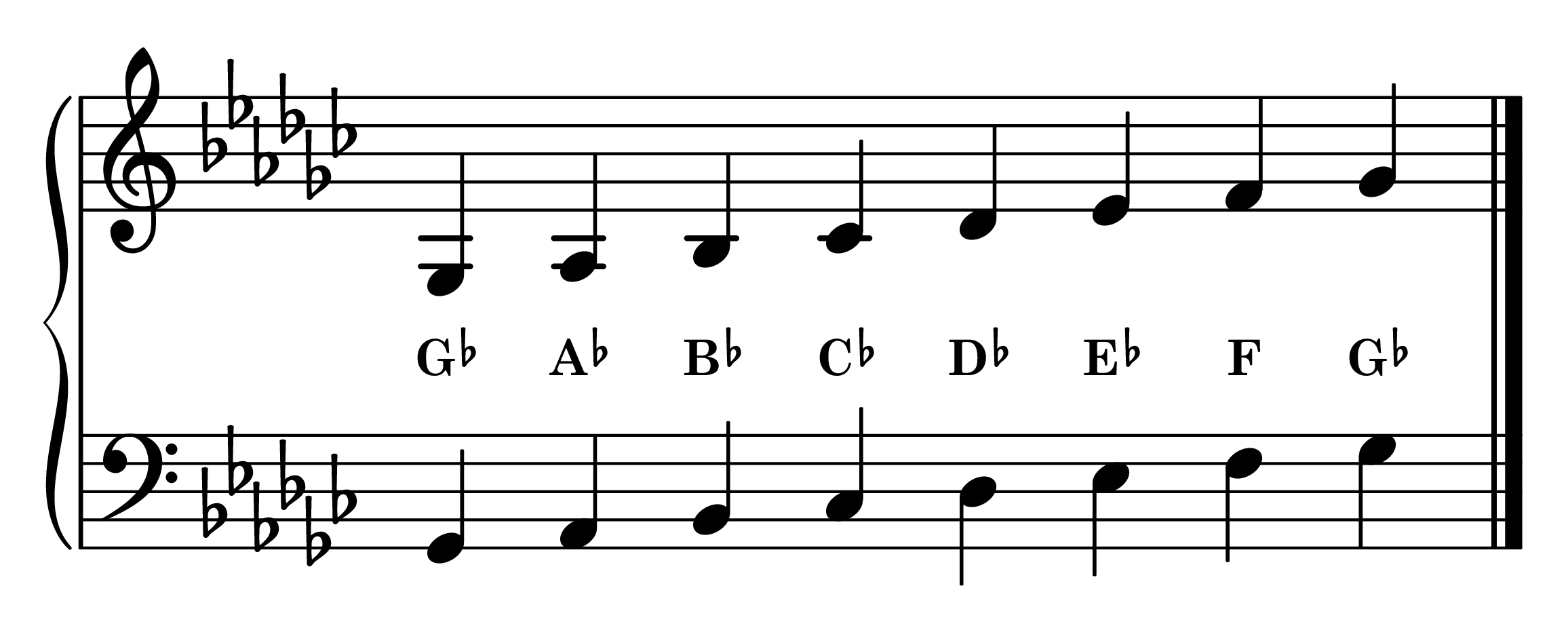
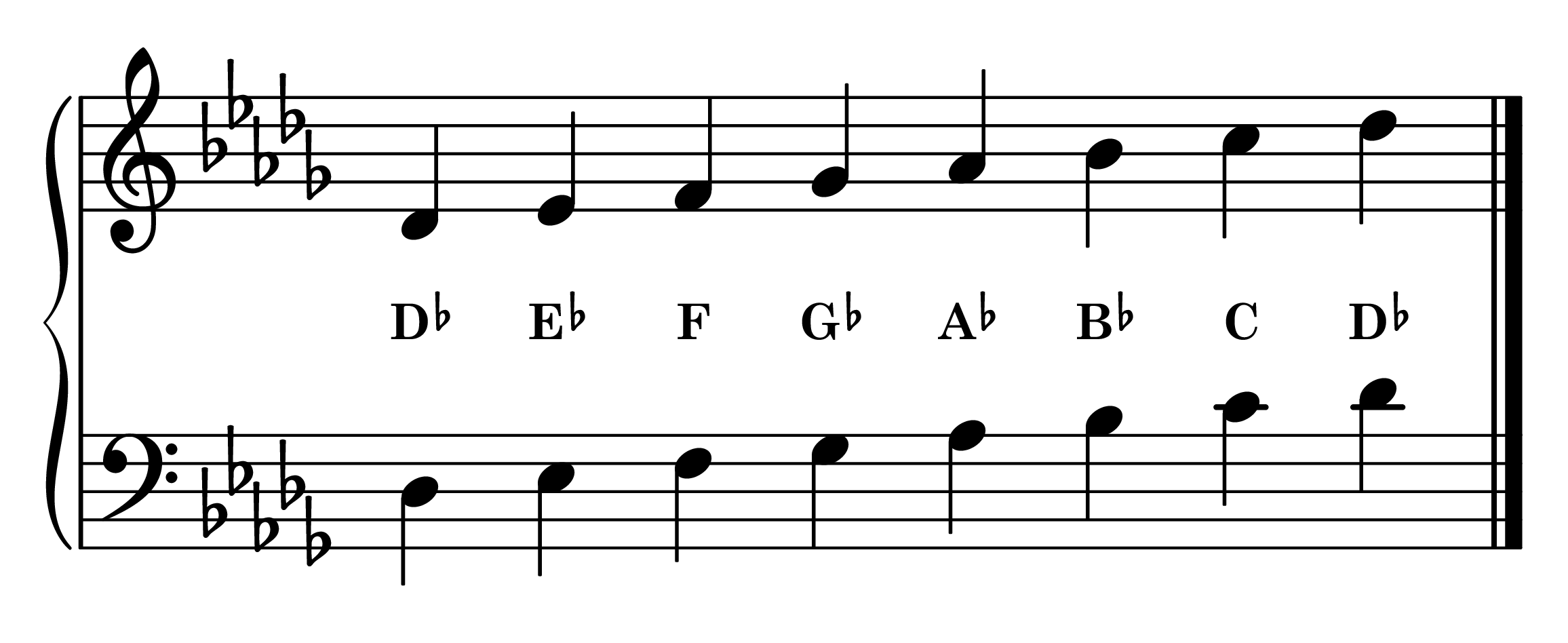
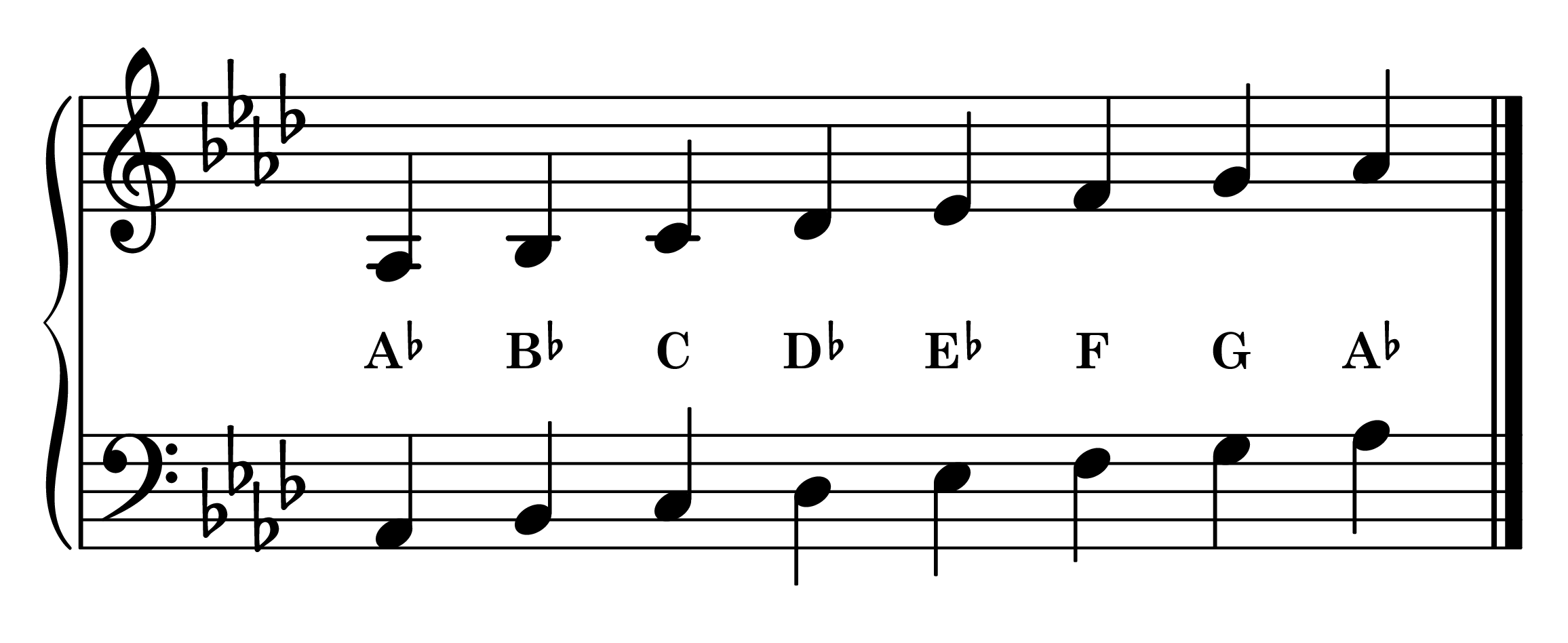
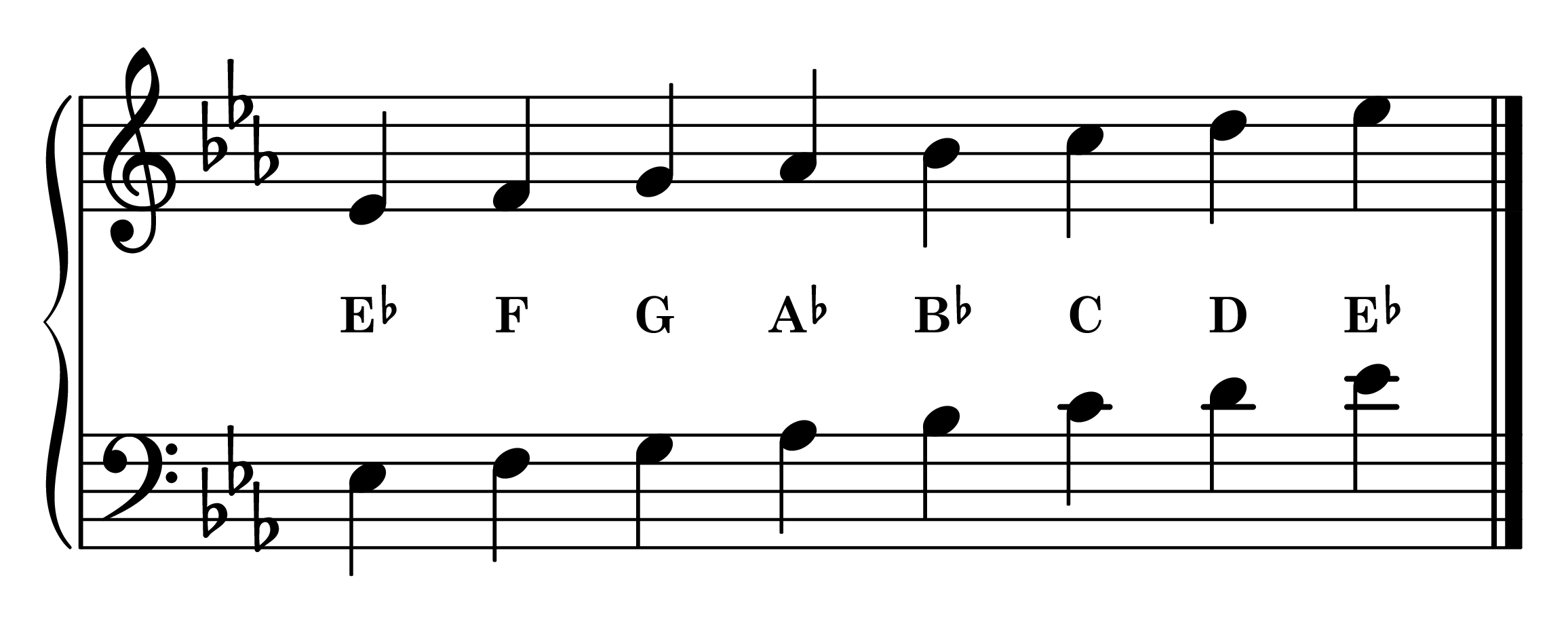
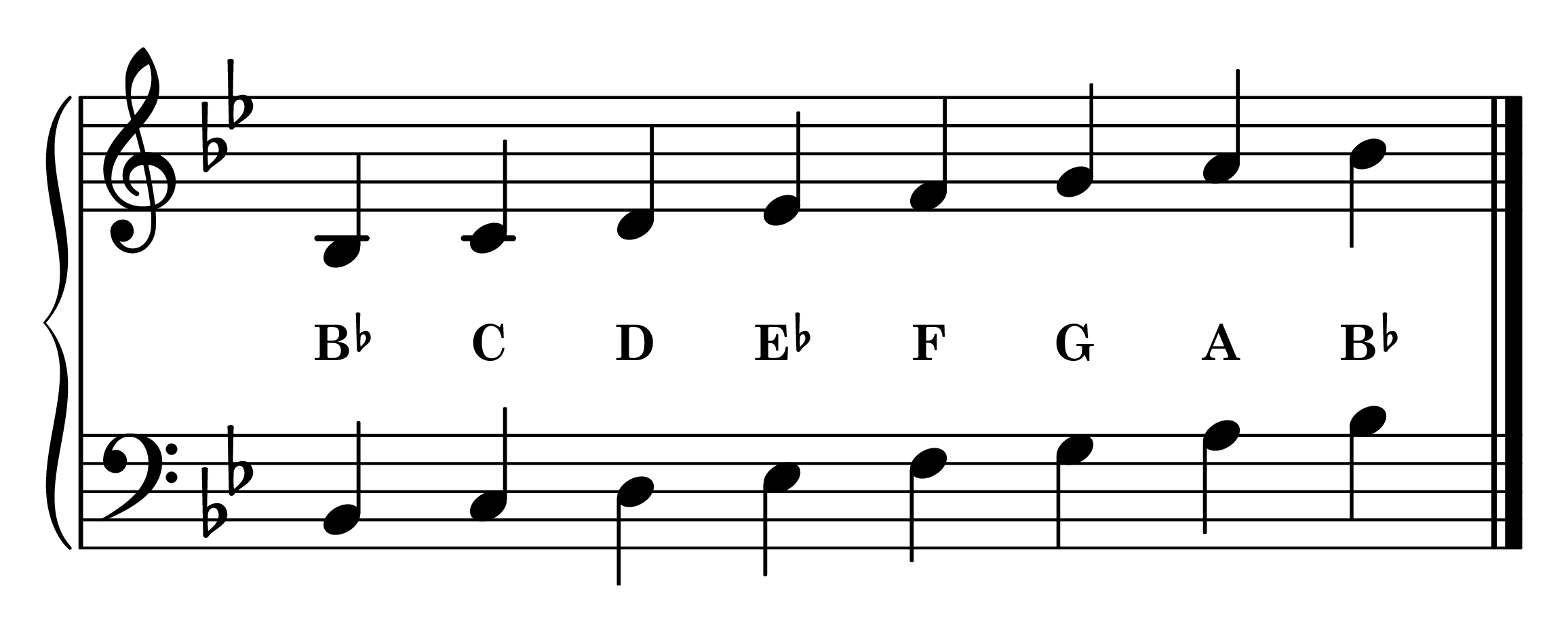
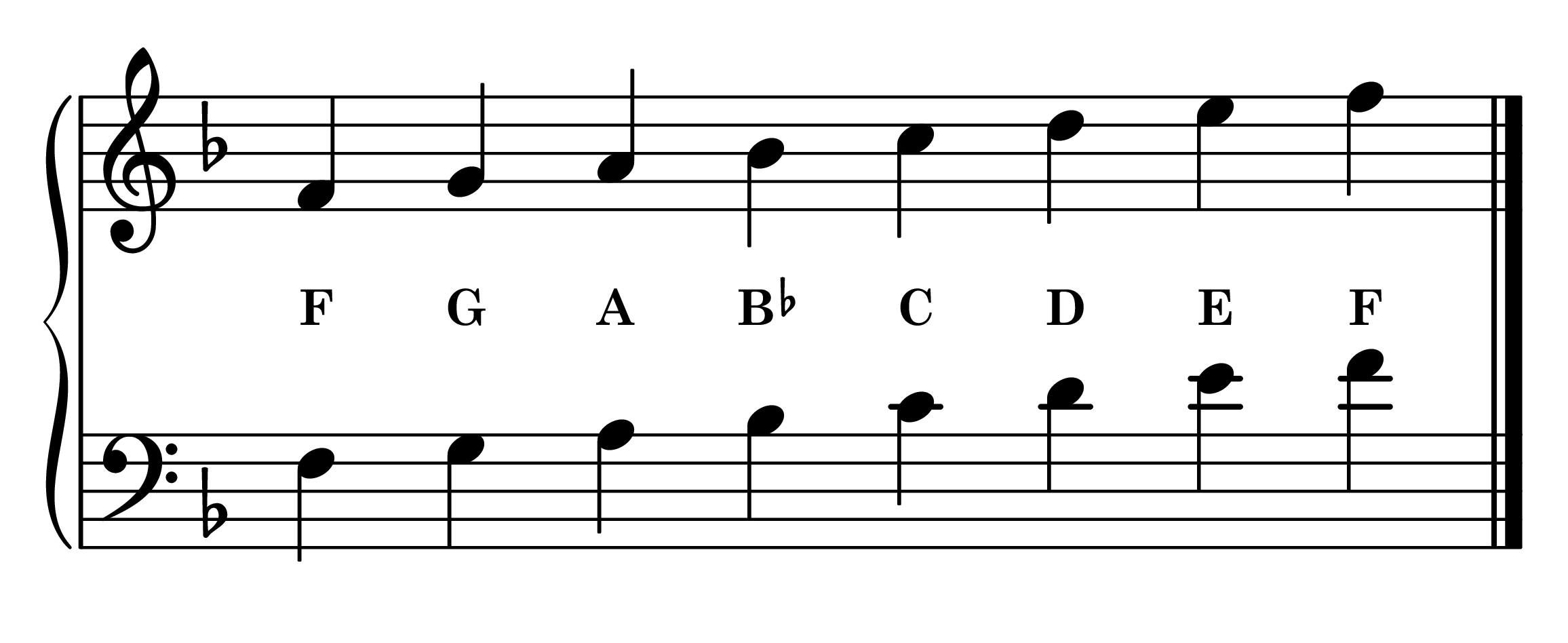
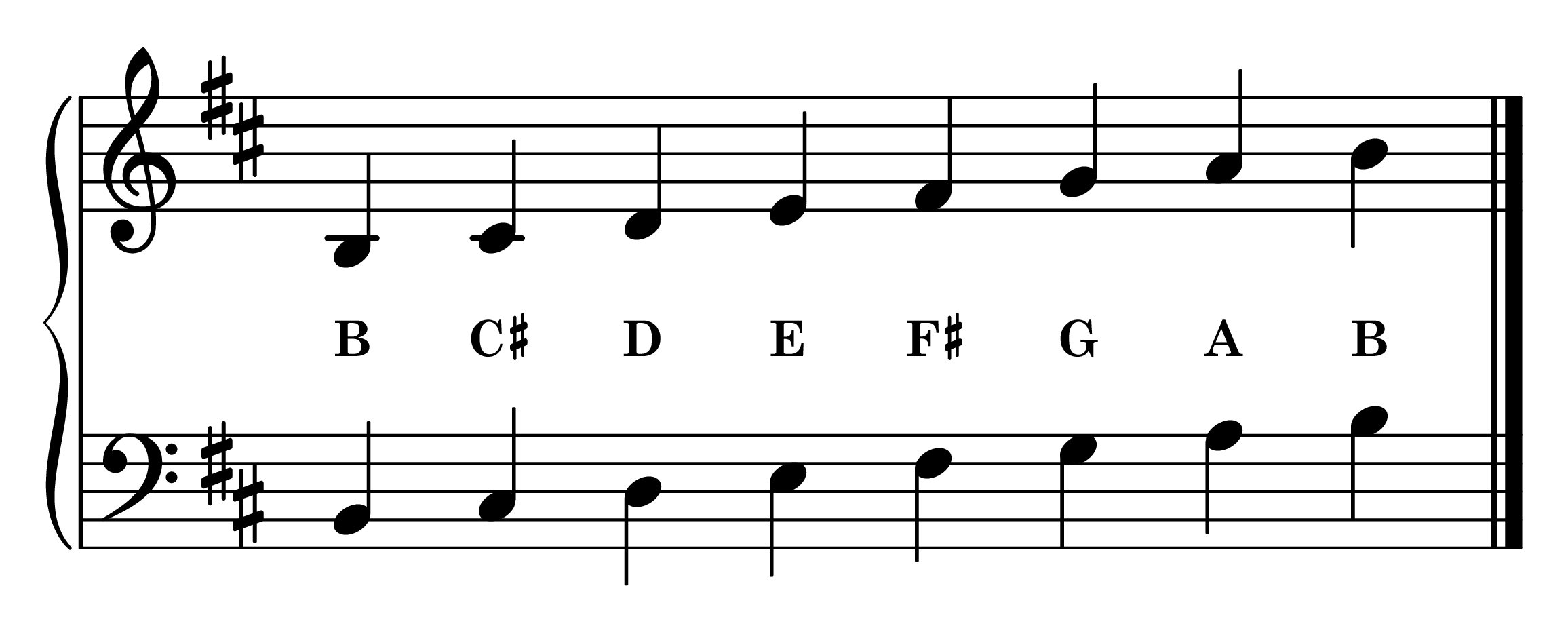
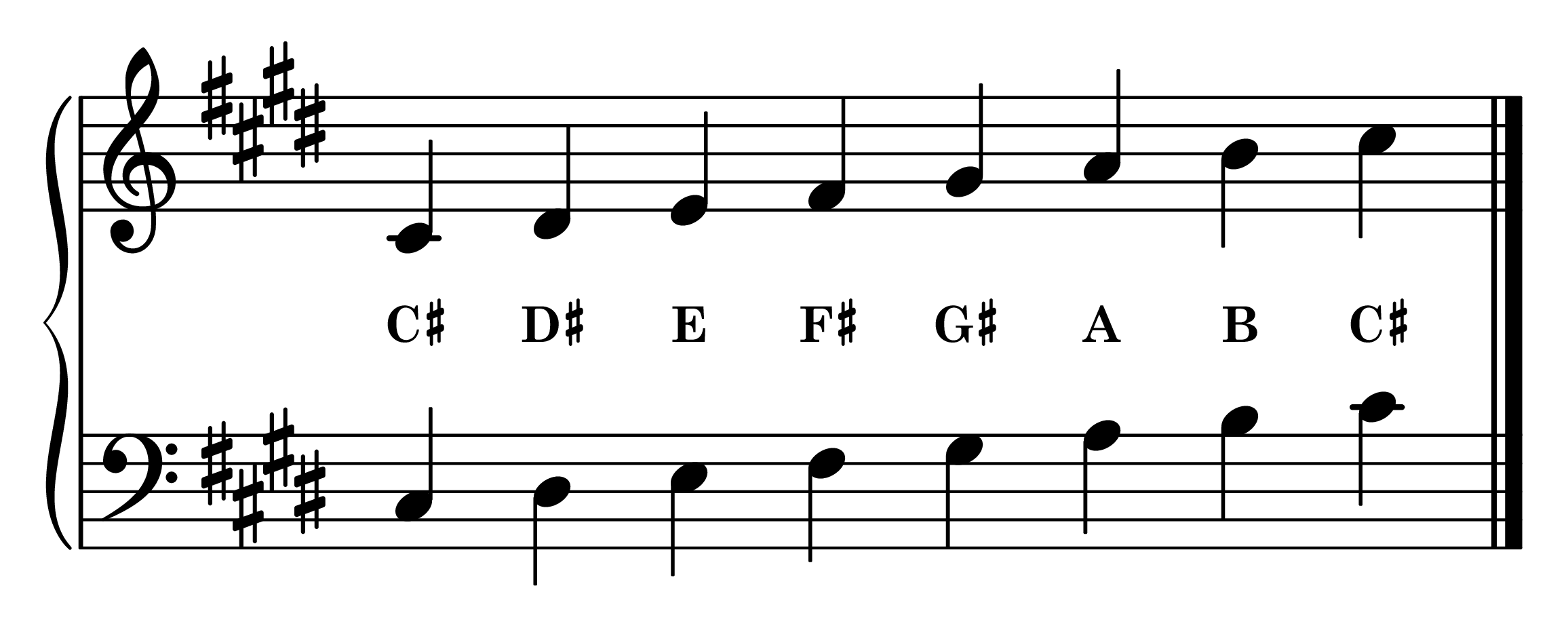
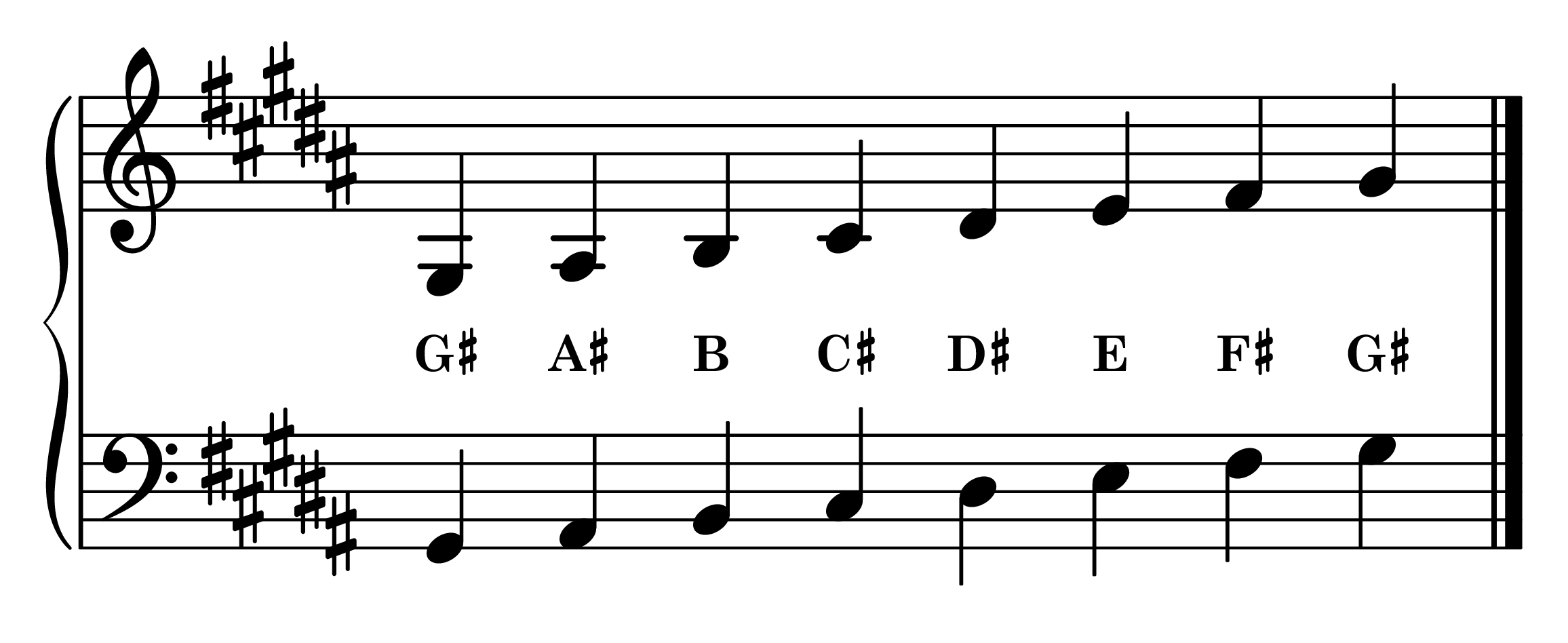
| Staff Layout | 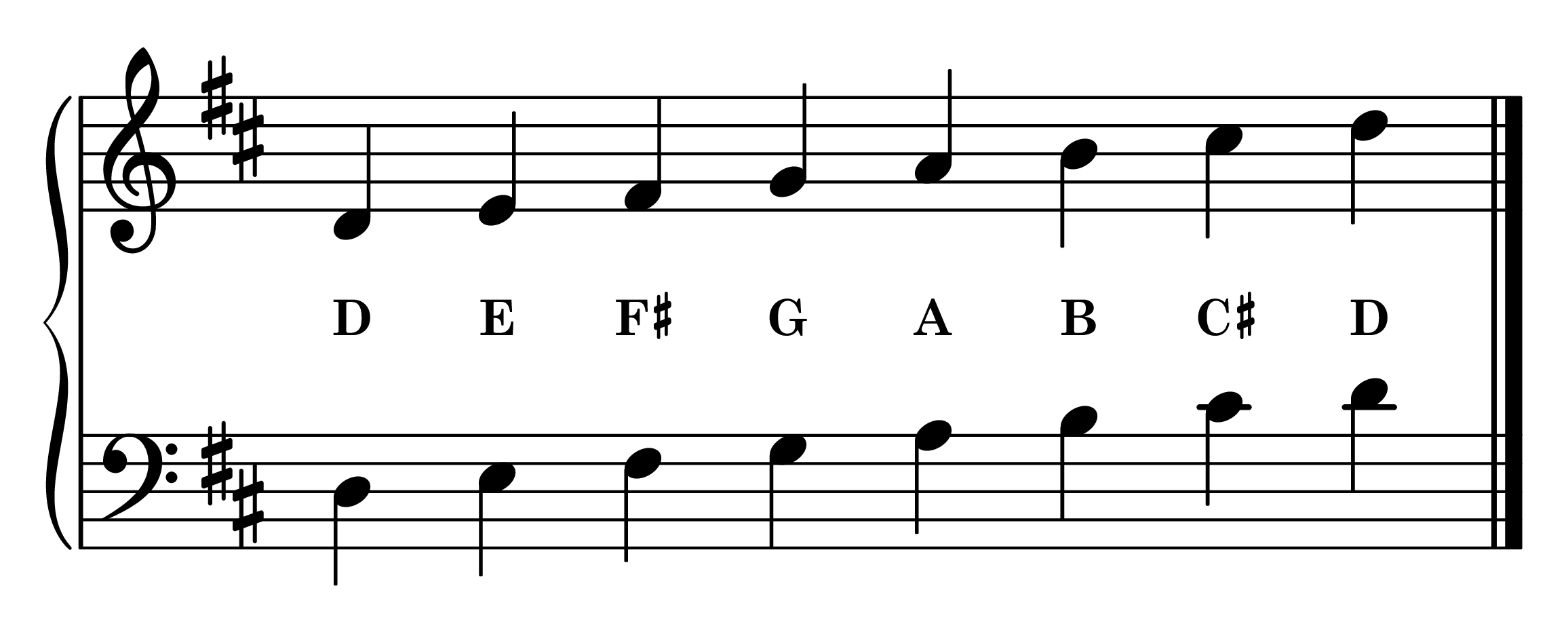 |
| Key Signature | Two Sharps (F♯, C♯) |
| Notes of Scale | D, E, F♯, G, A, B, C♯, D |
| RH Fingering | 1 2 3 - 1 2 3 4 - 5 |
| LH Fingering | 5 - 4 3 2 1 - 3 2 1 |
| Relative Scale | B Minor Scale |
| Parallel Scale | D Minor Scale |
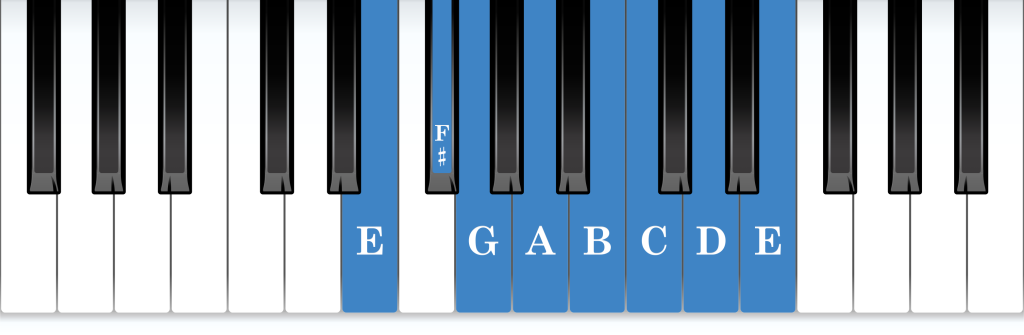
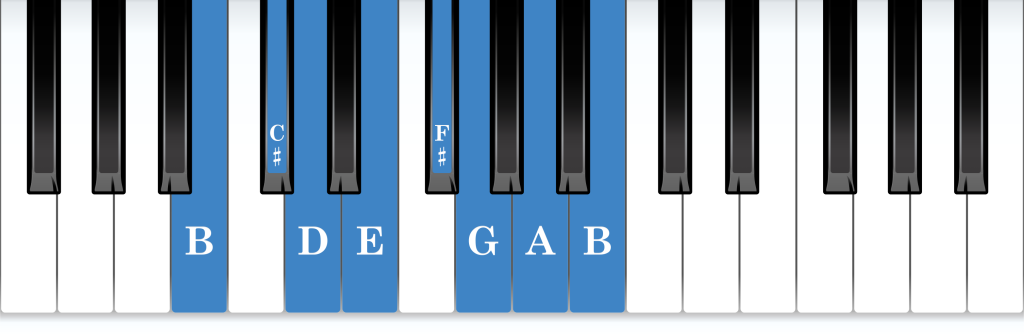
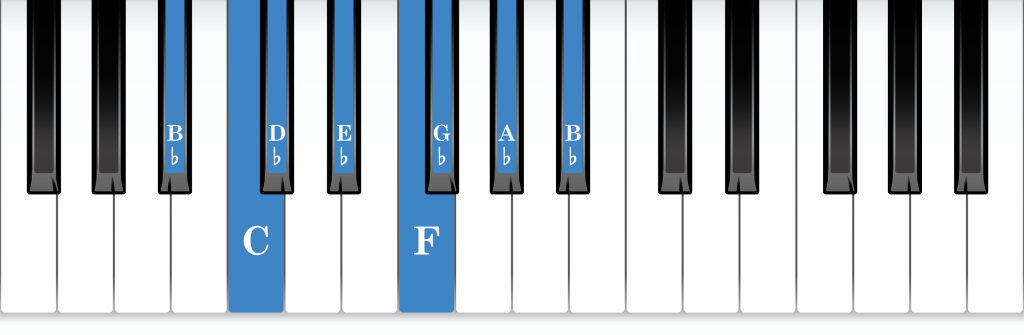
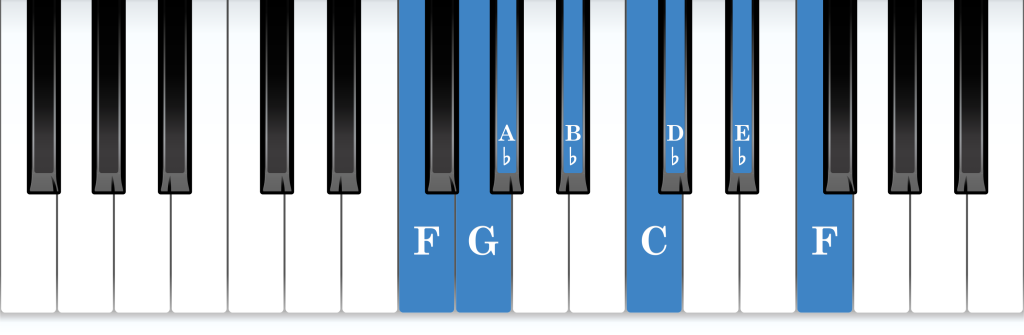
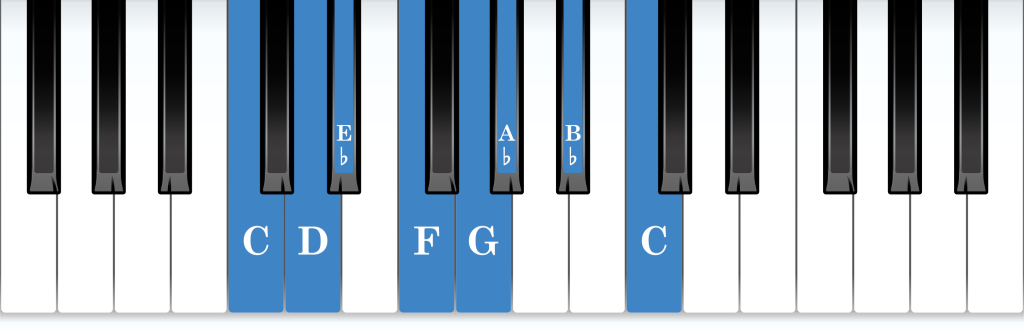
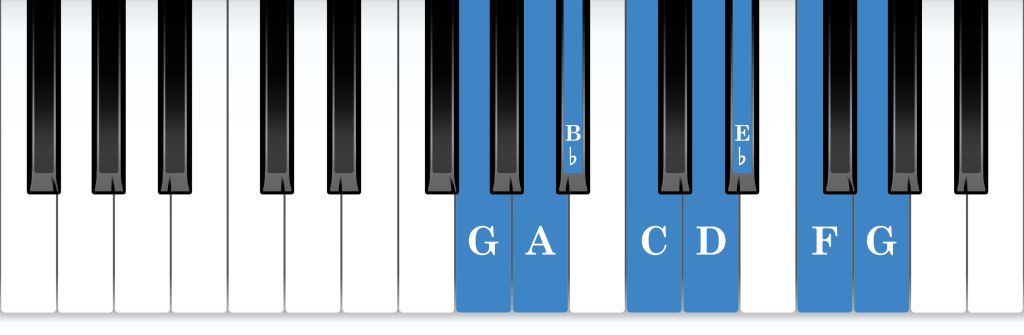
The D major scale is mostly white keys, with two bumps: F-sharp partway through the lower half, and C-sharp just before the top. Those two black keys give each half of the scale its own landmark.
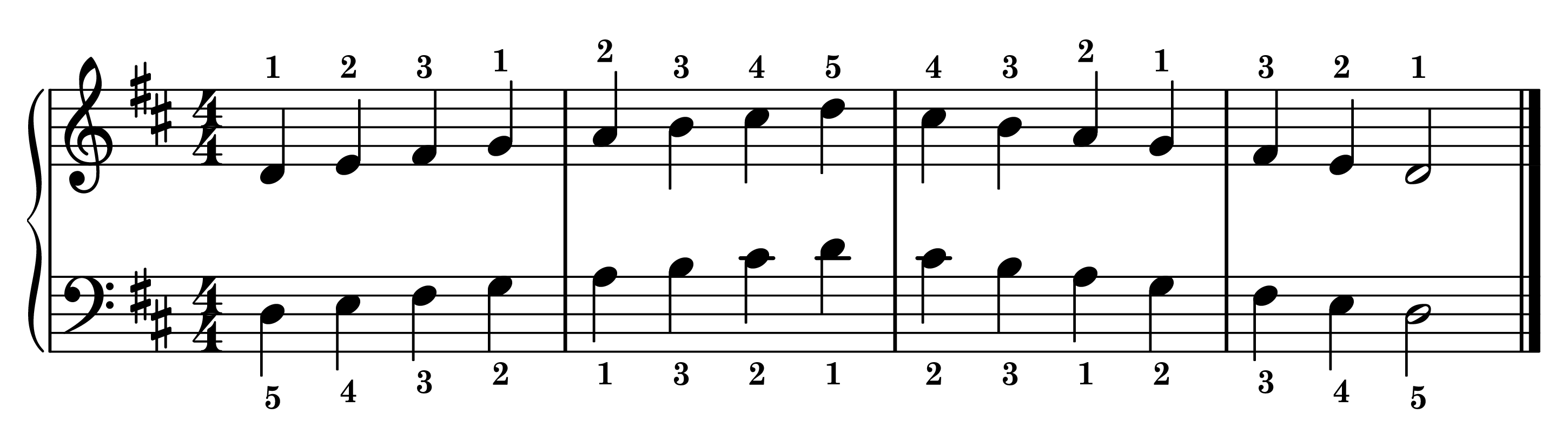
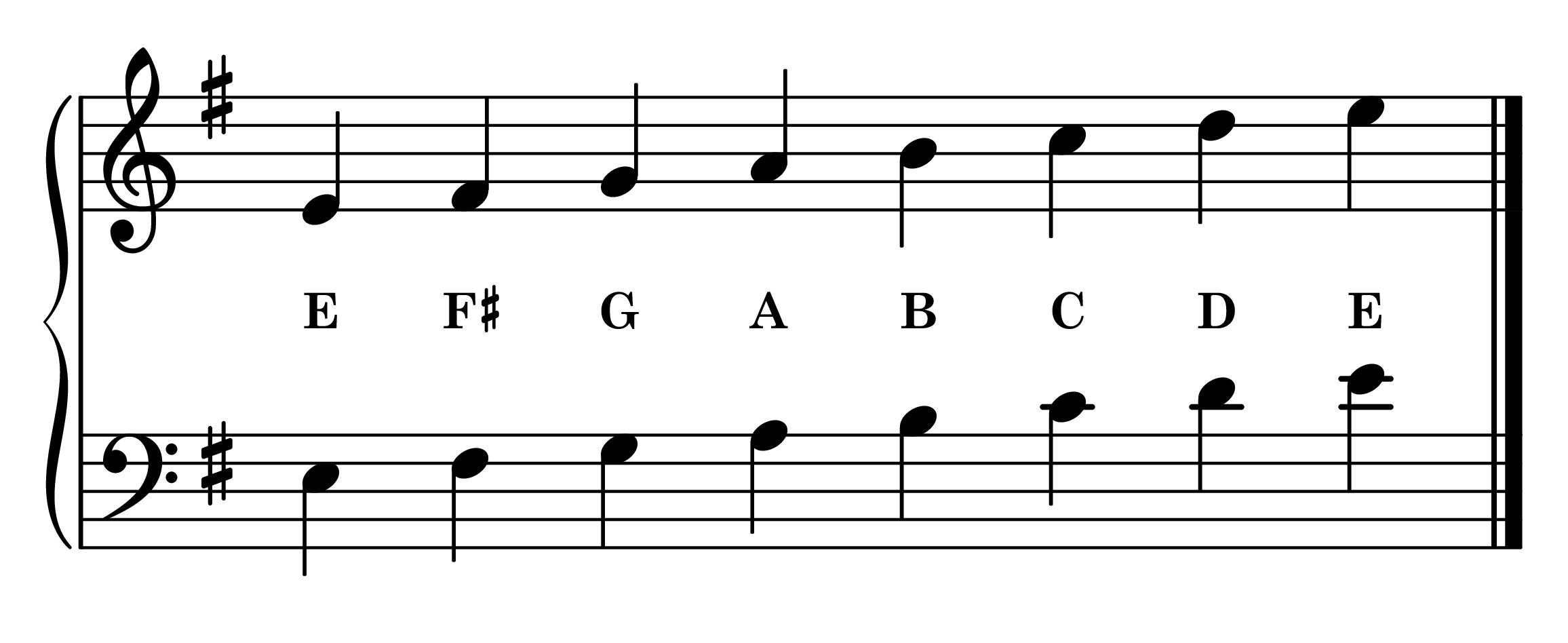
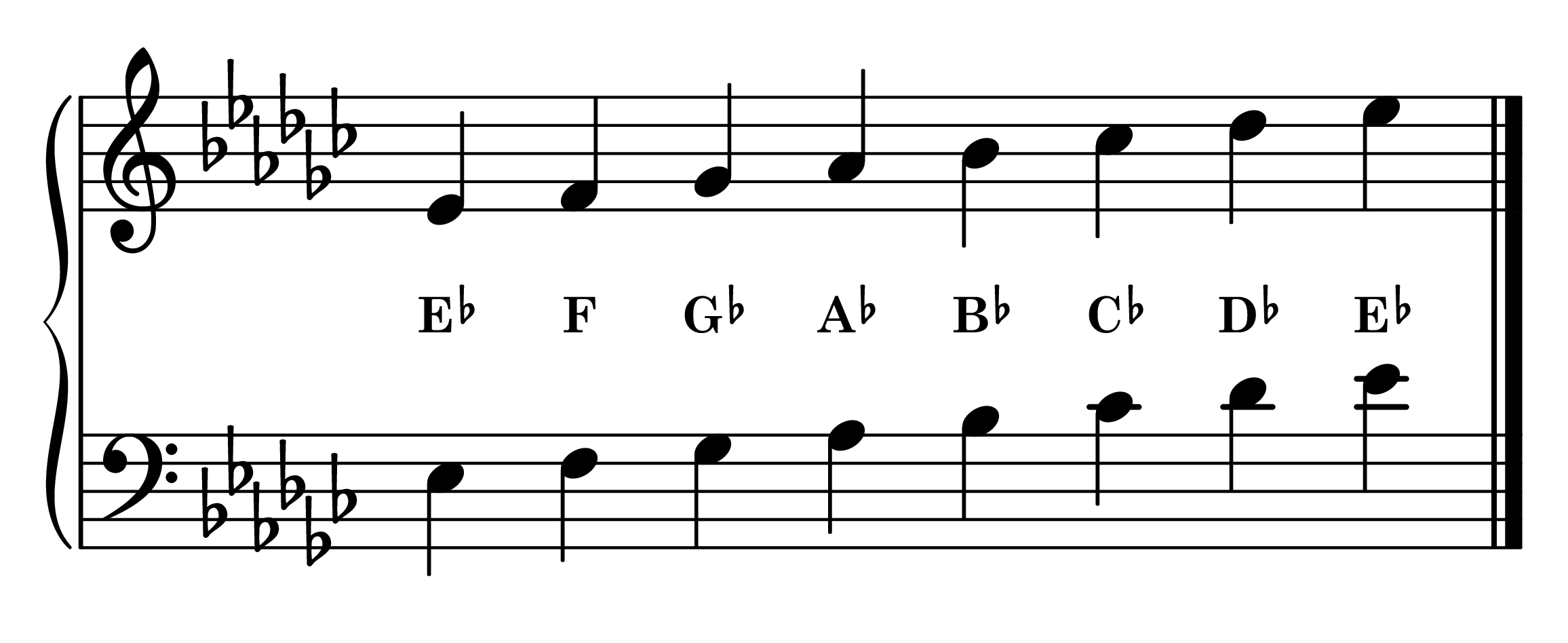
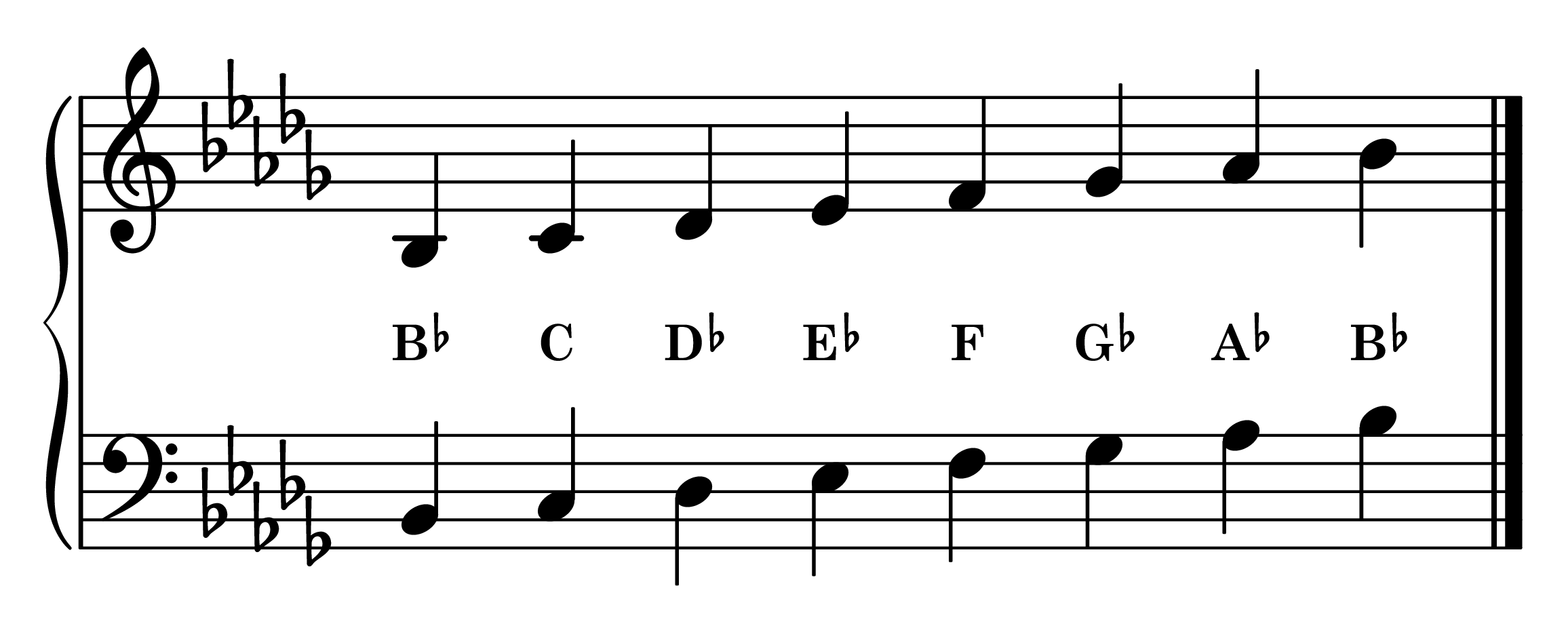
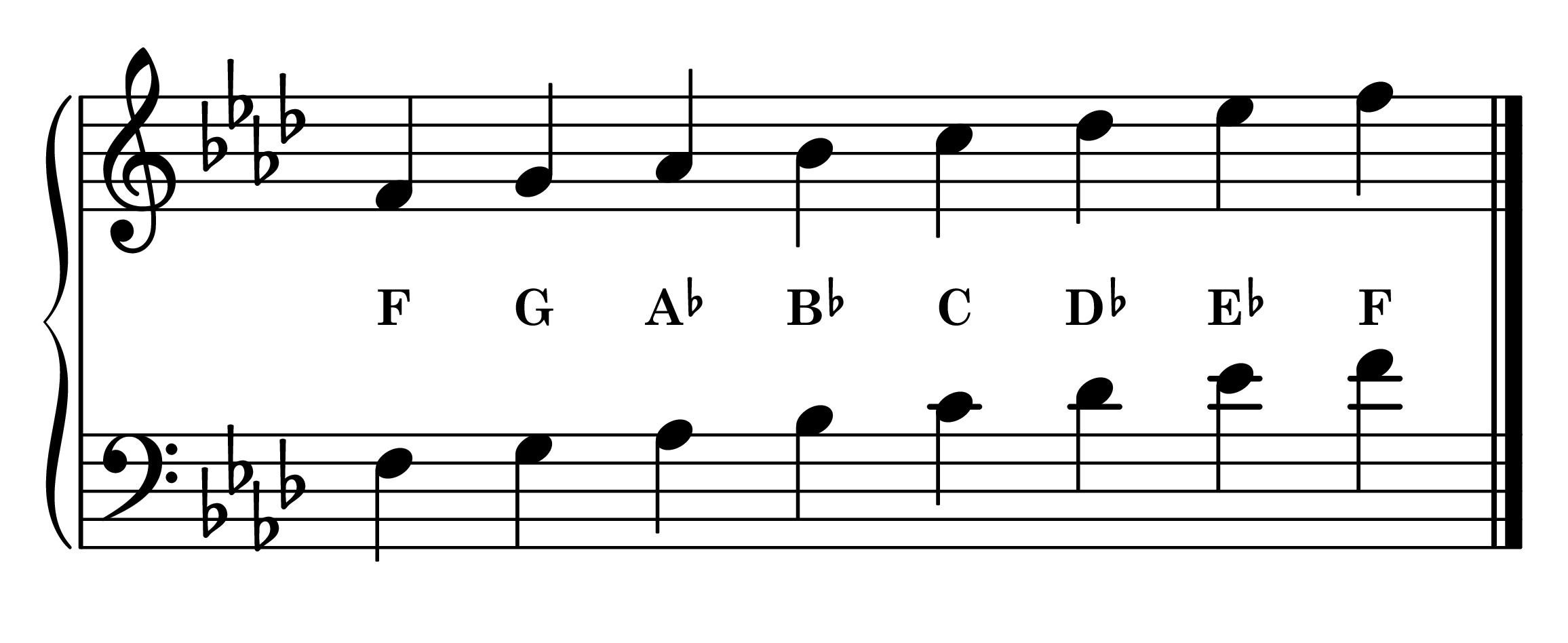
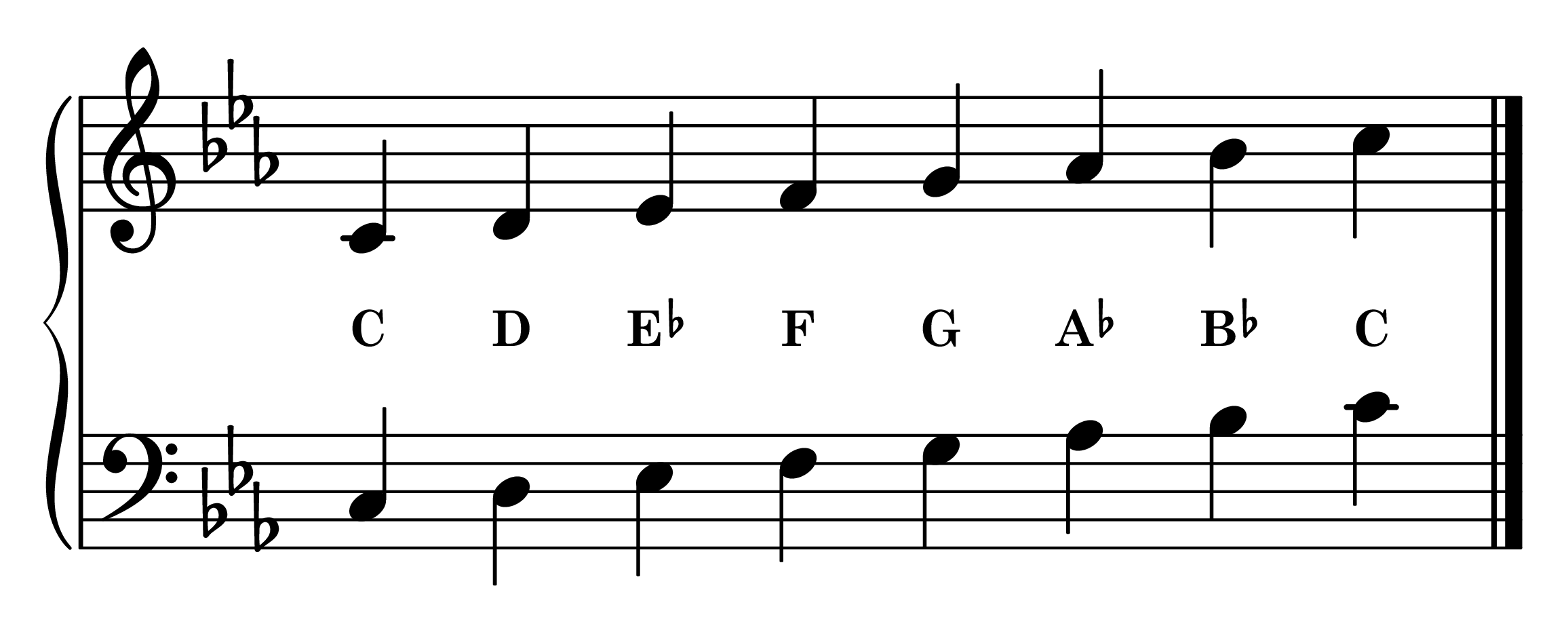
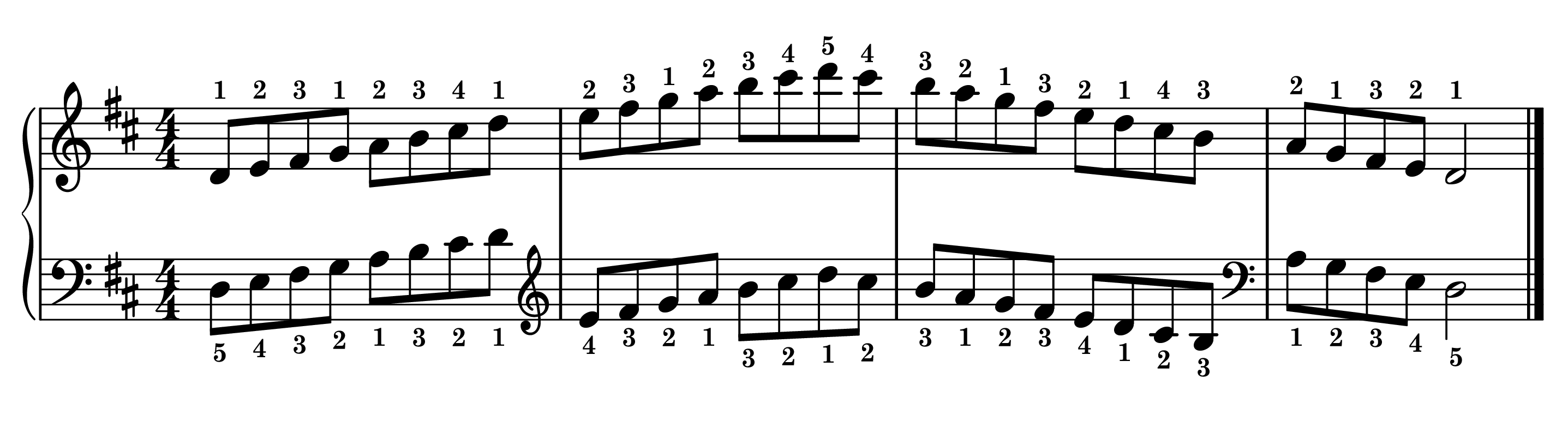
Here is the D major scale written out for both hands, one octave up and down.
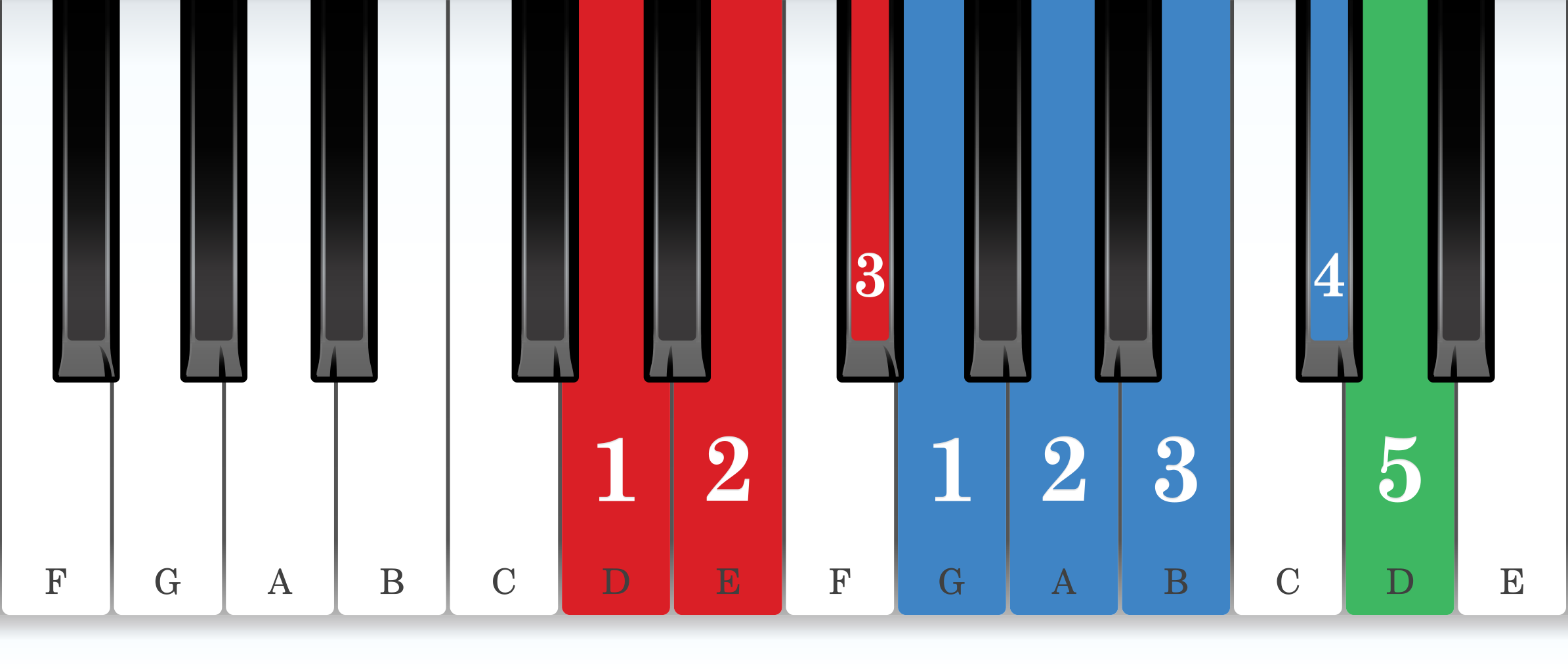
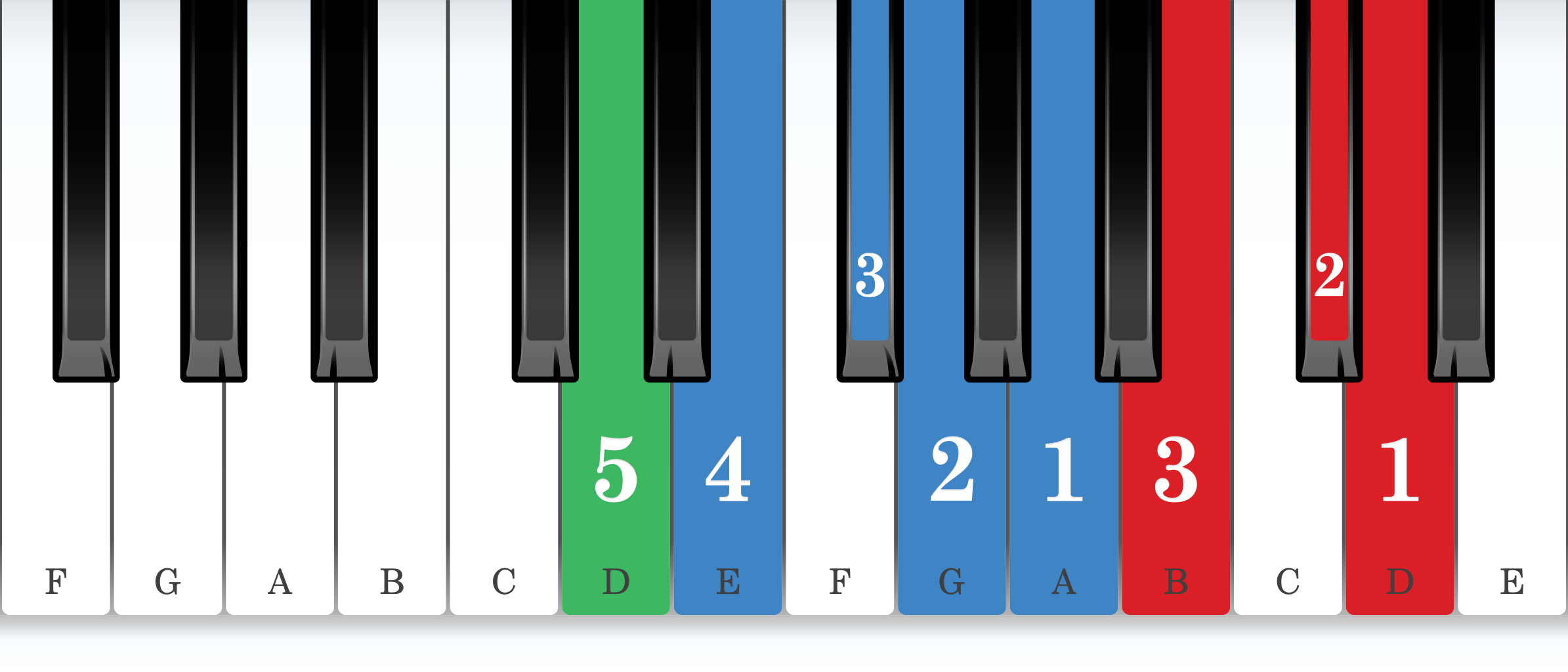
Let’s take each hand separately first. It helps to think of the scale in terms of its core positions, the two groups of notes the hand can cover without moving: three notes played with 1-2-3 (red on the charts) and four played with 1-2-3-4 (blue).
The fingering is the same as C and G major. In the right hand, D, E, and F-sharp form the three-note group and G, A, B, and C-sharp the four-note group, with the top D on the fifth finger (green). In the left hand, the bottom D takes the fifth finger, E, F-sharp, G, and A form the four-note group, and B, C-sharp, and D the three.
A useful way to work with the core positions is in three stages:
When both hands play at once, their core positions overlap in different places, and trying to track both at the same time tends to get in the way. Sync points are more useful here: the moments where the hands share a finger, or where the fingers mirror each other.
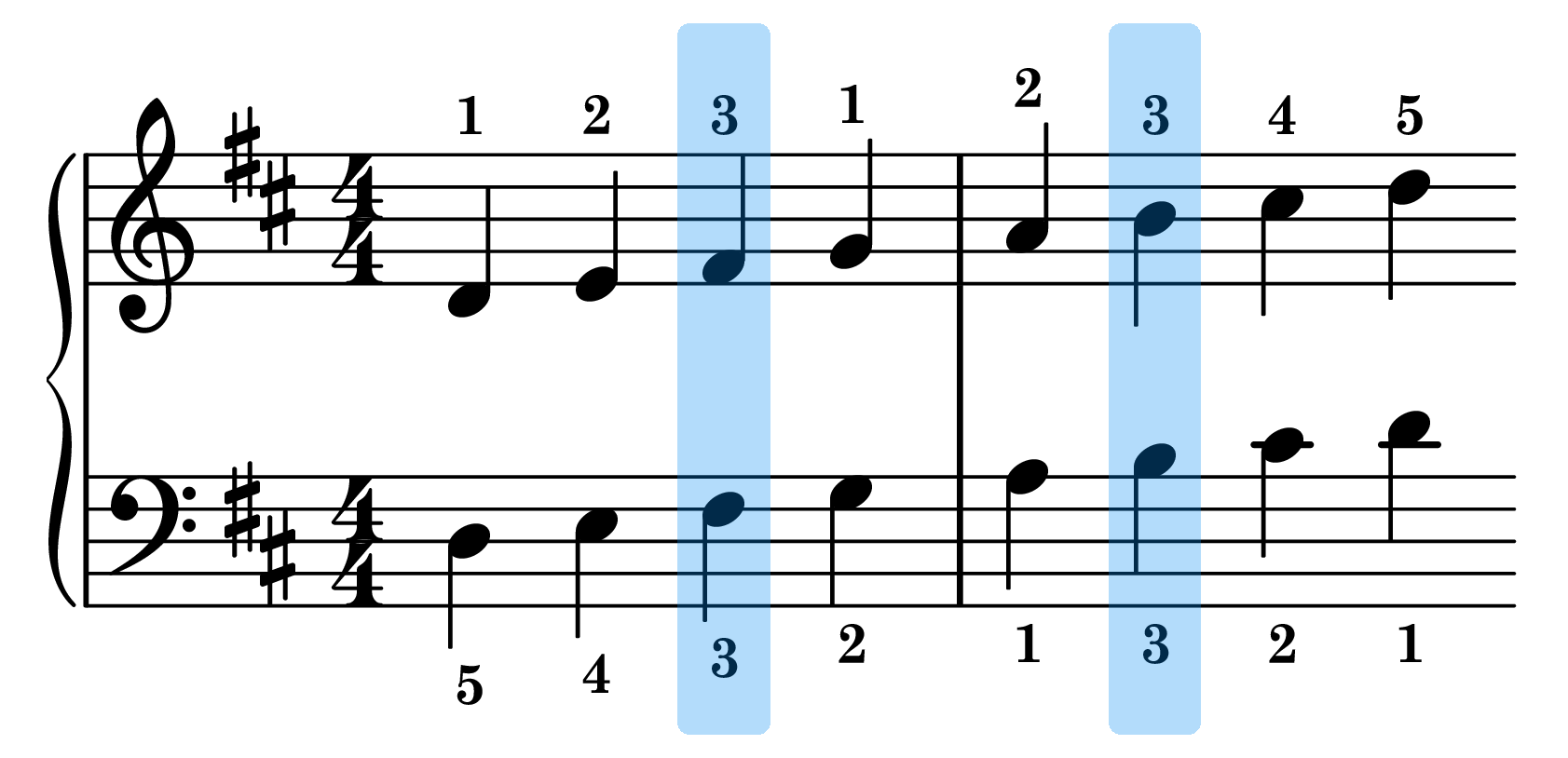
The 3rd fingers meet on F-sharp and on B.
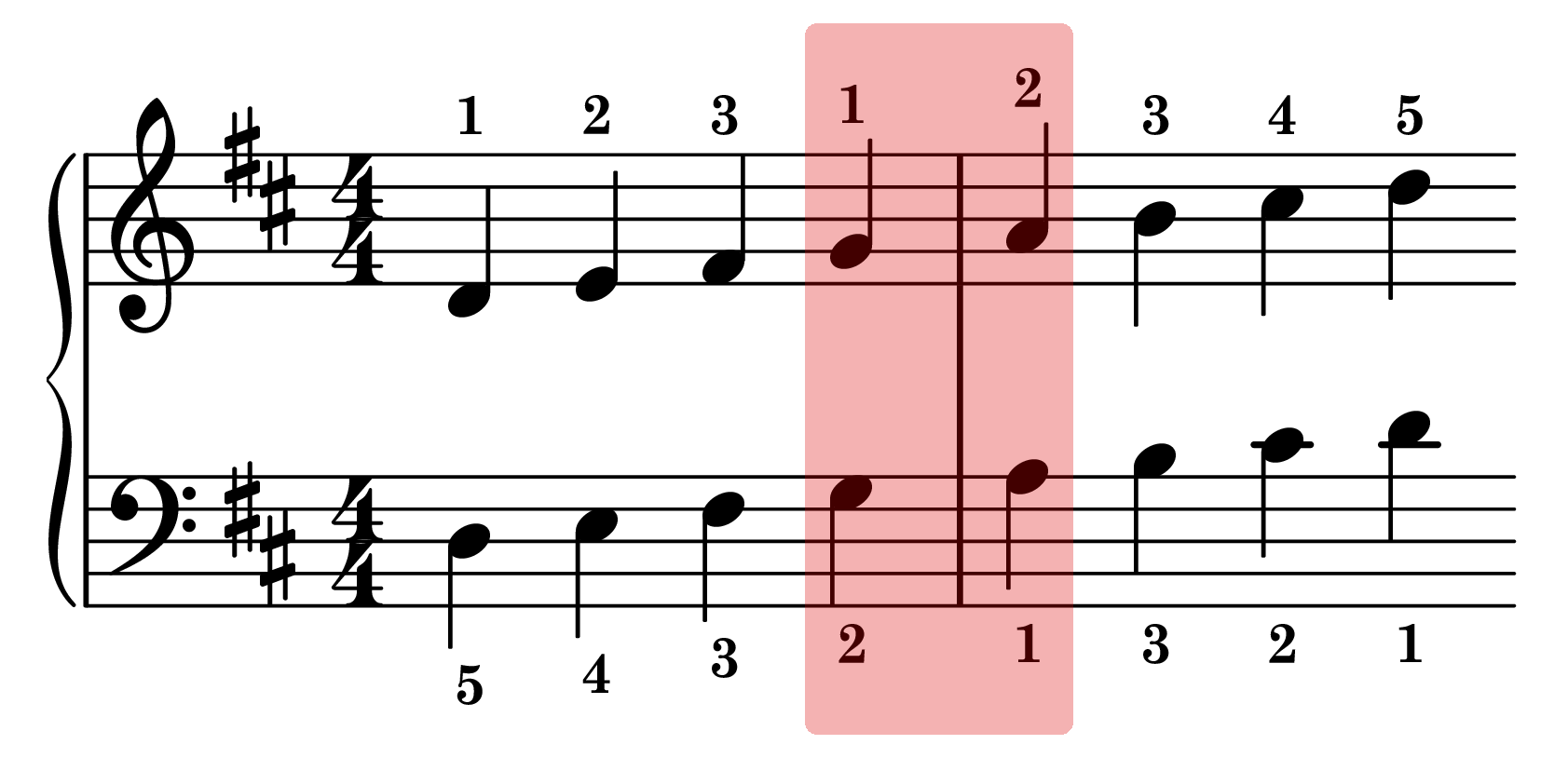
The thumbs come together on G and A, where fingers 1 and 2 form a mirror image, the “crab claw”, right in the middle of the scale.
The same three stages work for sync points:
Once one octave feels consistent, we can extend the scale further up the keyboard. In the right hand, instead of finishing on the fifth finger, the thumb passes under to D again and the core positions repeat until the top. In the left hand, the core positions simply continue upward; on the way down, the thumb takes the place of the fifth finger on each D until the very bottom, where the fifth finger finishes the scale.
If the black keys keep arriving late, or white keys sound in their place, the hand is usually sitting too far out on the white keys. Moving the whole hand a little further in, so the fingertips sit near where the black and white keys meet, tends to solve it.
Coming down in the left hand, it’s easy to put the fourth finger on A instead of tucking the thumb under to begin the next position. Letting the thumb anticipate that change a little earlier keeps the fingering on track.
Other techniques related to the D major piano scale:
No questions on this lesson yet. Be the first to ask one.
Continue learning with our full library of piano scale lessons