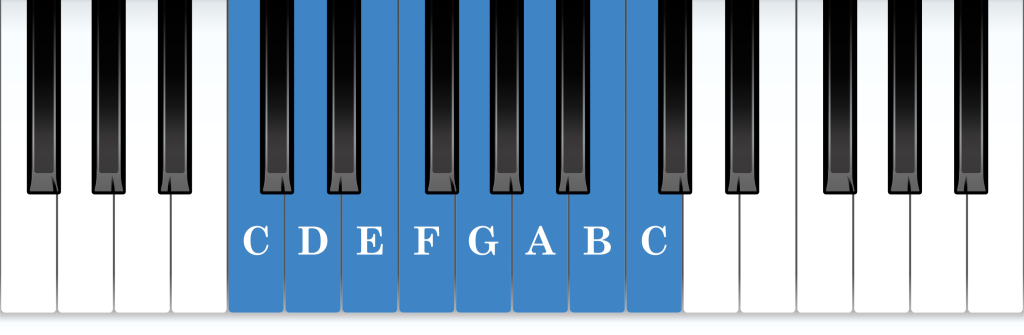
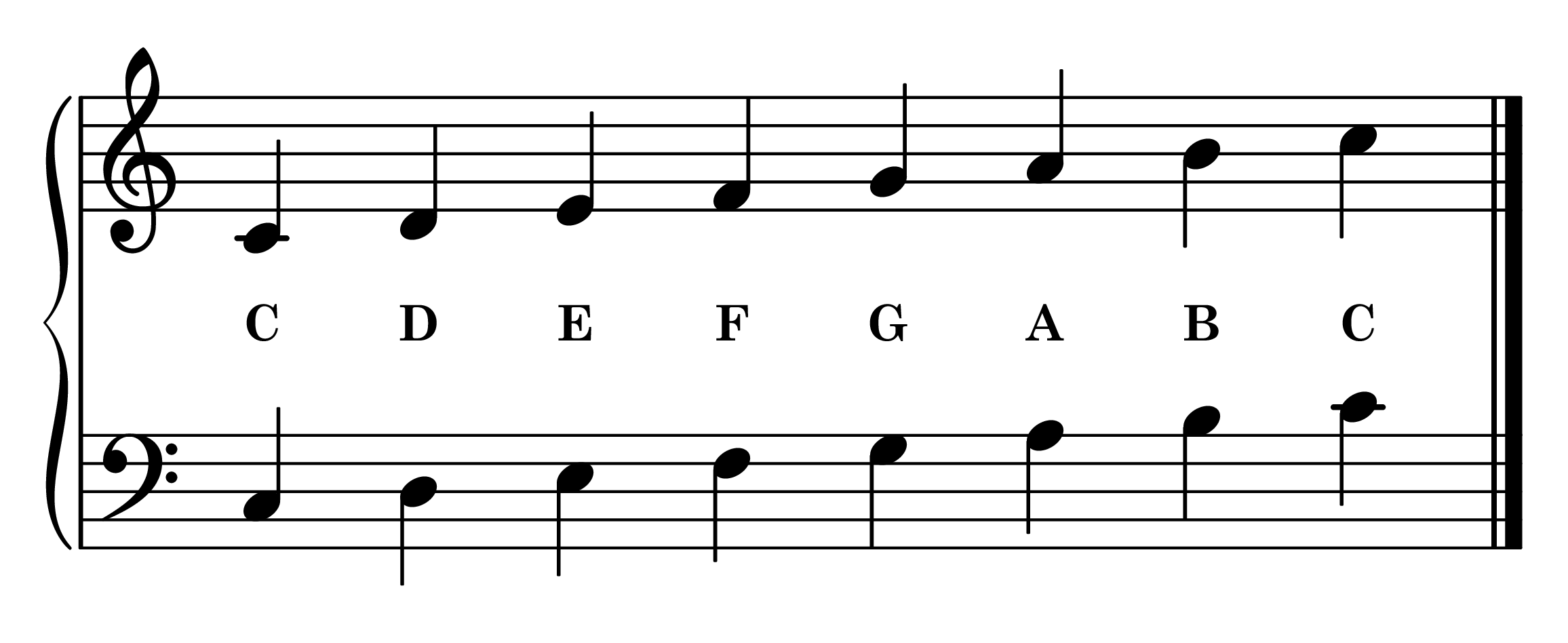
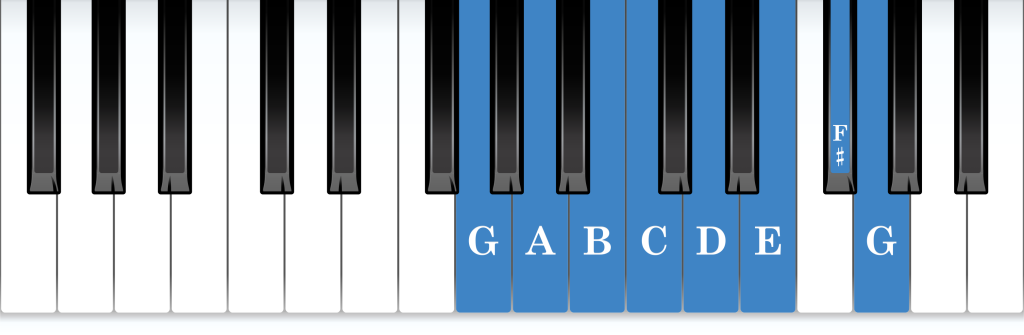
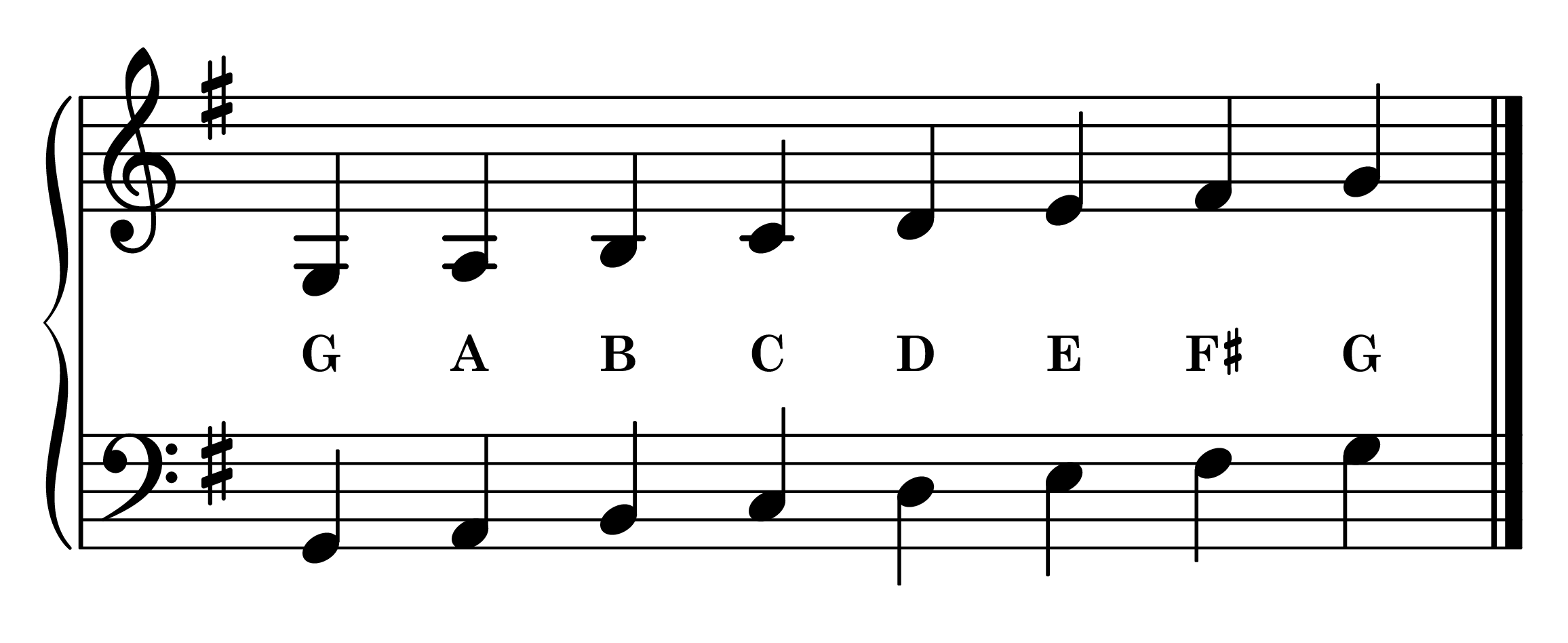
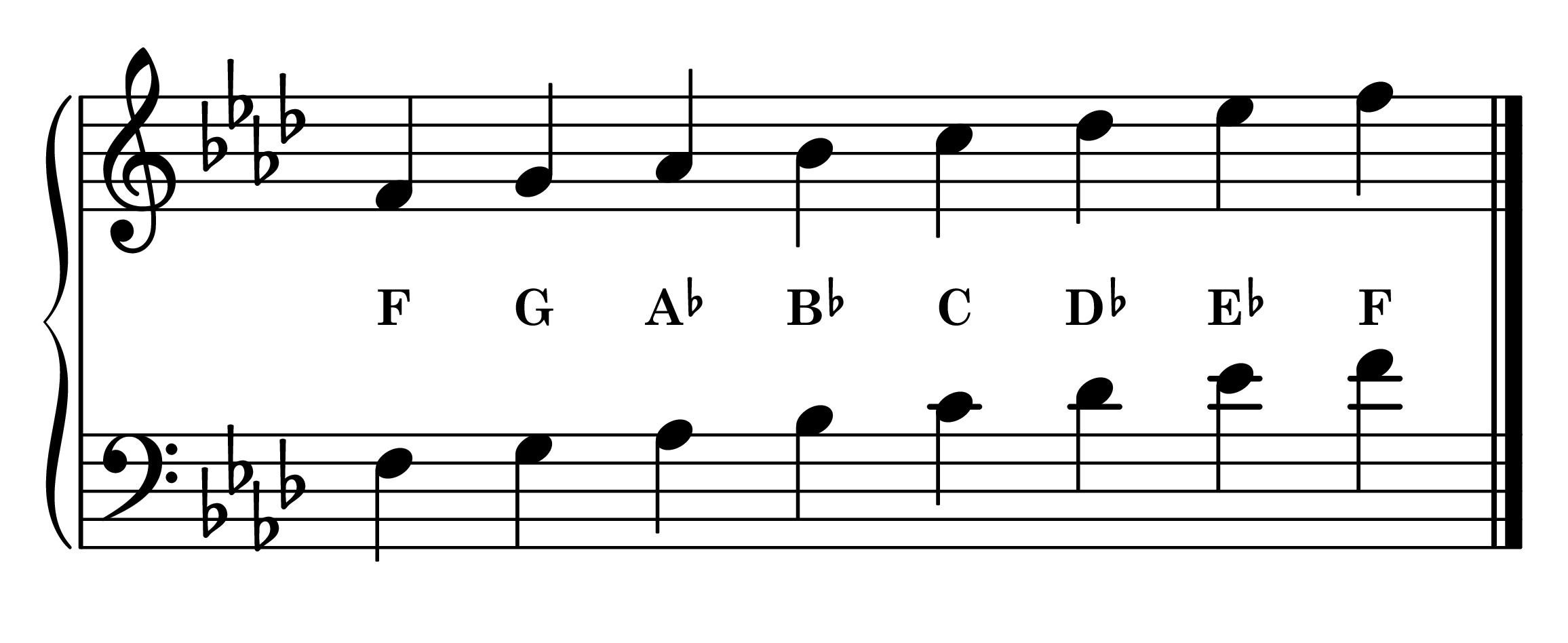
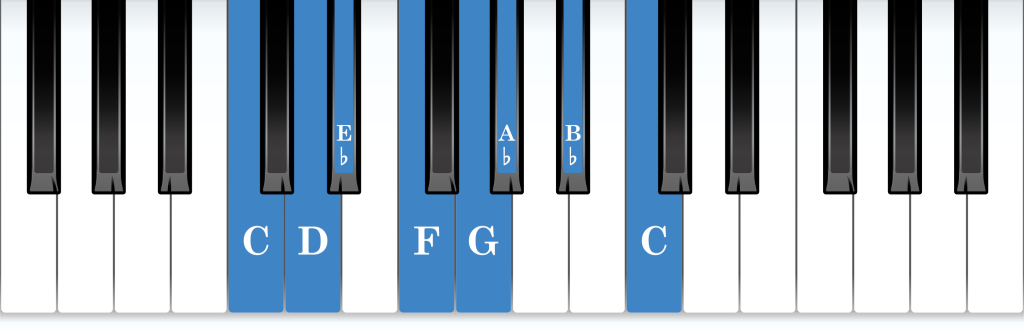
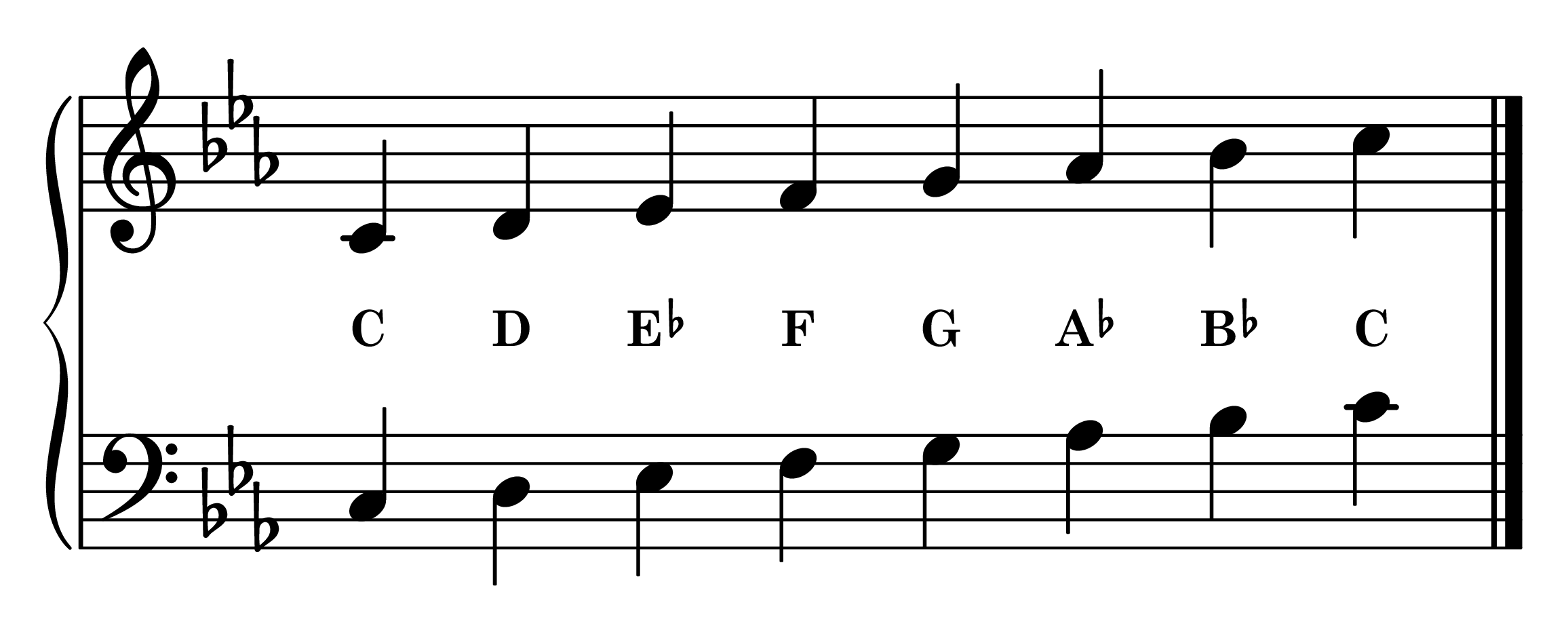
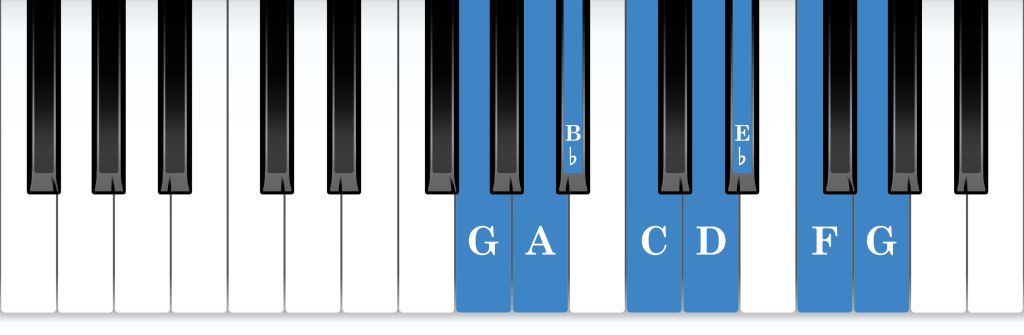
Questions and answers
No questions on this lesson yet. Be the first to ask one.
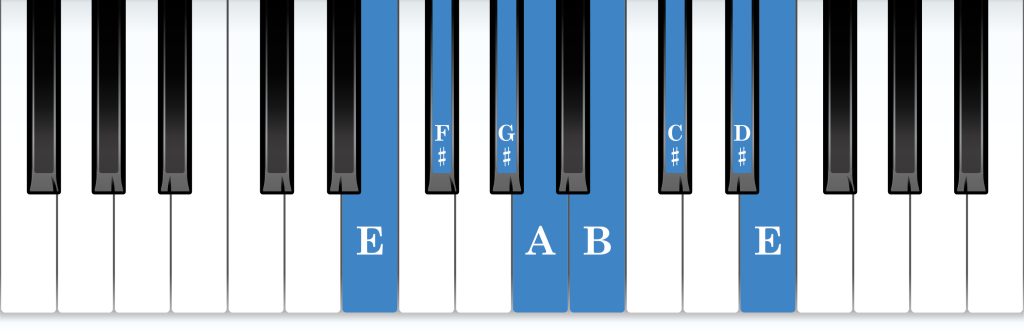
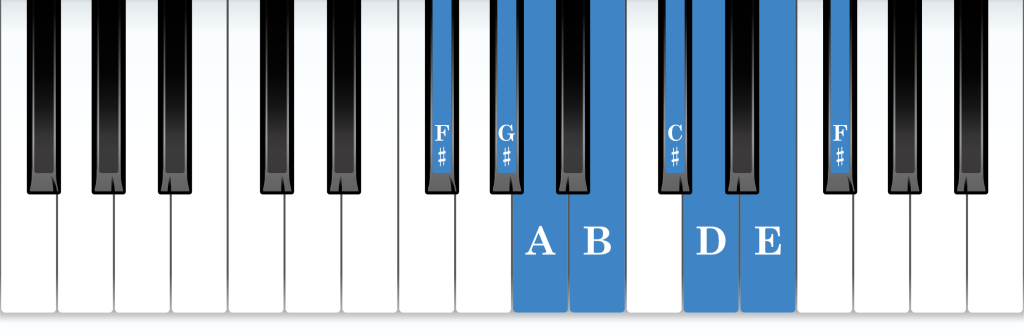
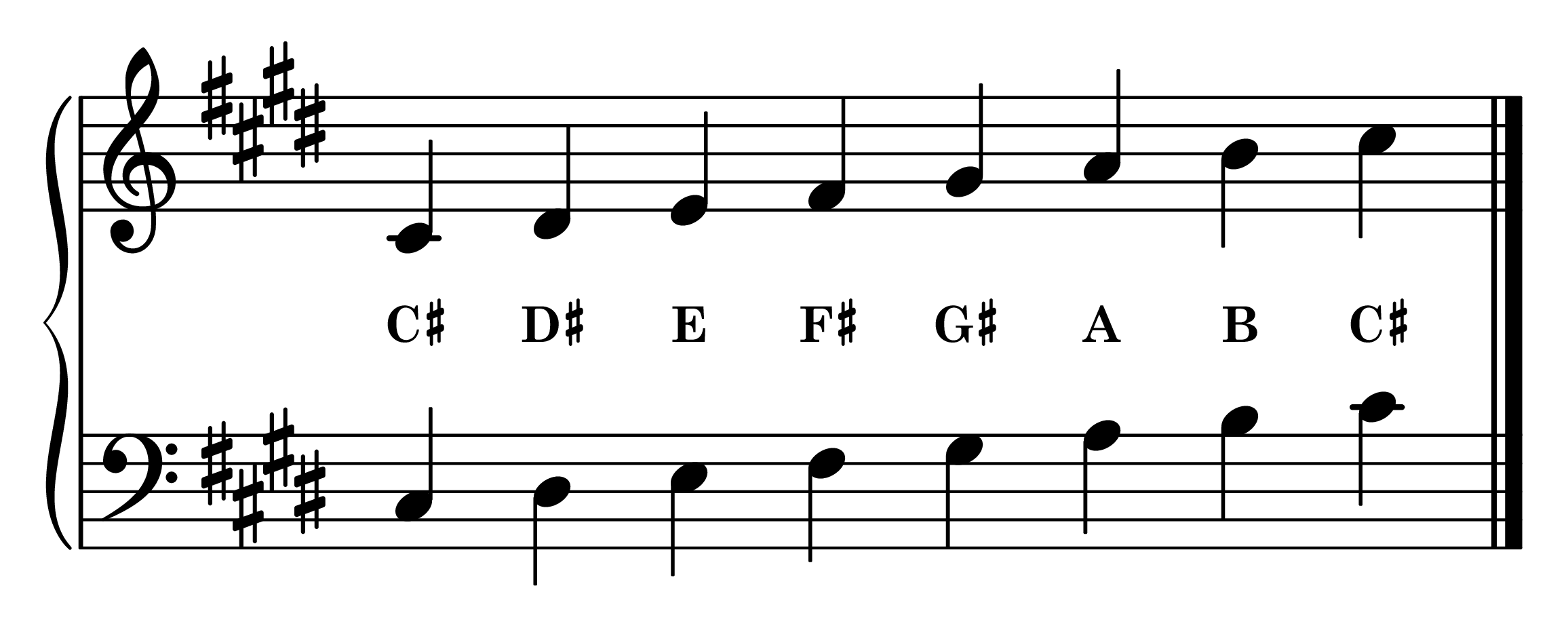
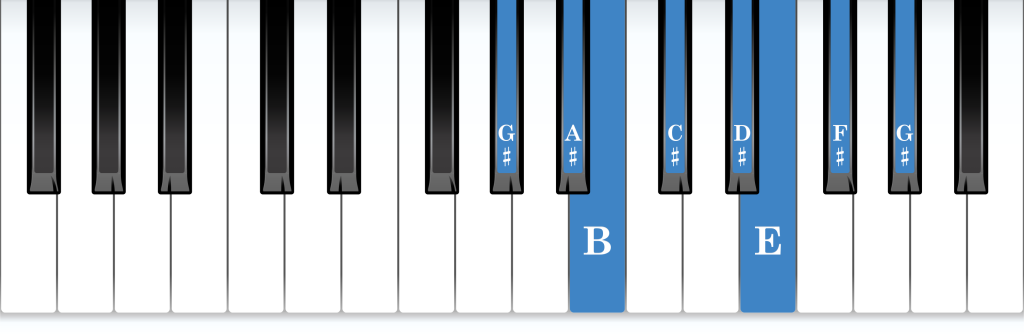
The B major scale has five sharps, and only two white keys: B and E. The right hand uses the same fingering as C major, but the left hand starts on the fourth finger so that both thumbs land on the white keys. Let’s use those white keys as anchors and let the rest of the hand settle into the black keys.
| B Major Scale Overview | |
|---|---|
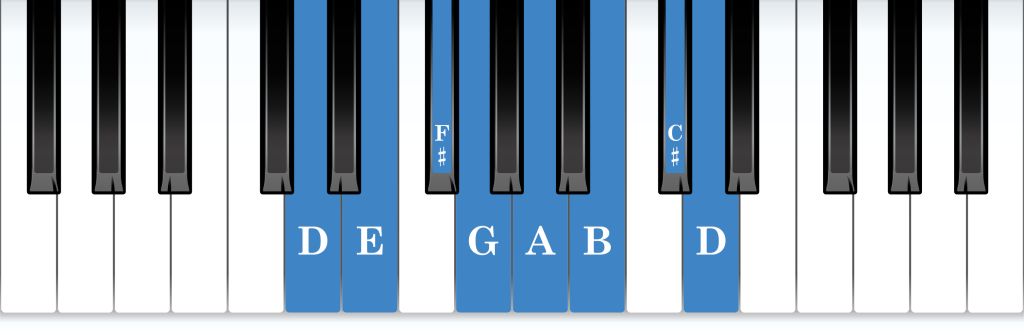
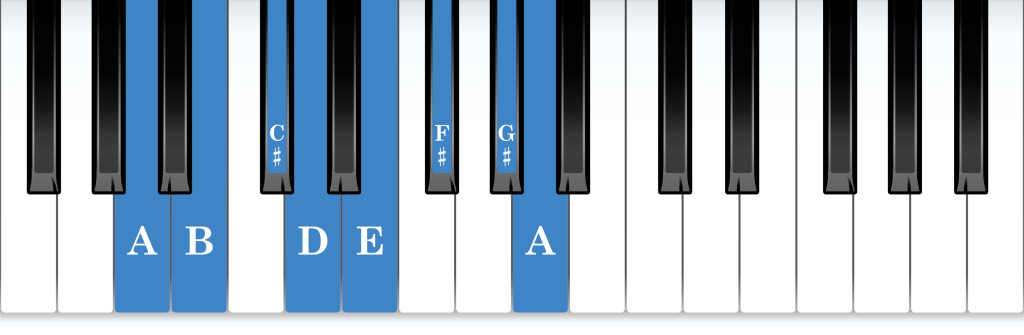
| Keyboard Layout | 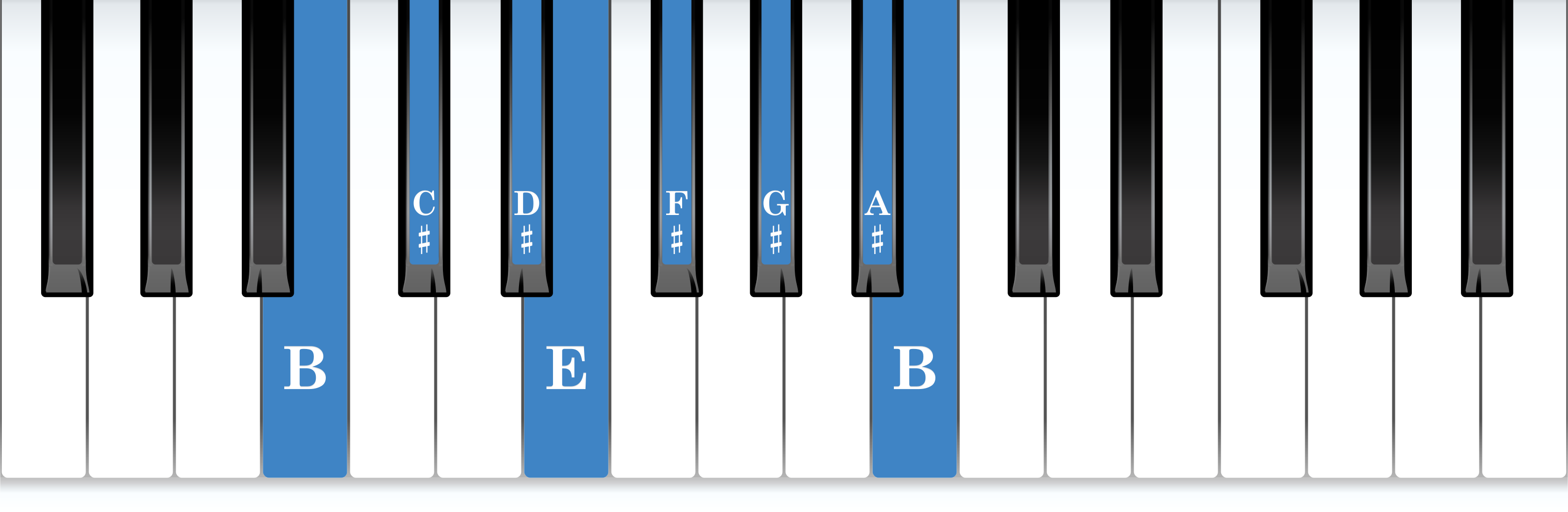 |
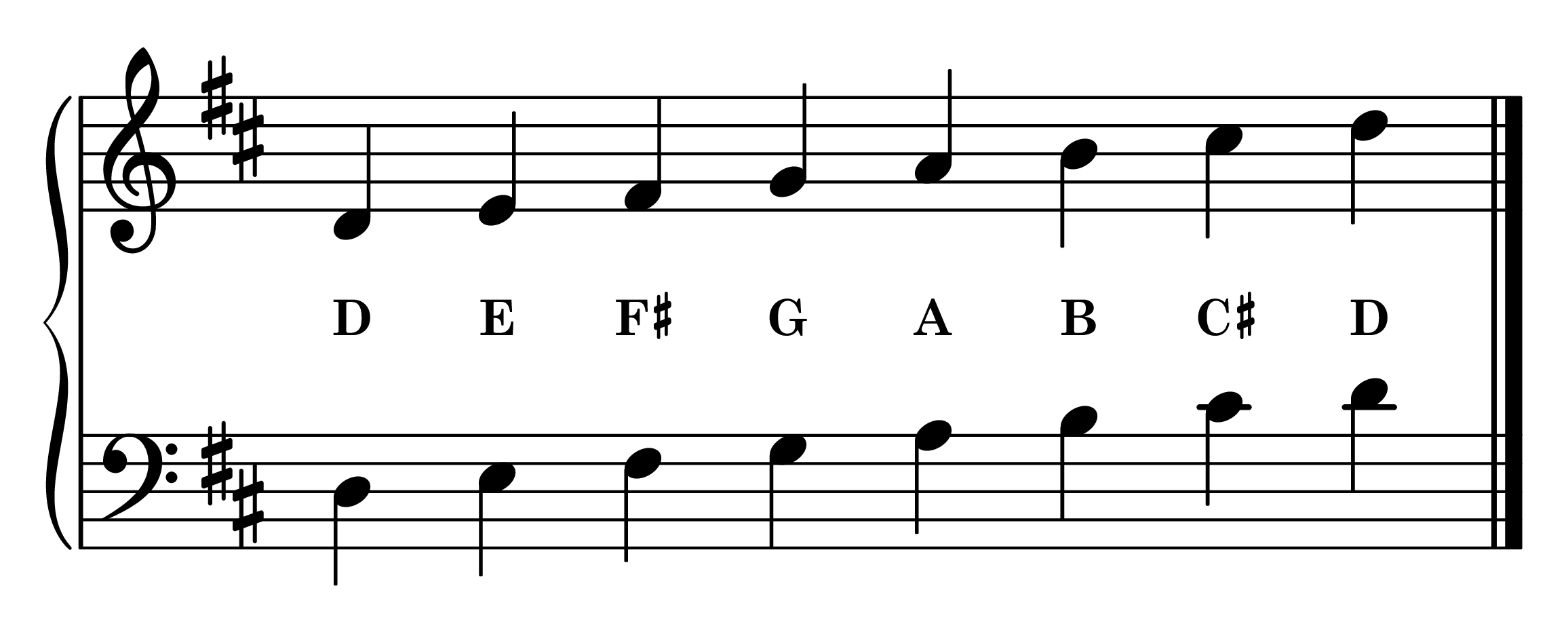
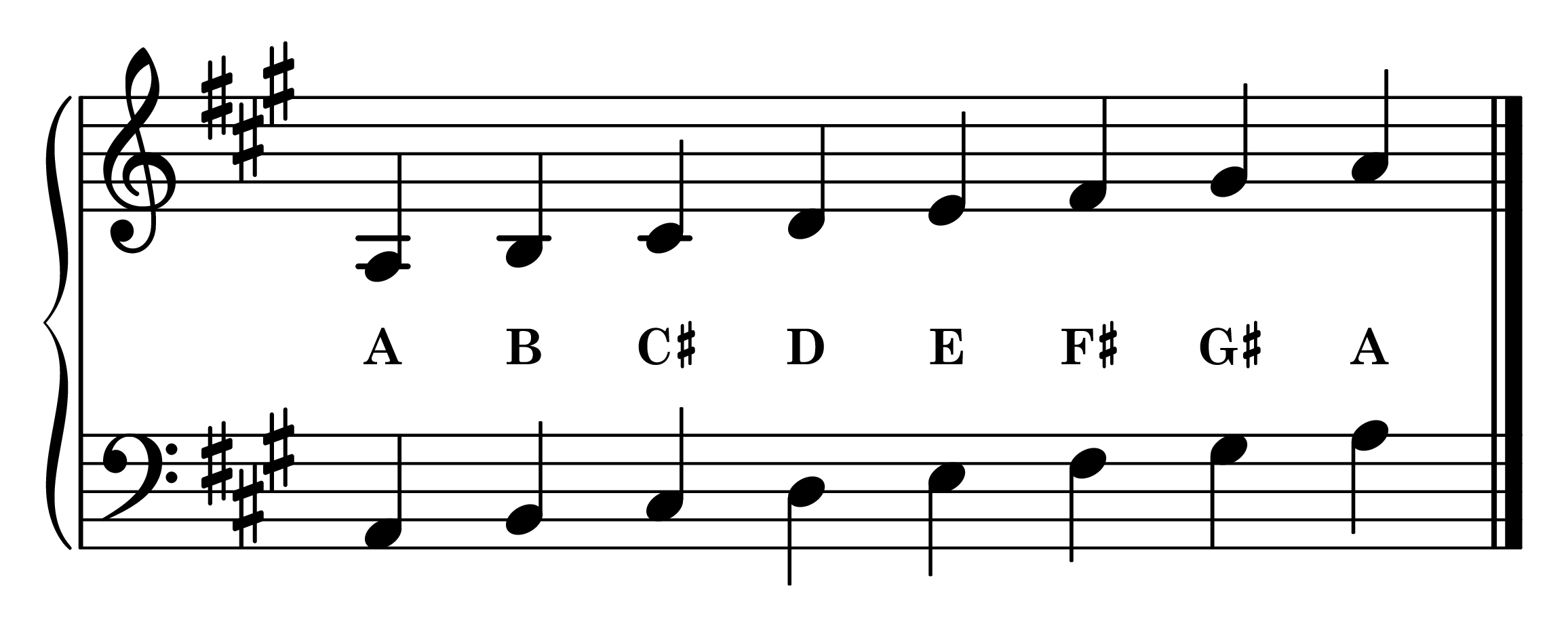
| Staff Layout | 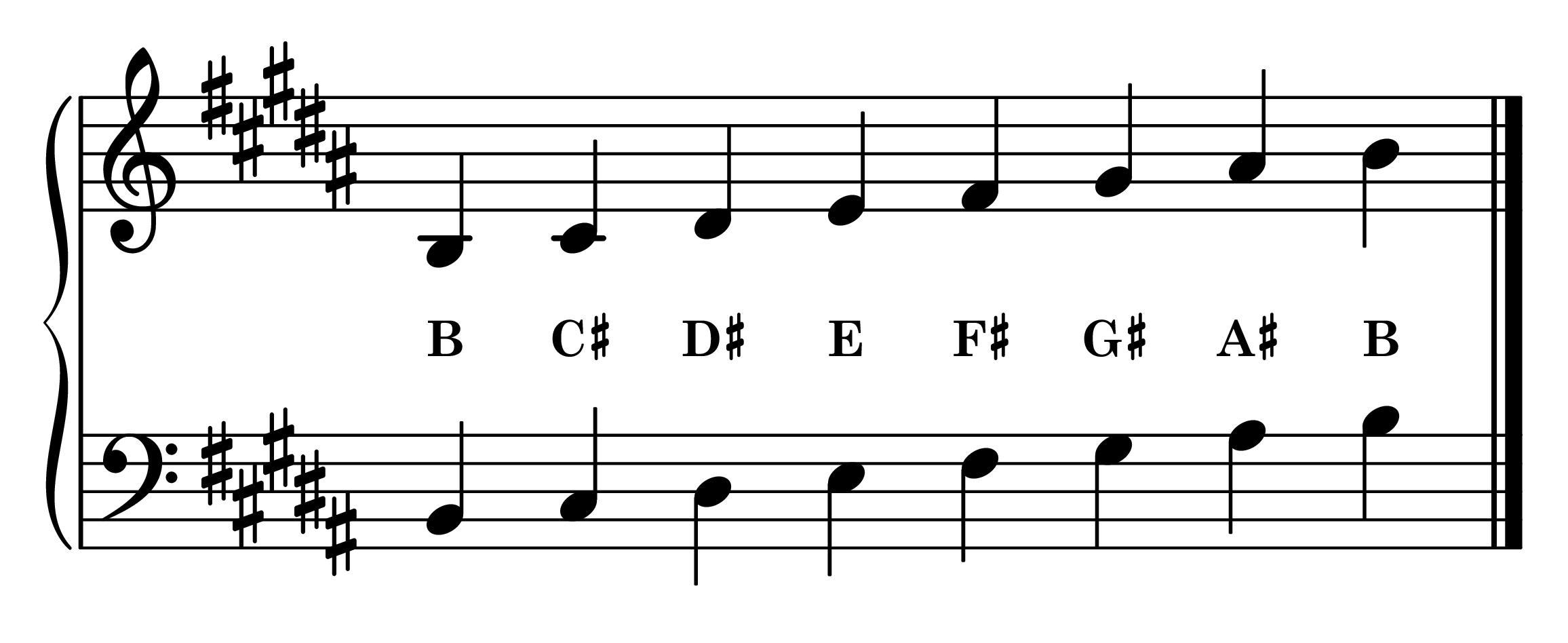 |
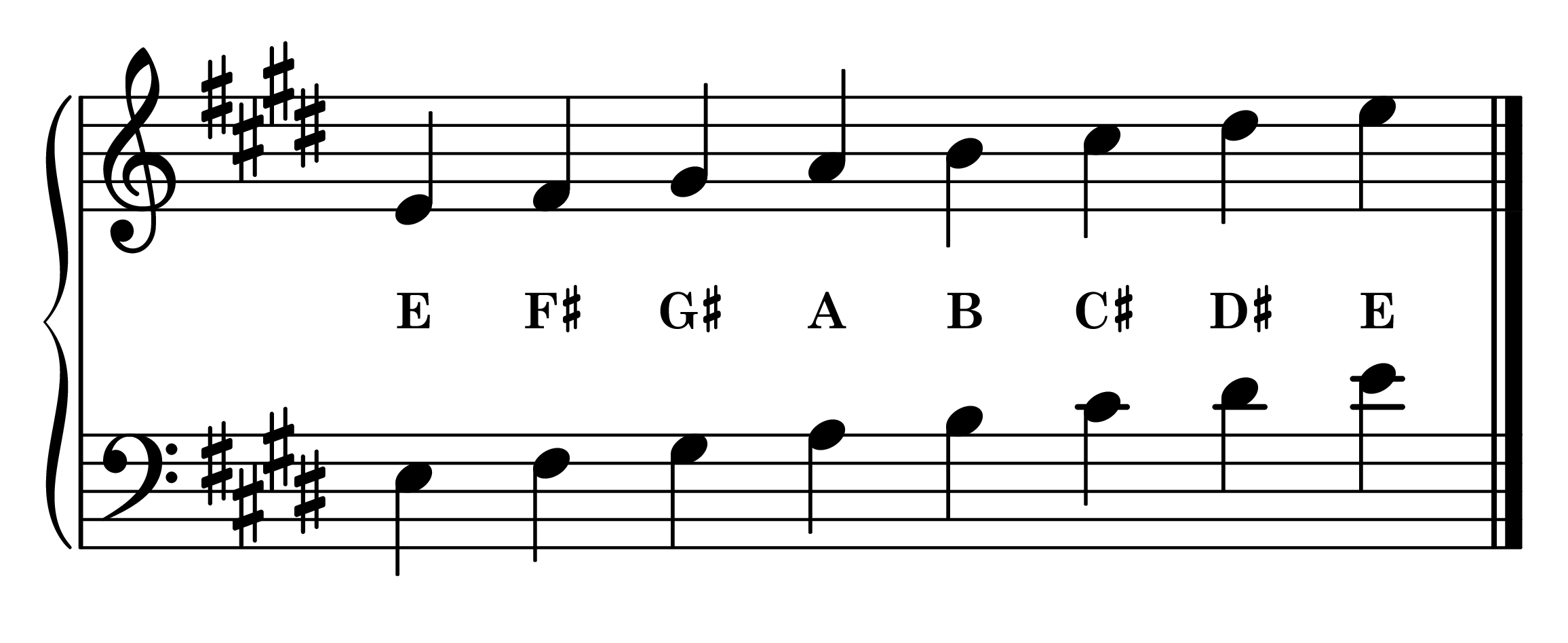
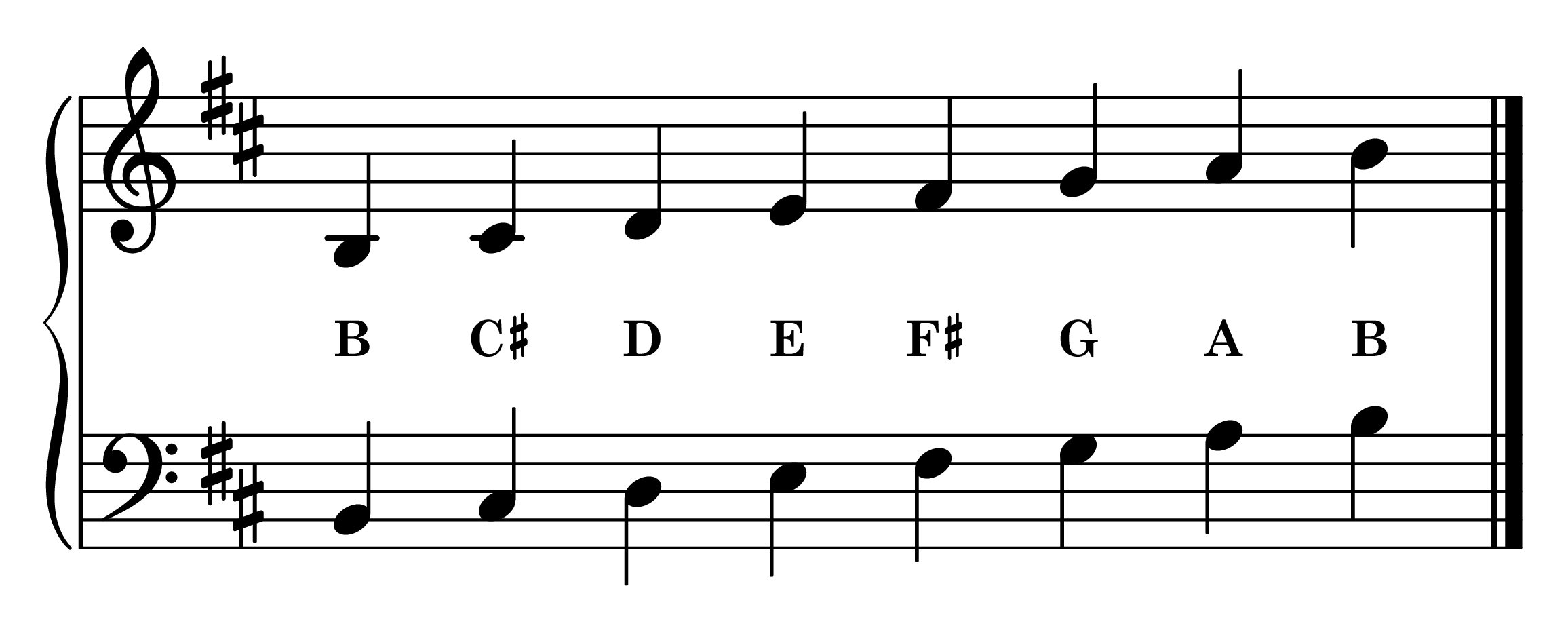
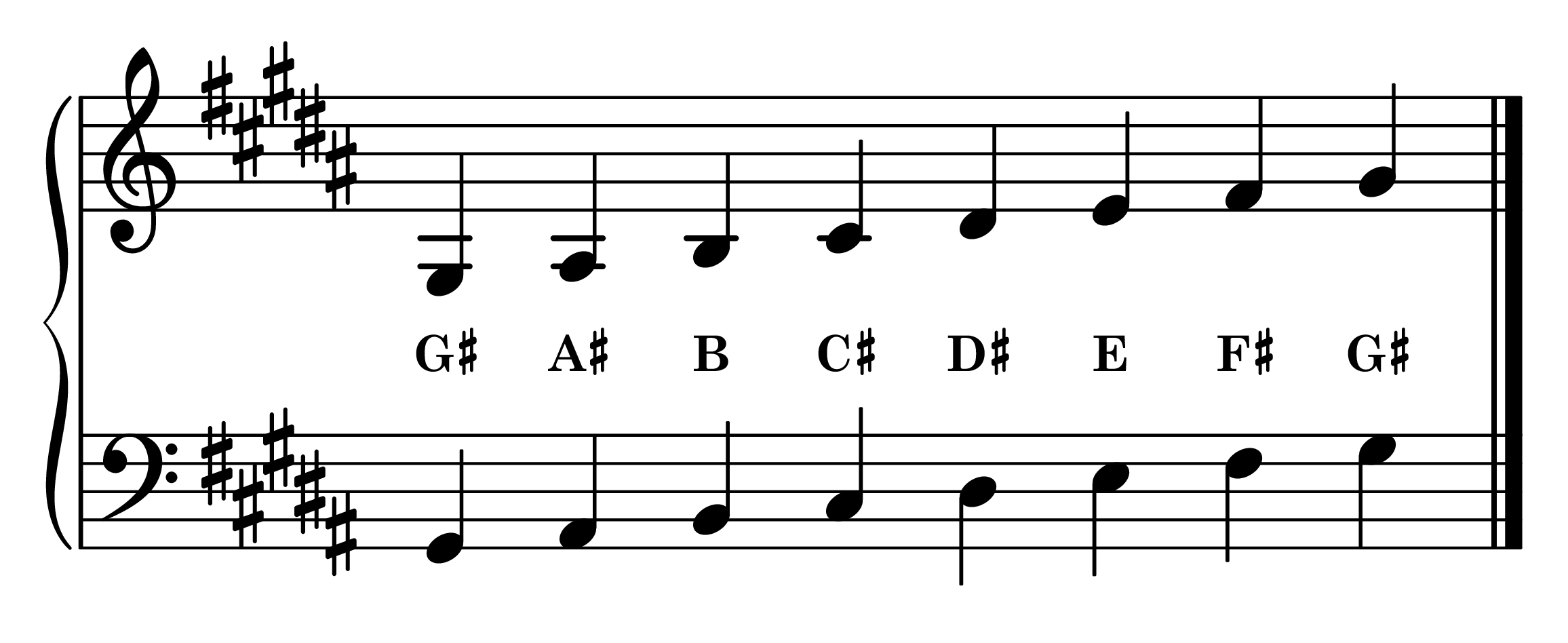
| Key Signature | Five sharps (F♯, C♯, G♯, D♯, A♯) |
| Notes of Scale | B, C♯, D♯, E, F♯, G♯, A♯, B |
| RH Fingering | 1 2 3 - 1 2 3 4 - 5 |
| LH Fingering | 4 3 2 1 - 4 3 2 1 |
| Relative Scale | G-sharp Minor Scale |
| Parallel Scale | B Minor Scale |
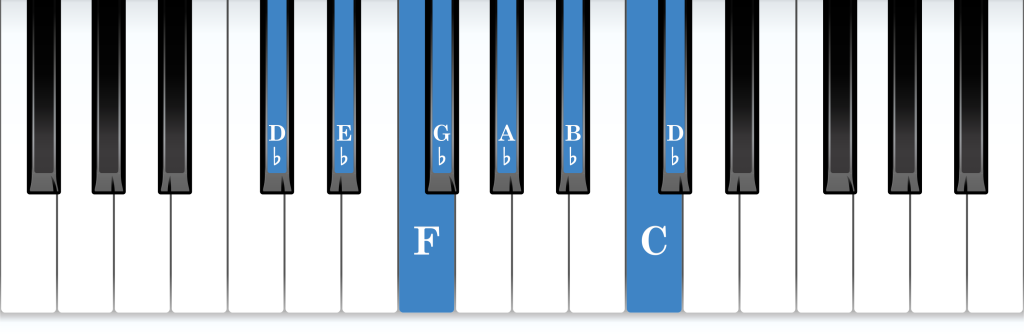
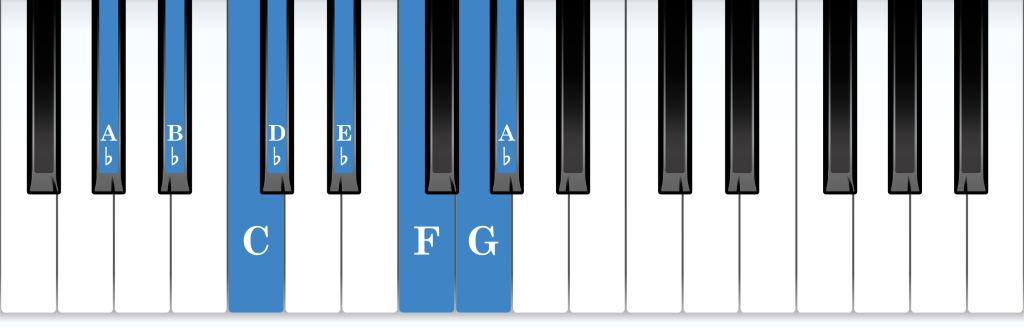
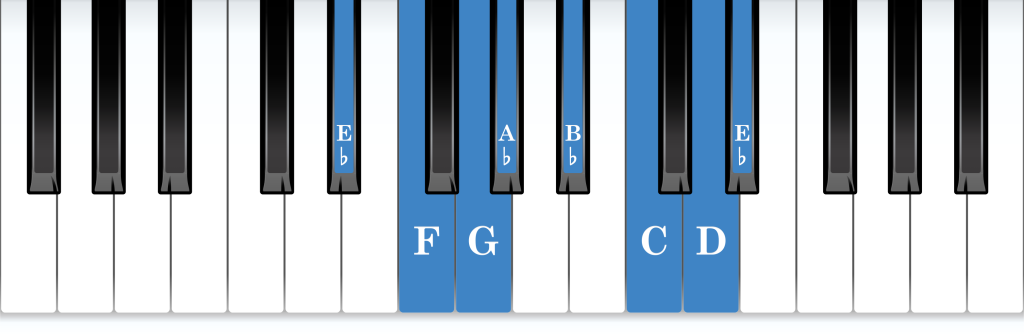
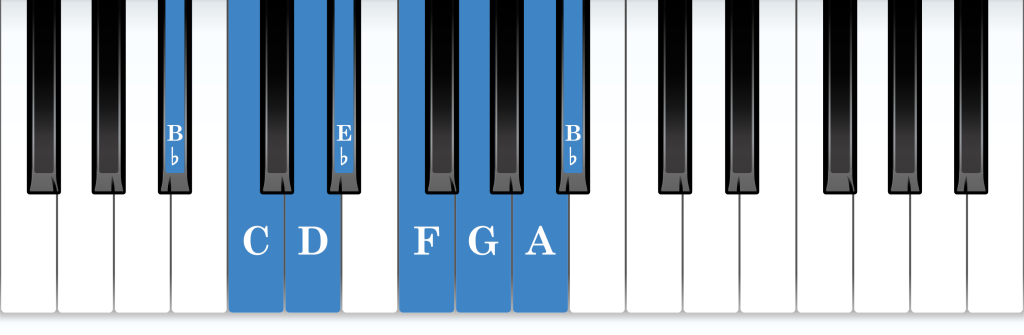
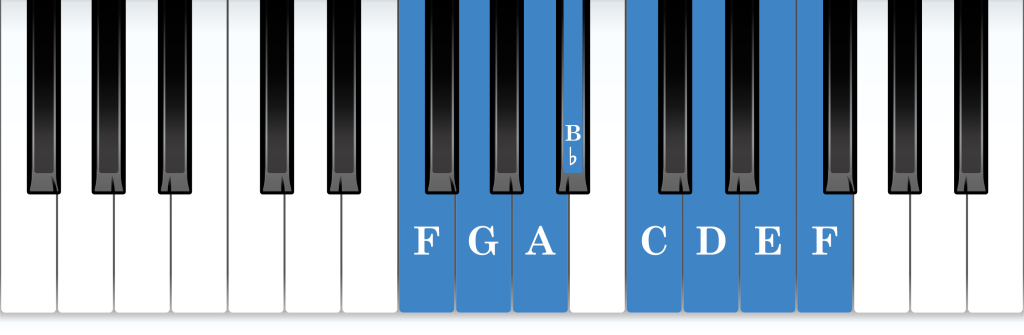
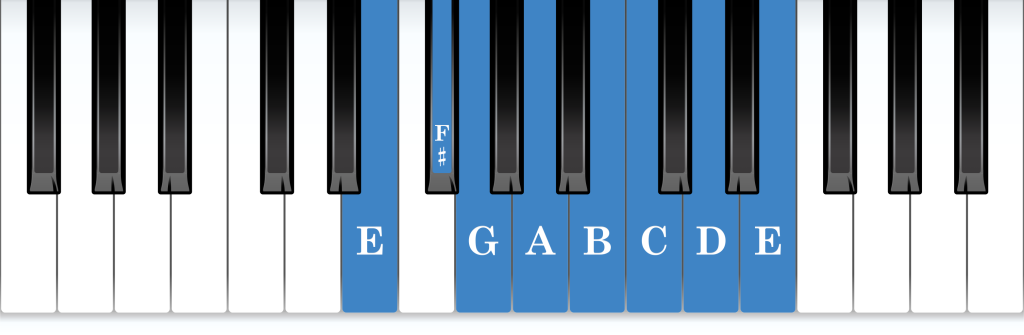
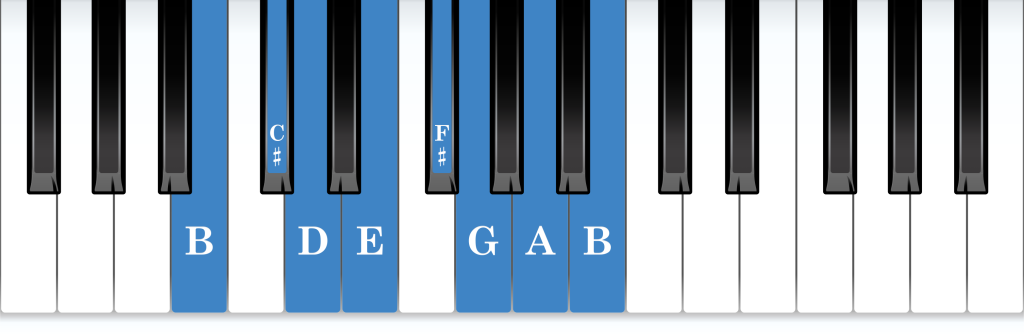
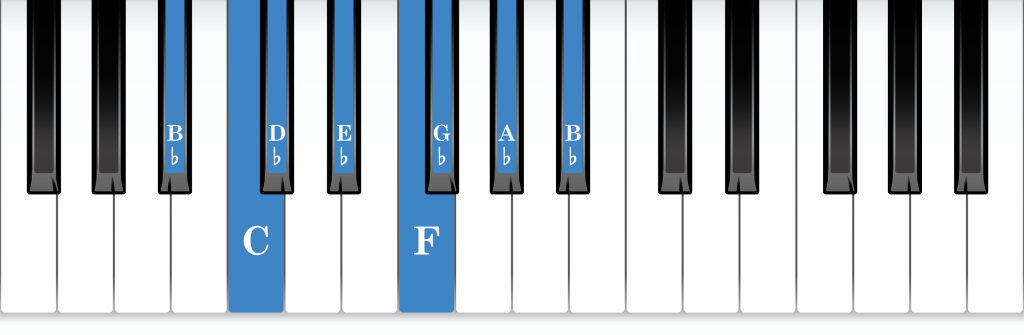
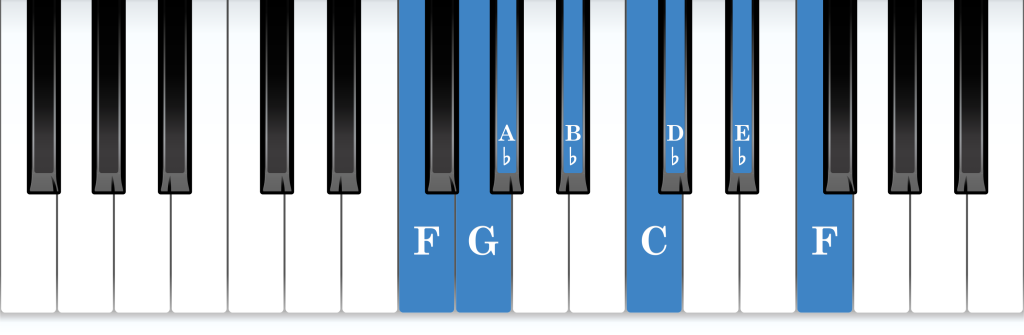
The B major scale has five black keys and only three white keys: B at the bottom and top, and E in the middle. As a terrain, it starts low on B, climbs onto the pair C-sharp and D-sharp, drops to E, then climbs over the three black keys before stepping down to the top B.
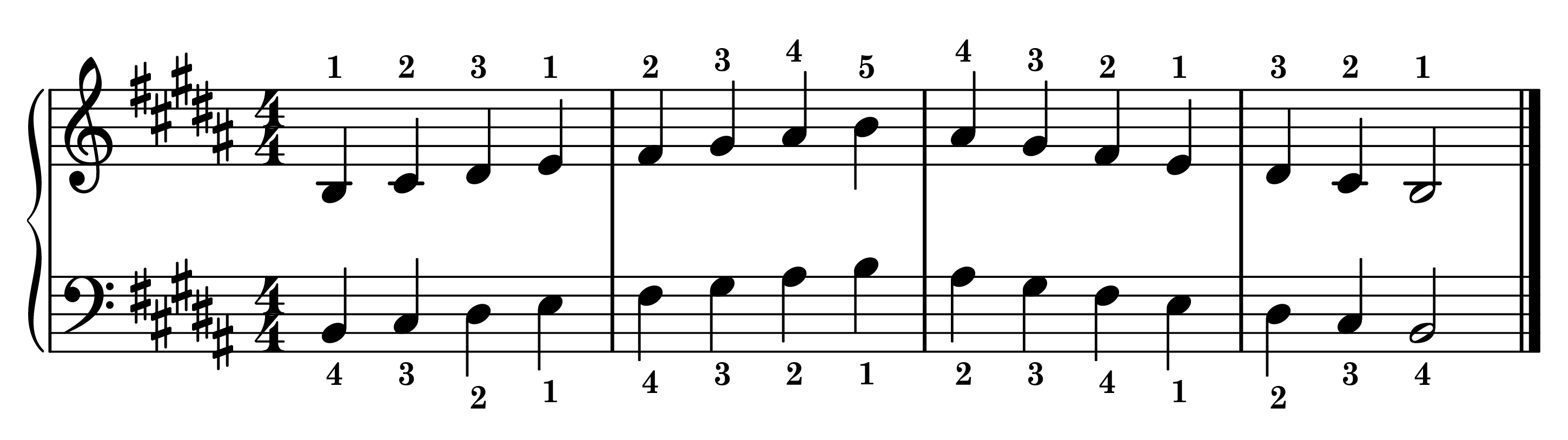
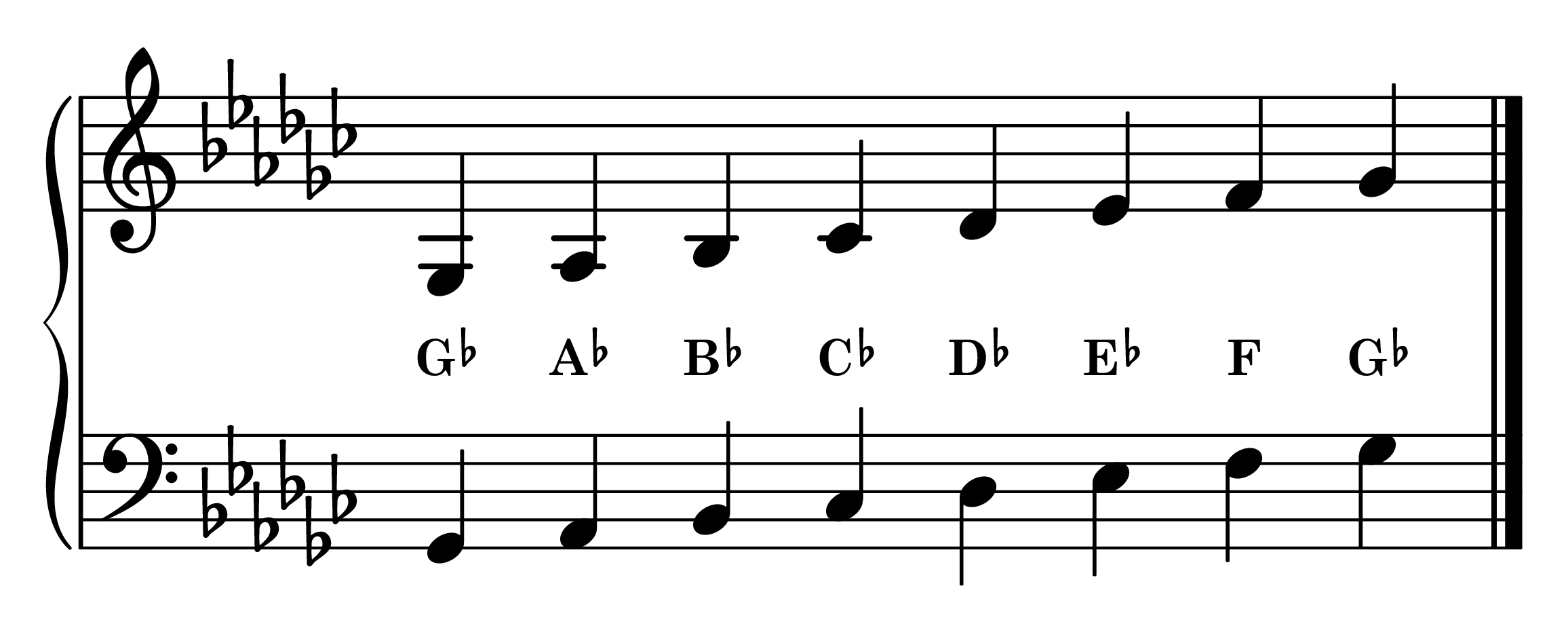
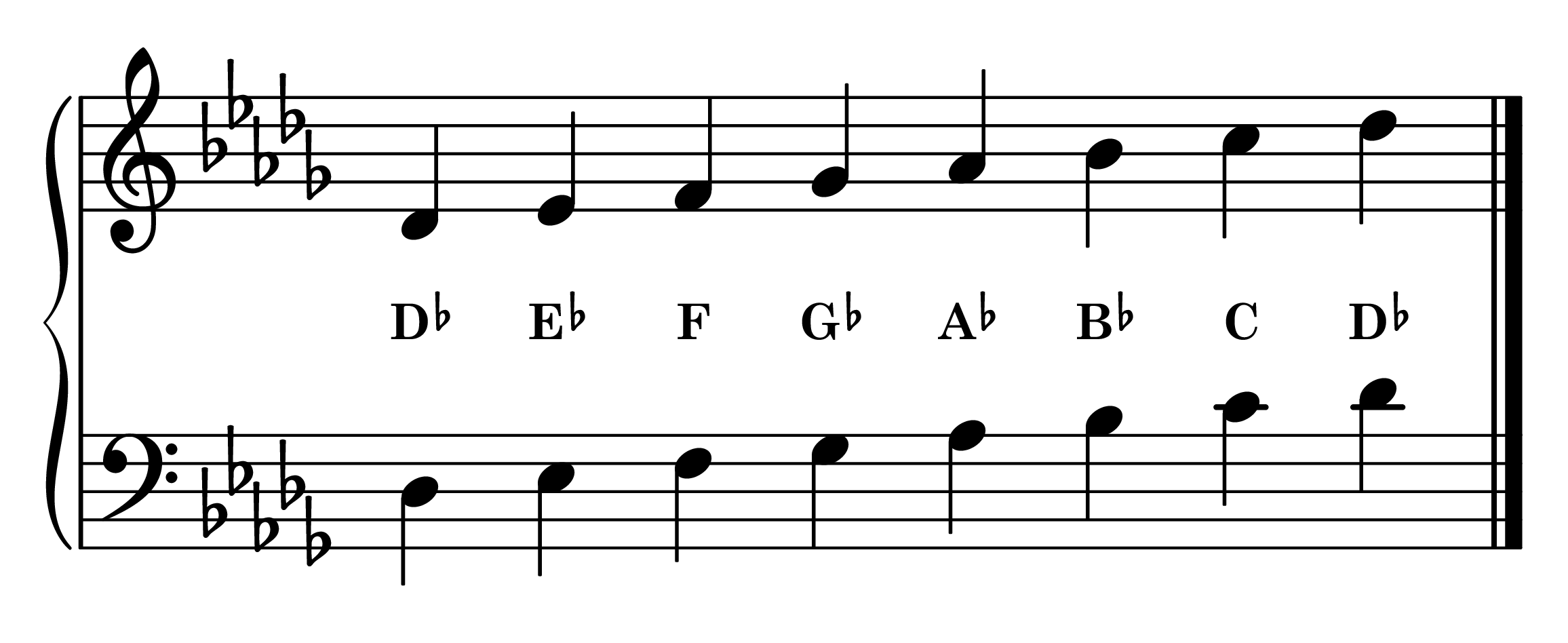
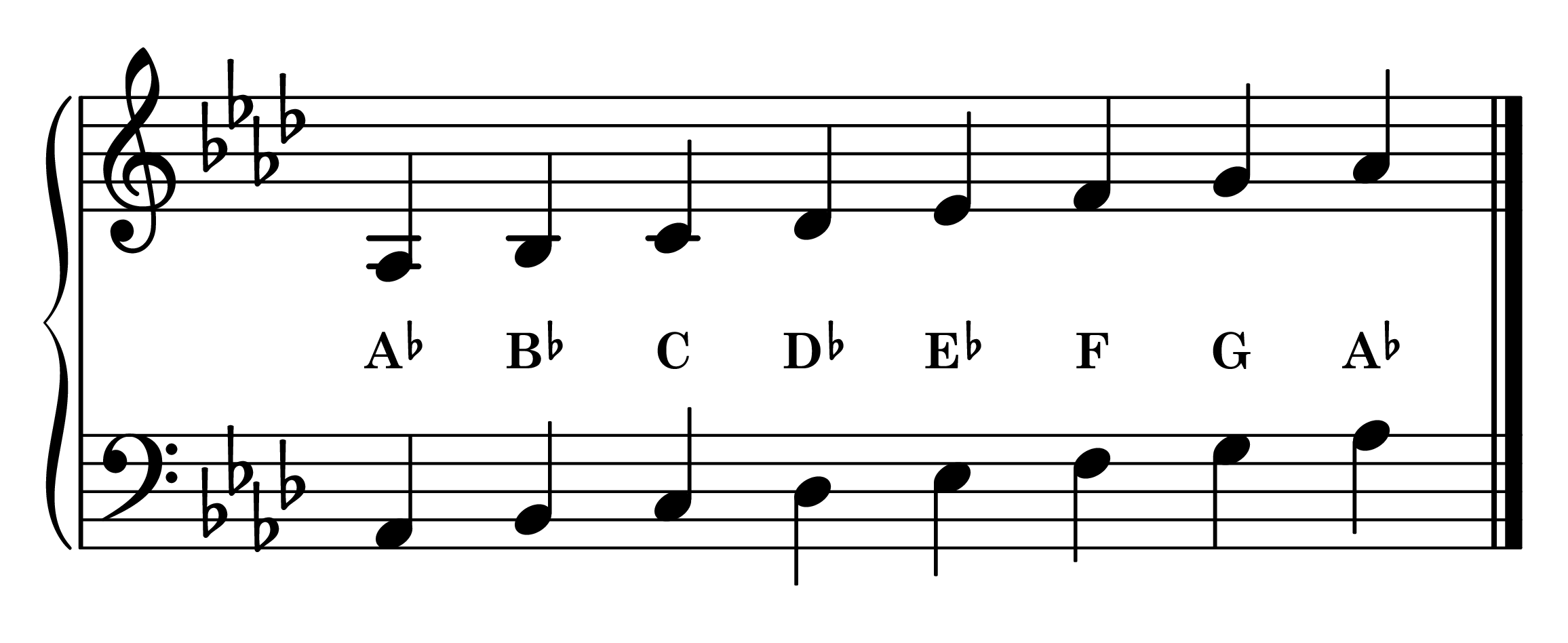
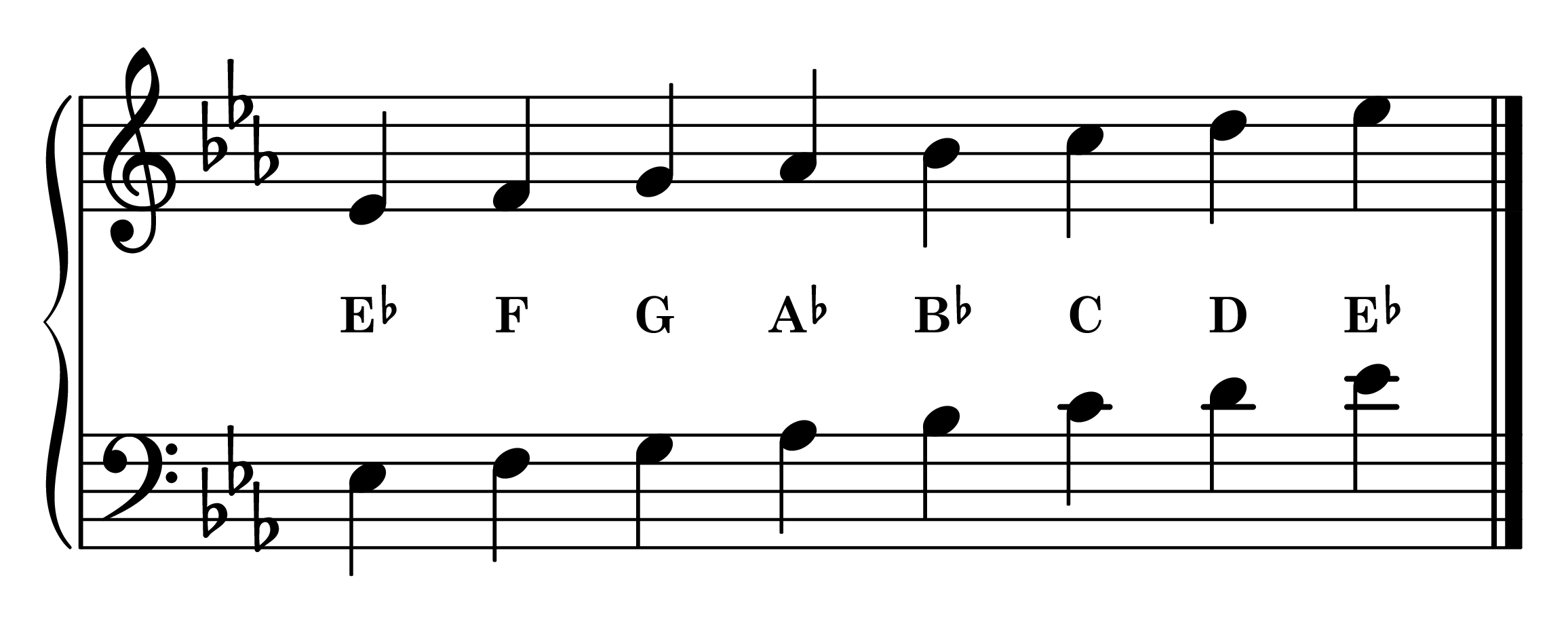
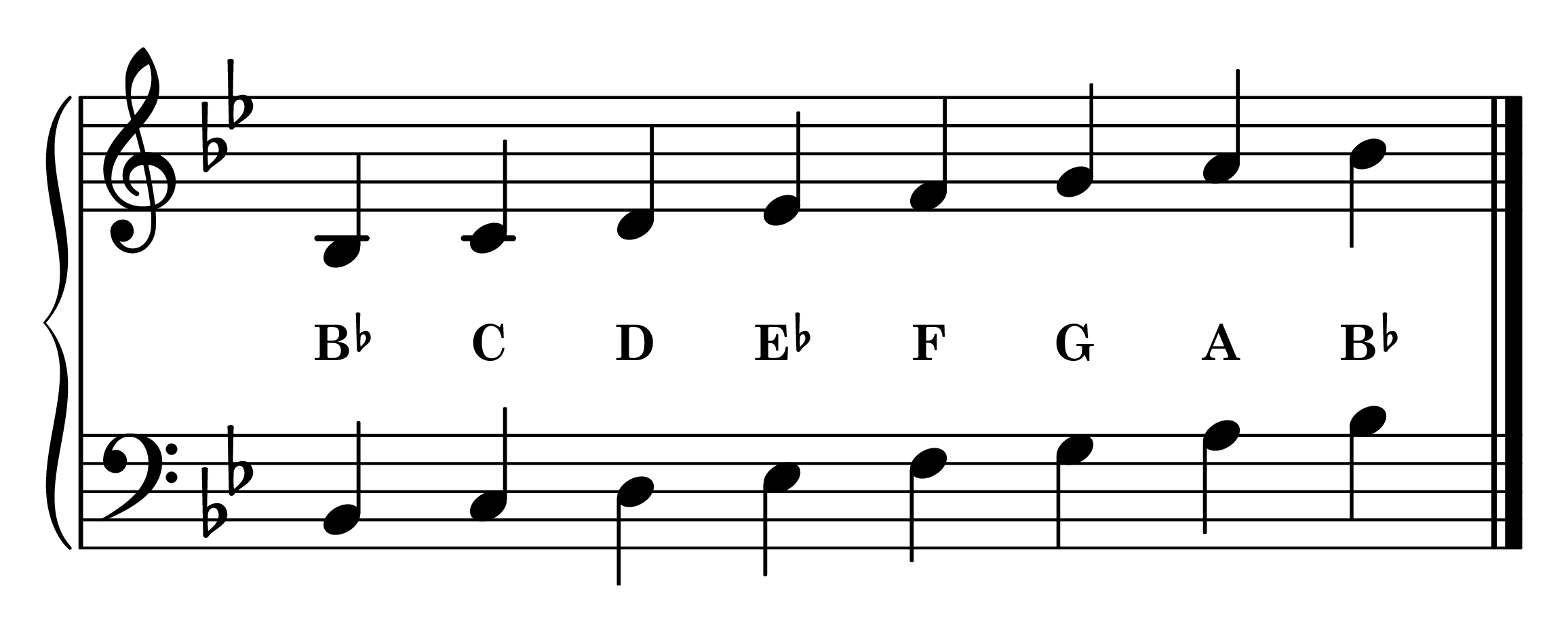
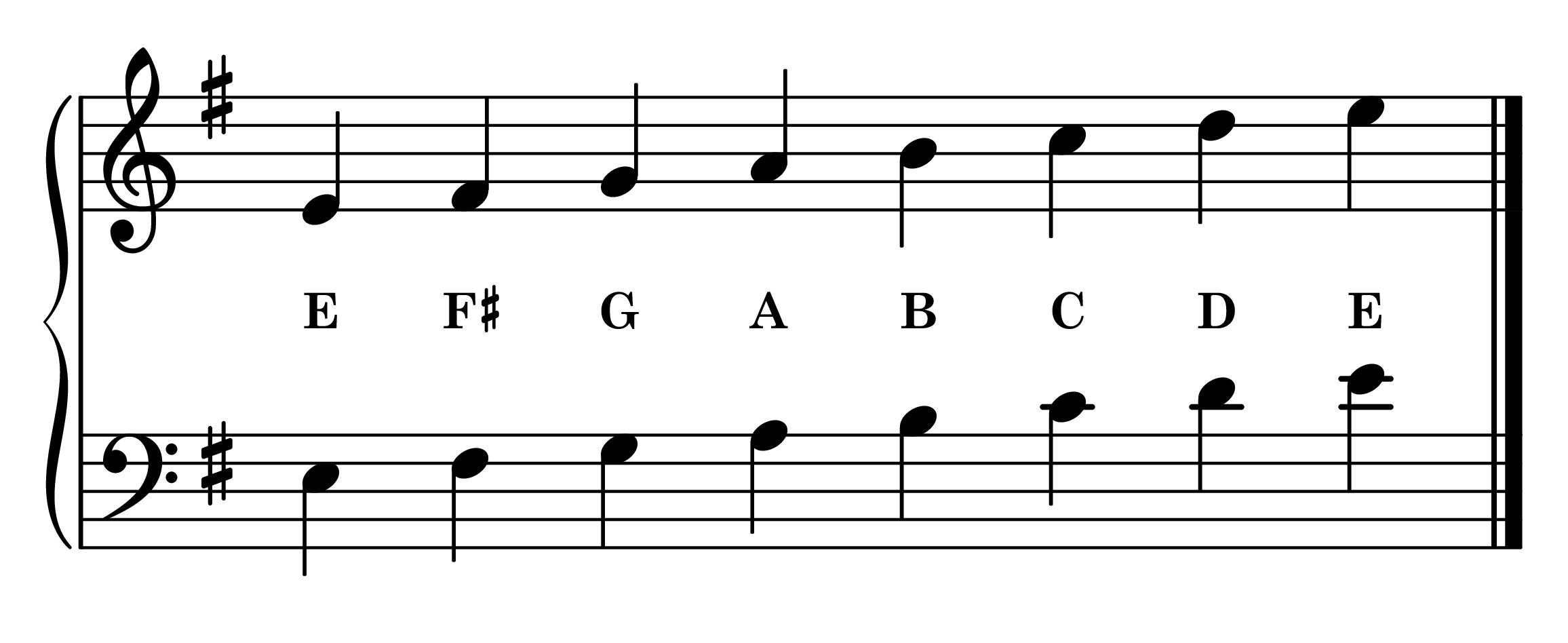
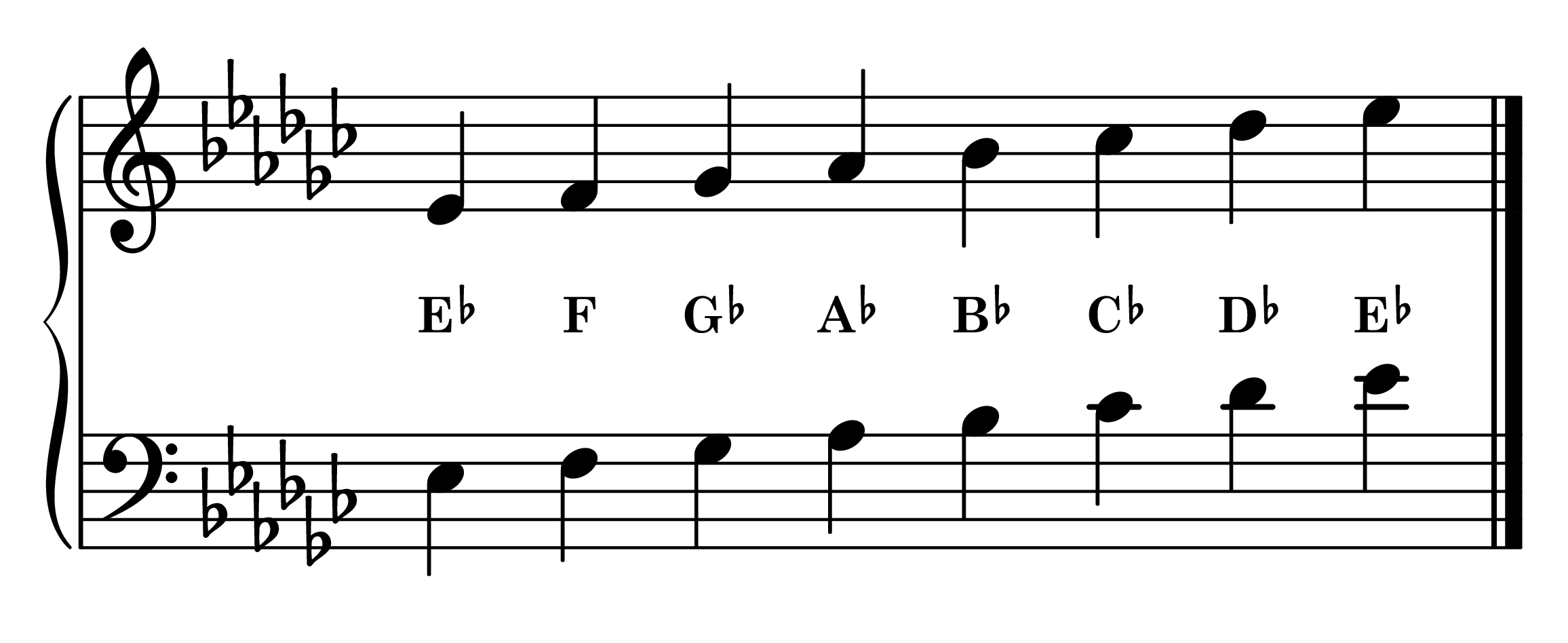
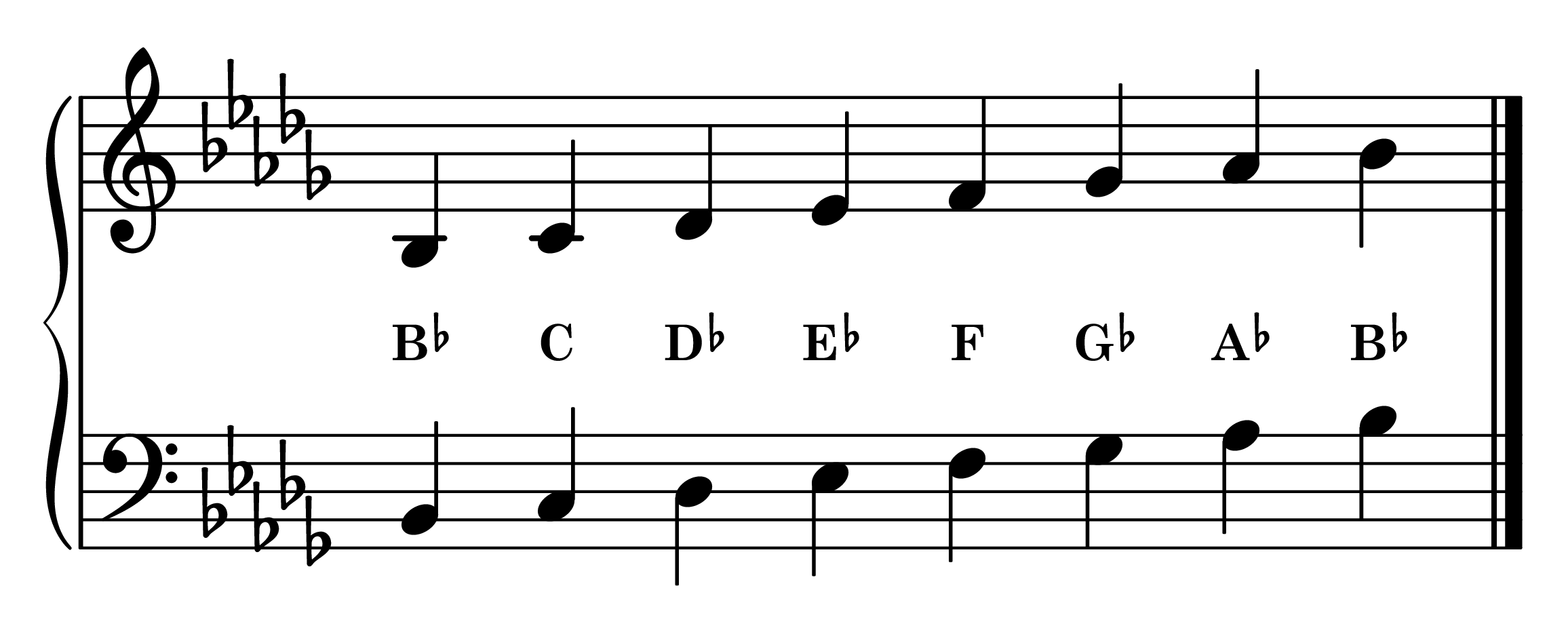
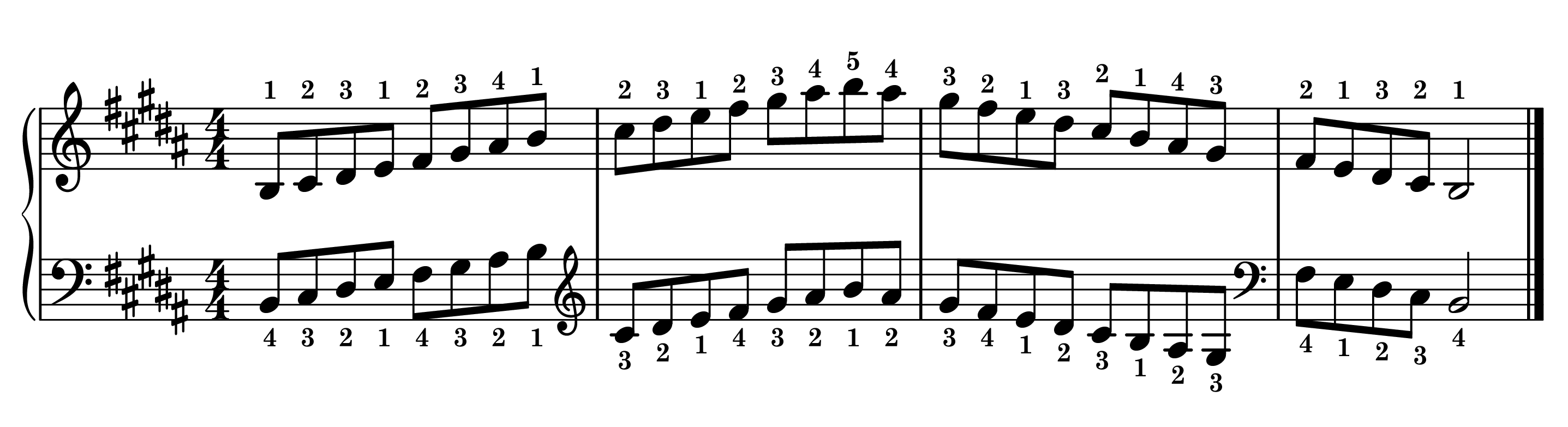
Here is the B major scale written out for both hands, one octave up and down. The key signature has five sharps.
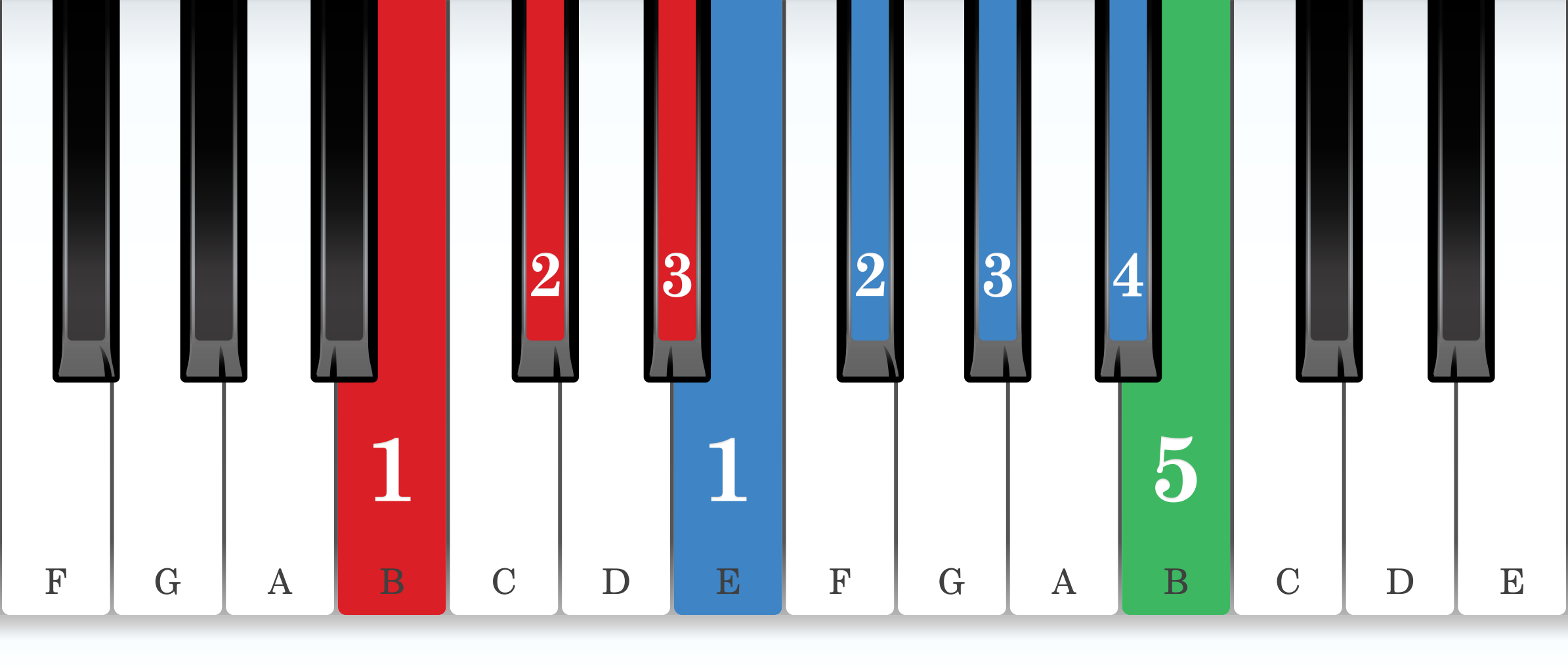
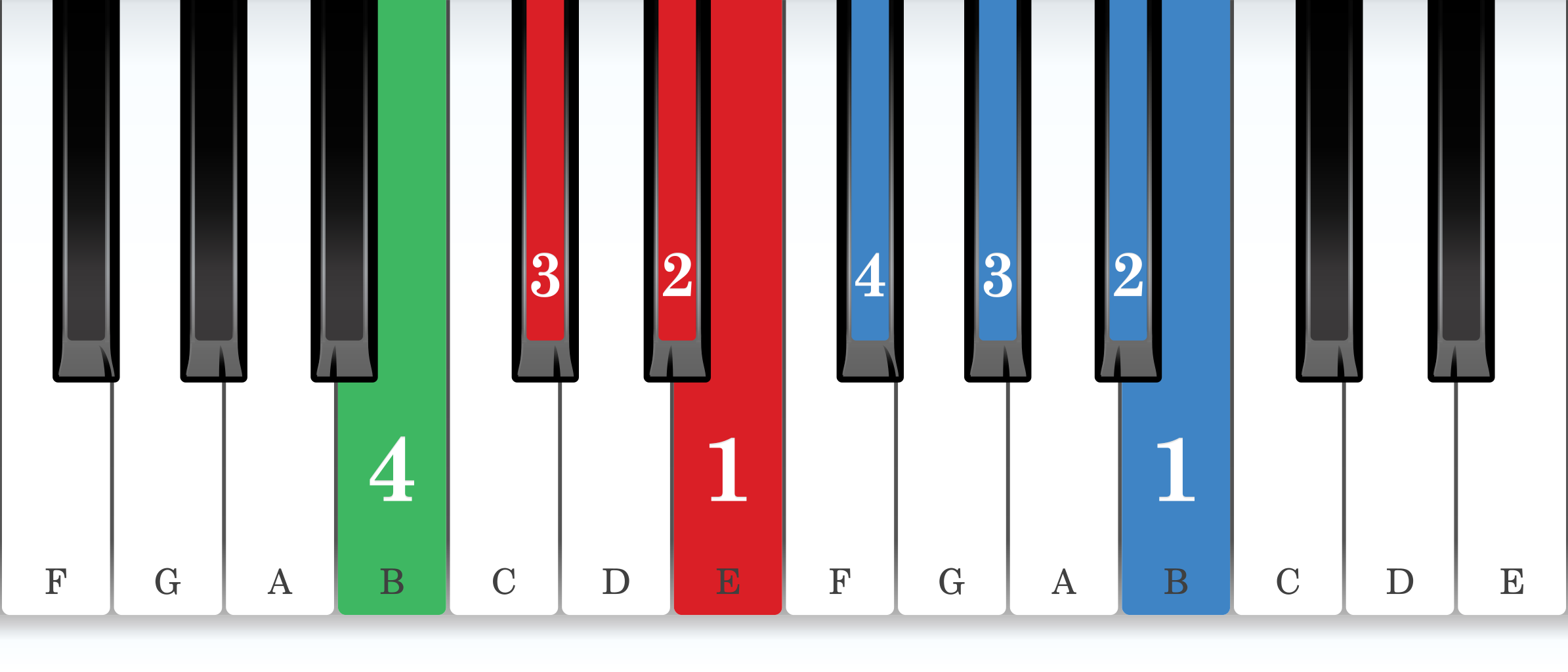
Let’s take each hand separately first. It helps to think of the scale in terms of its core positions, the two groups of notes the hand can cover without moving: three notes played with 1-2-3 (red on the charts) and four played with 1-2-3-4 (blue).
The right hand uses the same pattern as C major: B, C-sharp, and D-sharp as the three-note group, E, F-sharp, G-sharp, and A-sharp as the four-note group, and the top B on the fifth finger (green). The left hand is different. It starts on the fourth finger (green) rather than the fifth, so that the thumbs land on the white keys: C-sharp, D-sharp, and E form the three-note group, and F-sharp, G-sharp, A-sharp, and B the four.
A useful way to work with the core positions is in three stages:
When both hands play at once, their core positions overlap in different places, and trying to track both at the same time tends to get in the way. Sync points are more useful here: the moments where the hands share a finger, or where the fingers mirror each other.
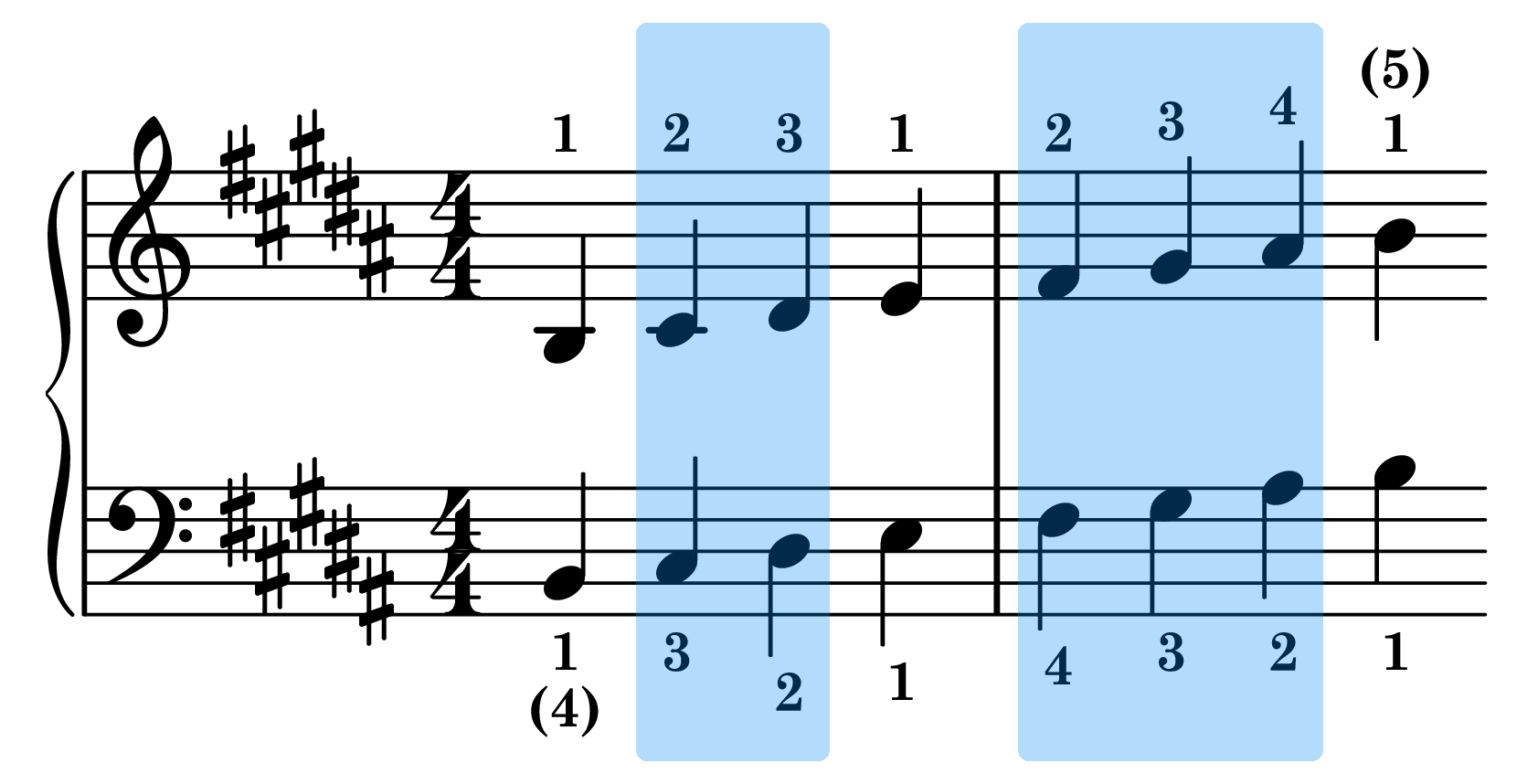
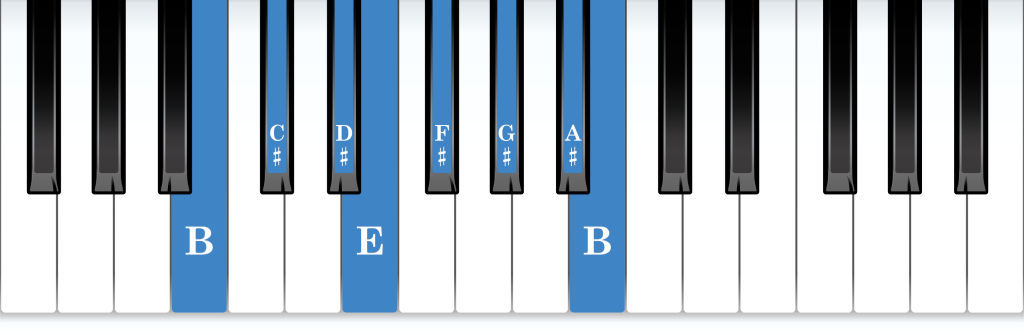
On the black keys, fingers 2 and 3 form a mirror image on C-sharp and D-sharp, and fingers 2, 3, and 4 form another on F-sharp, G-sharp, and A-sharp. Both sets of black keys line up in reverse order in the two hands.
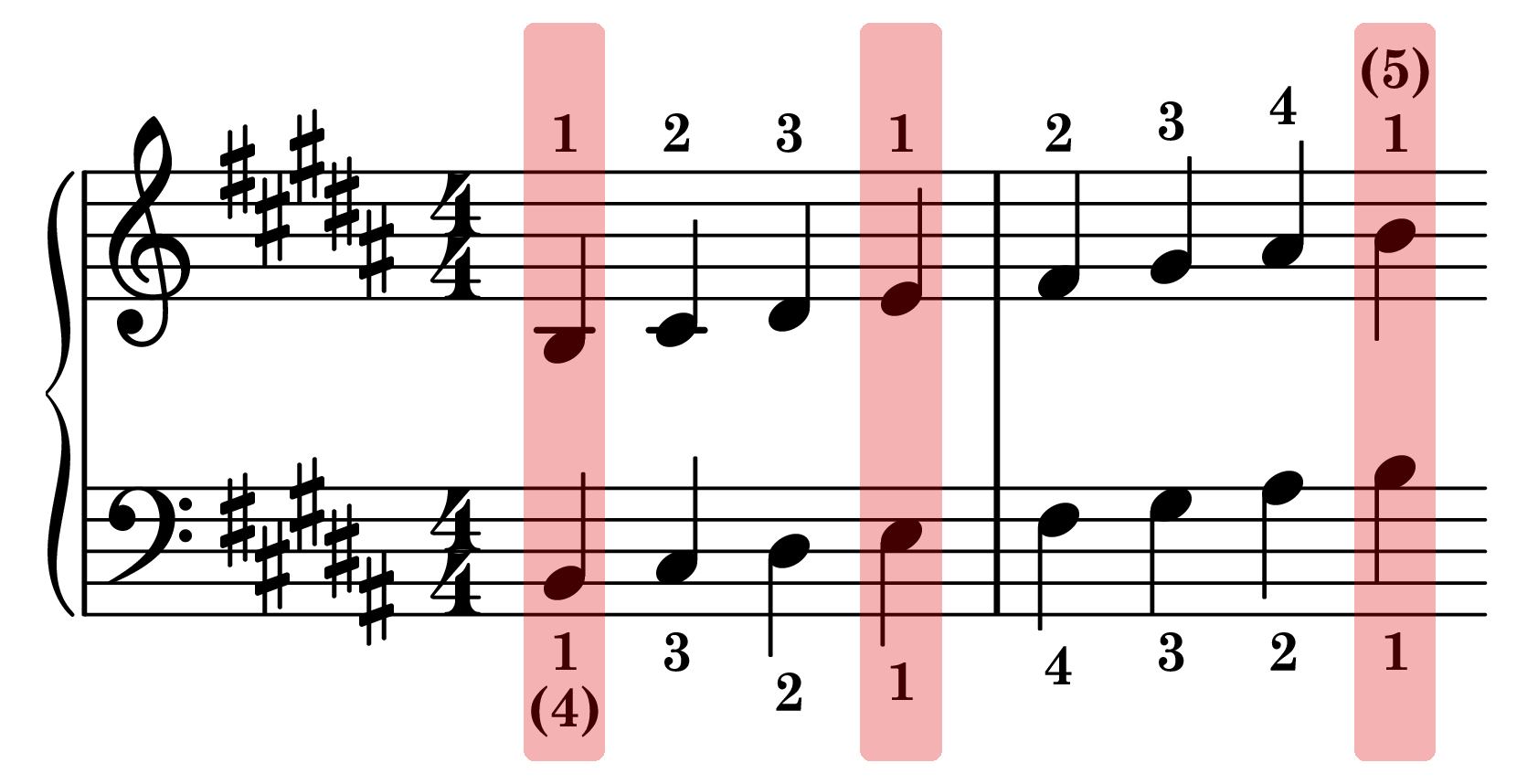
The thumbs come together on the two white keys, E and B. In a single octave the scale begins and ends on B with other fingers, but as soon as it continues into a second octave, both thumbs meet on B as well: the 1 is the fingering for more than one octave, and the finger in parentheses is the one-octave fingering. Landing both thumbs on the white keys keeps the hands aligned as they move between the two groups of black keys.
The same three stages work for sync points:
Once one octave feels consistent, we can extend the scale further up the keyboard. In the right hand, instead of finishing on the fifth finger, the thumb passes under to B again and the core positions repeat. In the left hand, the core positions continue upward, with the thumb on every B above the starting note; on the way down, the thumb stays on each B until the bottom, where the fourth finger finishes the scale.
The most common problem is starting the left hand on the fifth finger out of habit. It works for a few notes, then puts the thumb onto a black key later in the scale. Starting on the fourth finger keeps both thumbs on E and B, where they belong.
Surrounded by so many black keys, the white key E can catch the hand off guard. Letting the thumb travel under the hand a little early, in both hands, means it’s already on its way when E arrives.
Other techniques related to the B major piano scale:
No questions on this lesson yet. Be the first to ask one.
Continue learning with our full library of piano scale lessons