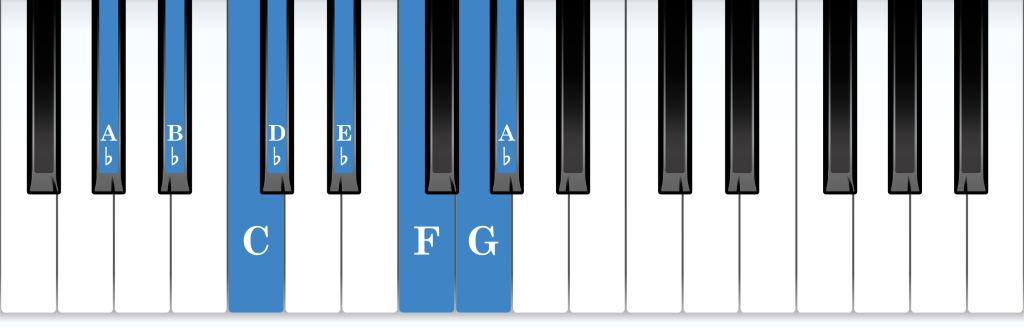
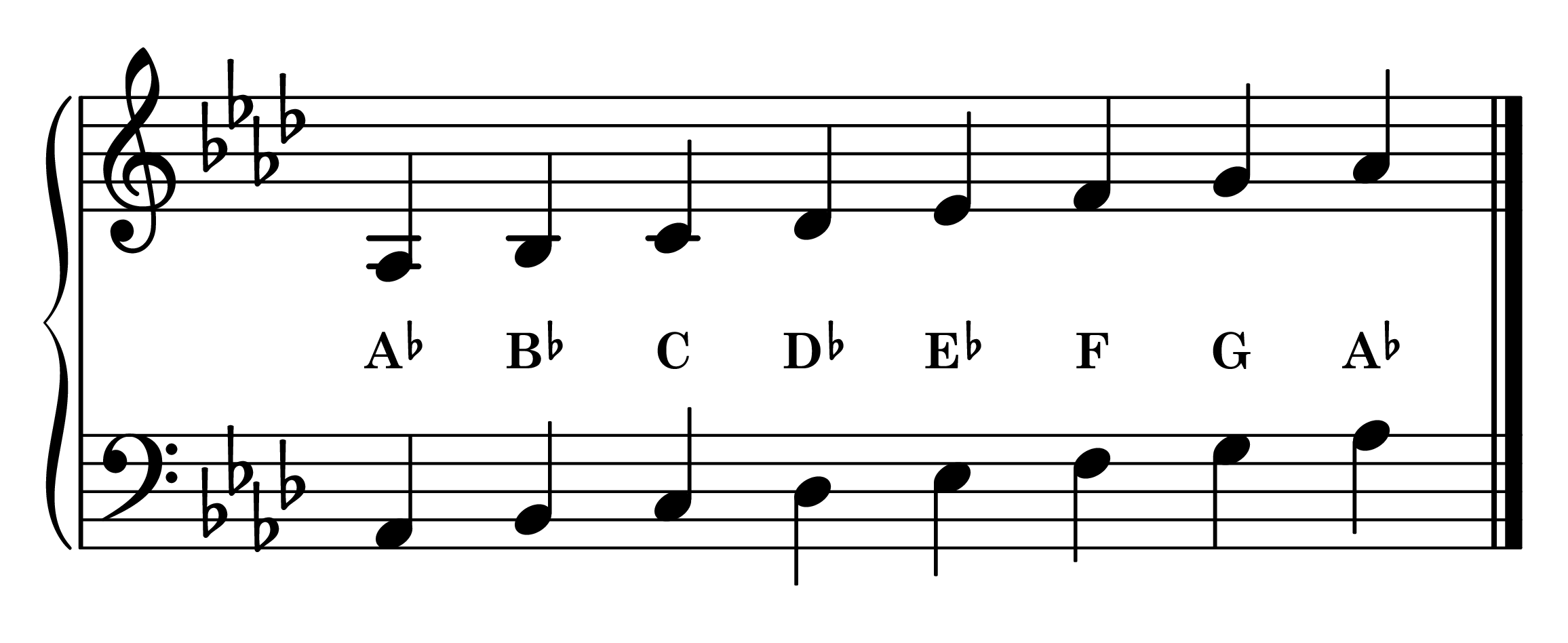
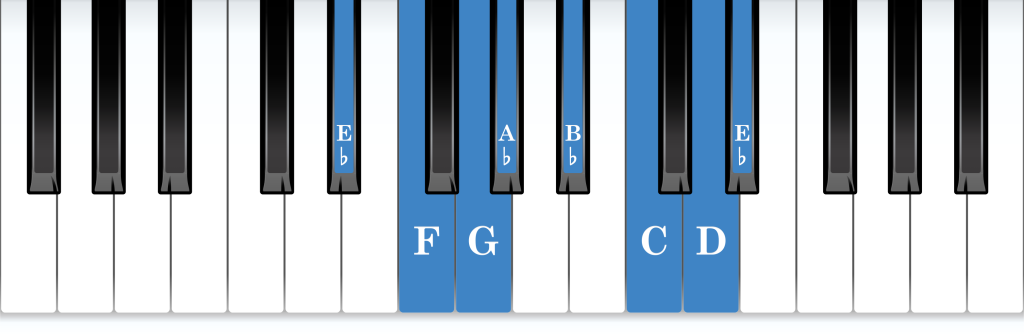
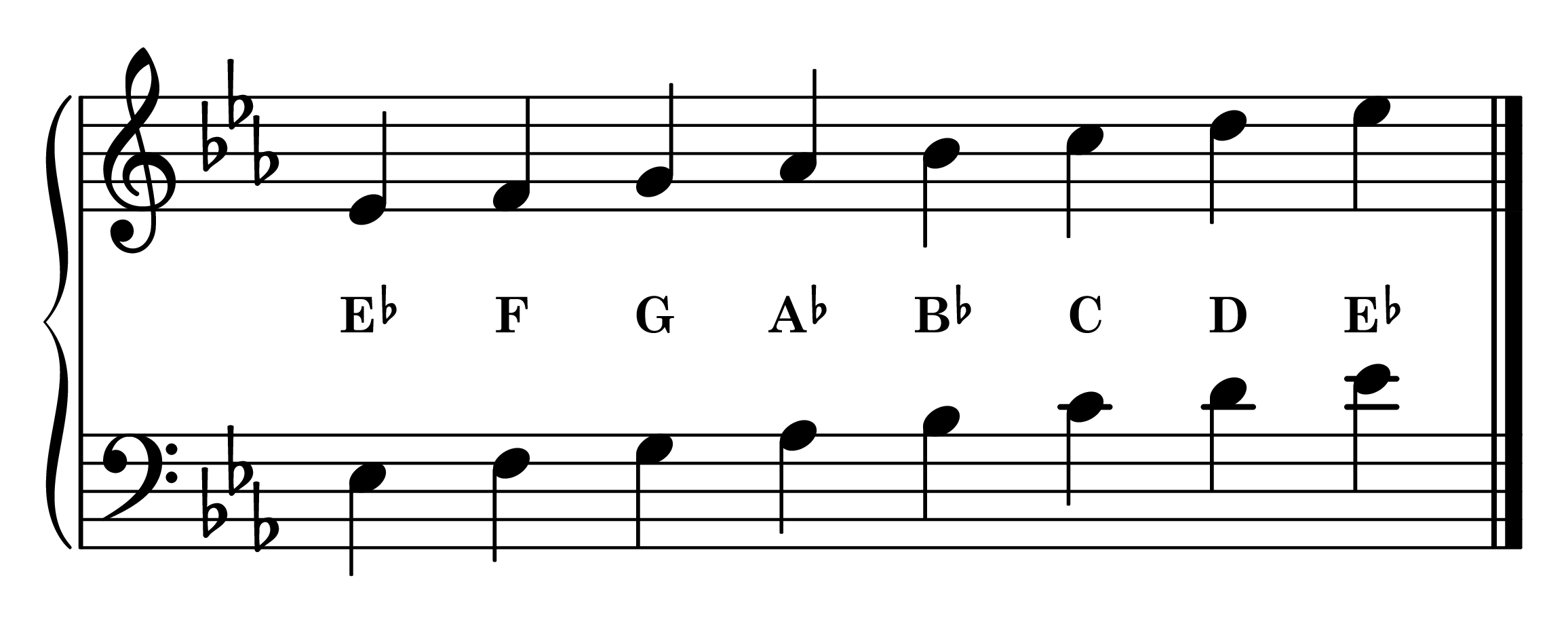
Questions and answers
No questions on this lesson yet. Be the first to ask one.
The F minor scale has four flats. Like F major, the right hand plays four notes before the thumb passes under, which is the one place where the fingering differs from most scales. The harmonic and melodic forms raise the notes near the top, and in the melodic form, the top four notes become white keys.
| F Minor Scale Overview | |
|---|---|
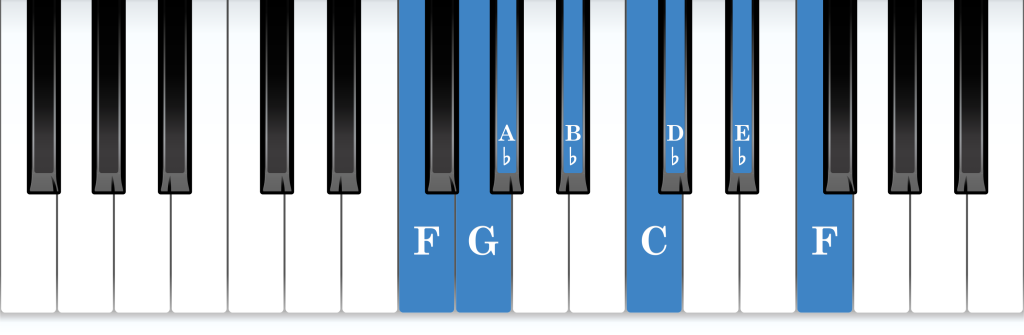
| Keyboard Layout | 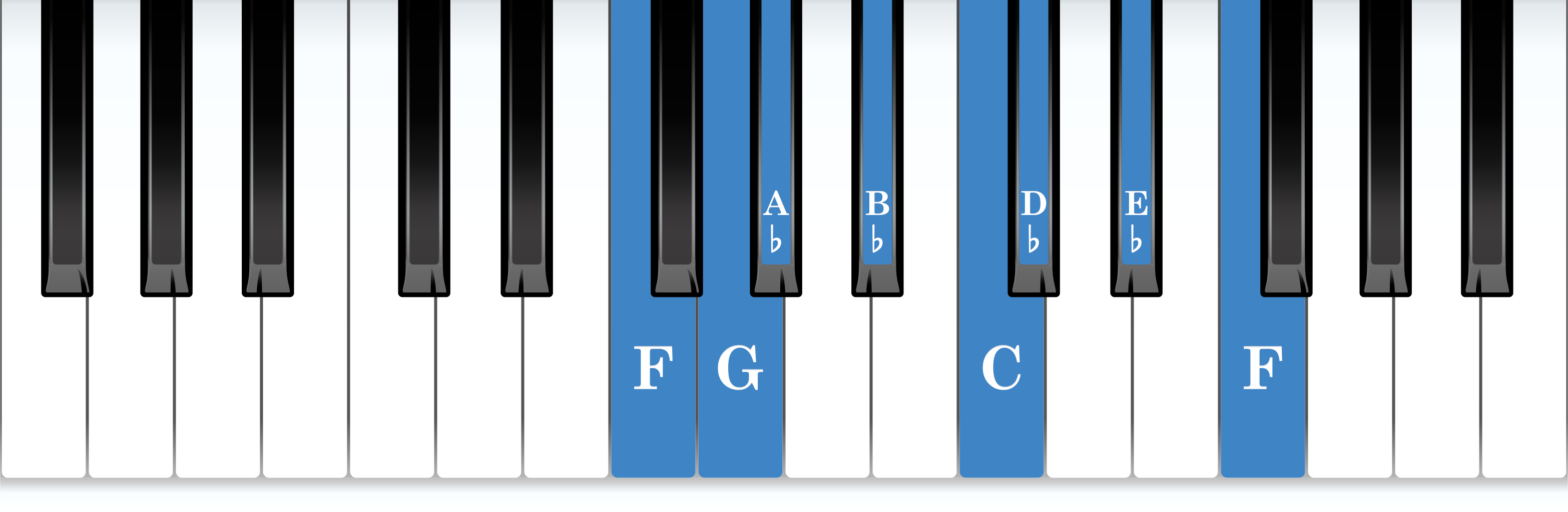 |
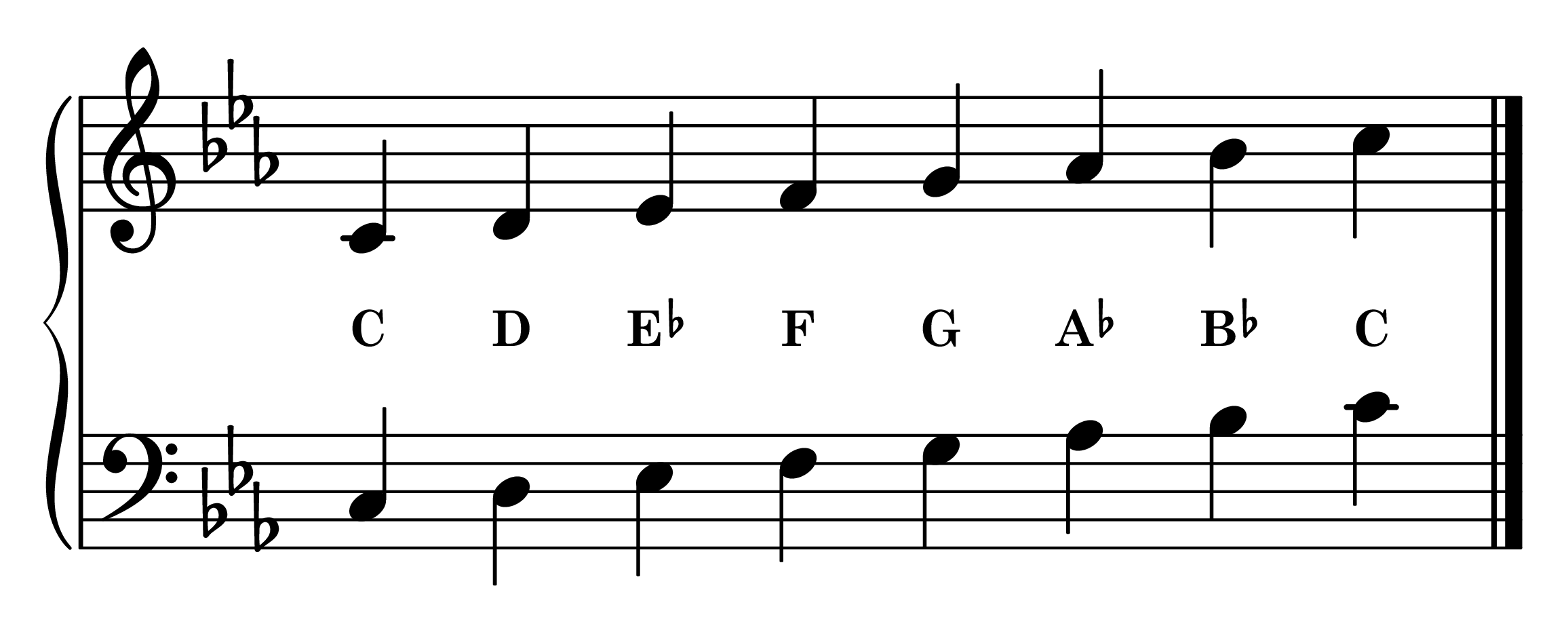
| Staff Layout | 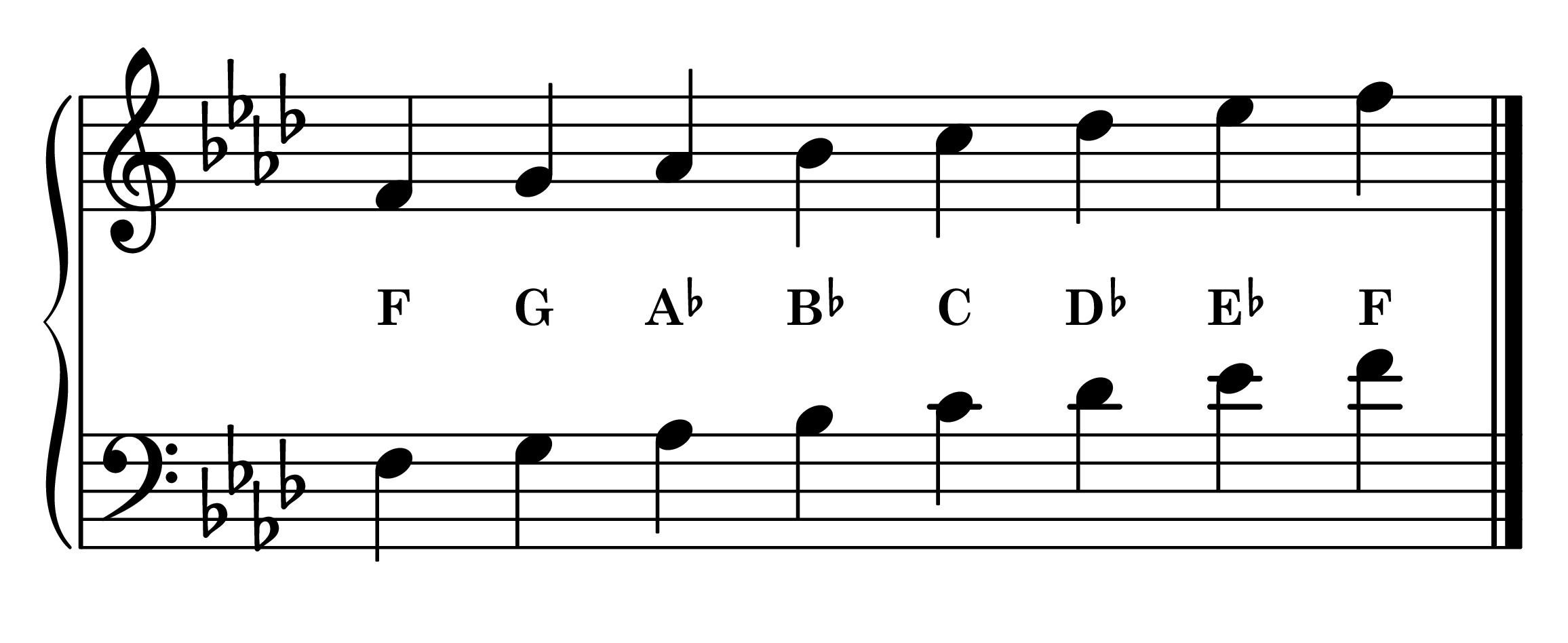 |
| Key Signature | Four flats (B♭, E♭, A♭, D♭) |
| Notes of Scale | F, G, A♭, B♭, C, D♭, E♭, F |
| RH Fingering | 1 2 3 4 - 1 2 3 4 |
| LH Fingering | 5 - 4 3 2 1 - 3 2 1 |
| Relative Scale | A-flat Major Scale |
| Parallel Scale | F Major Scale |
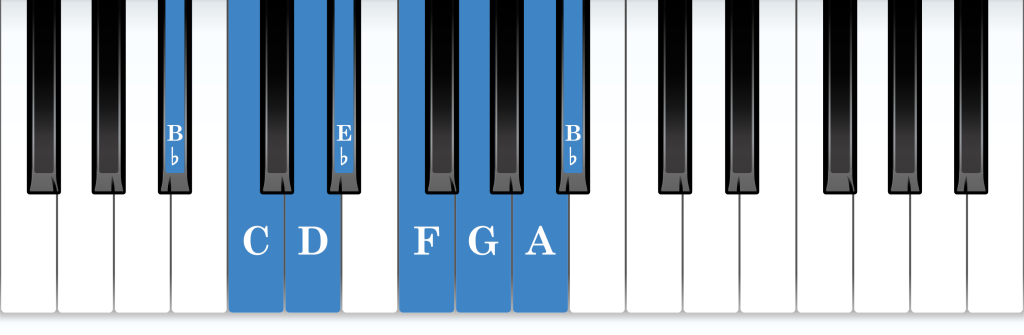
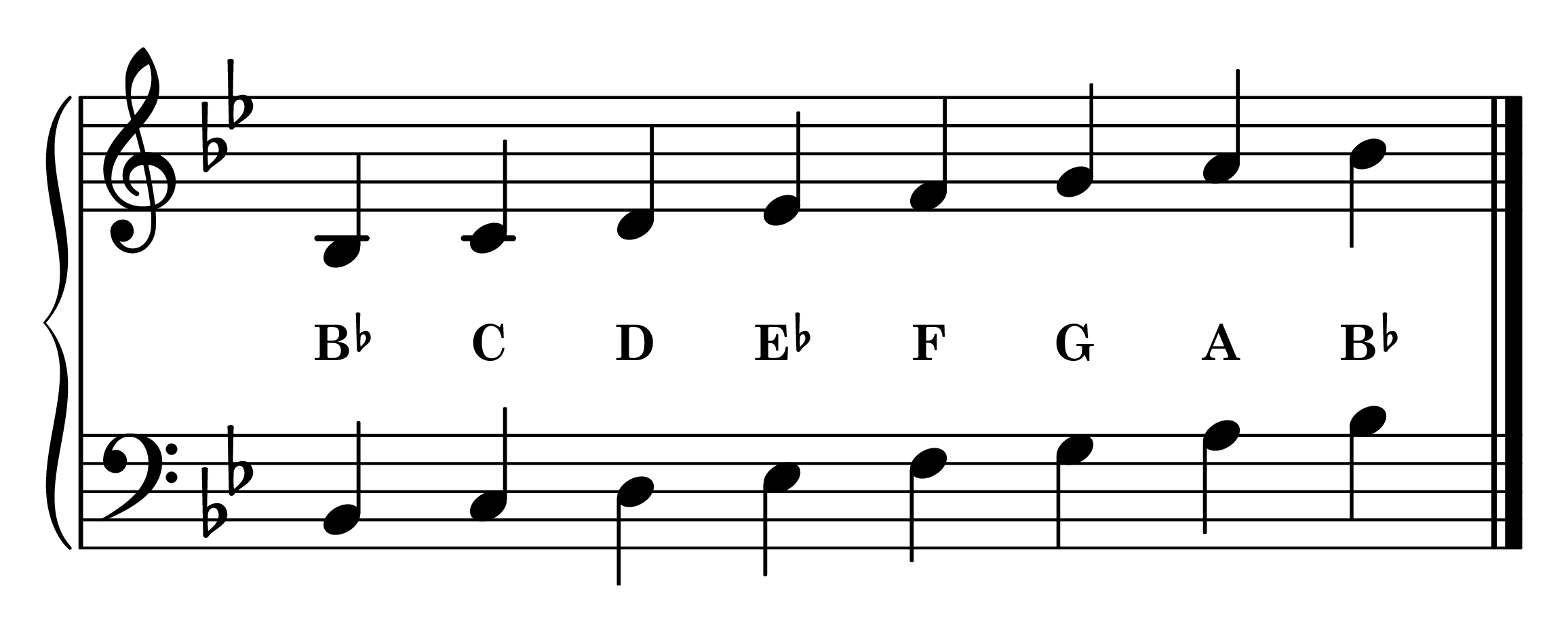
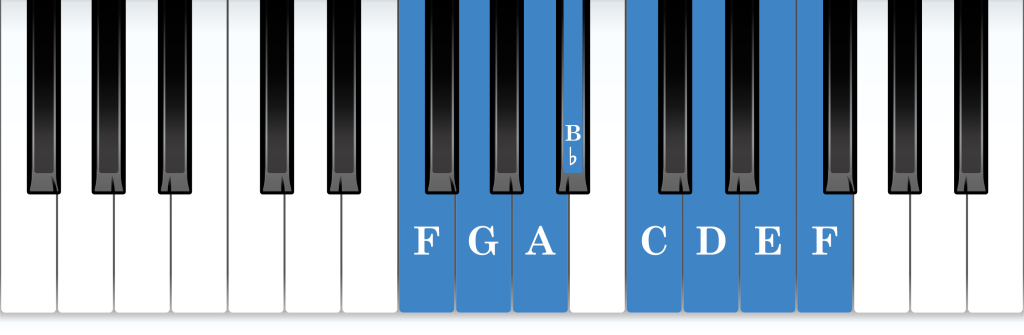
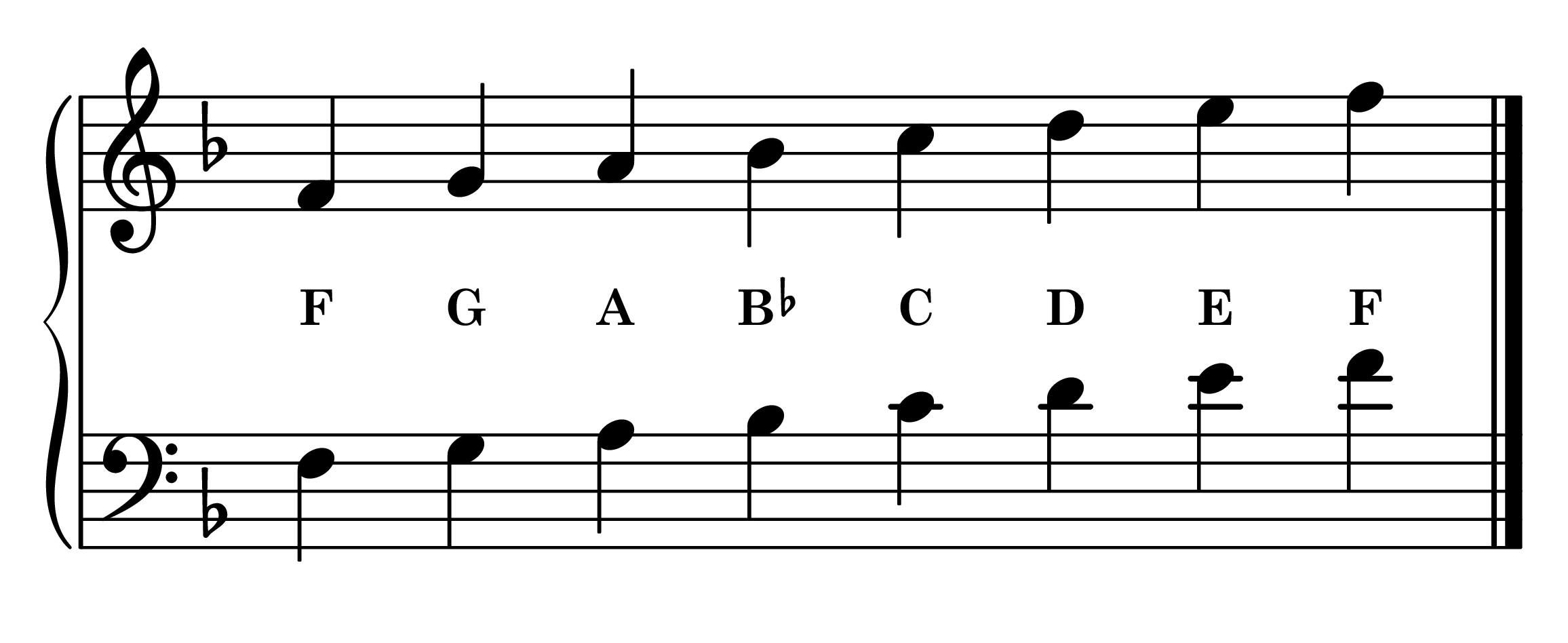
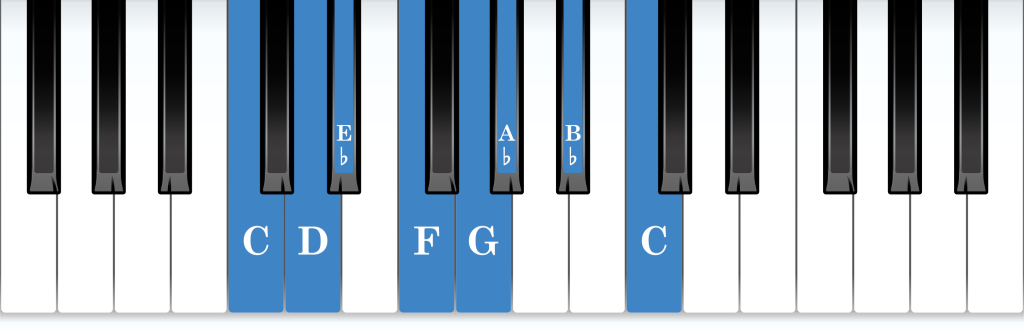
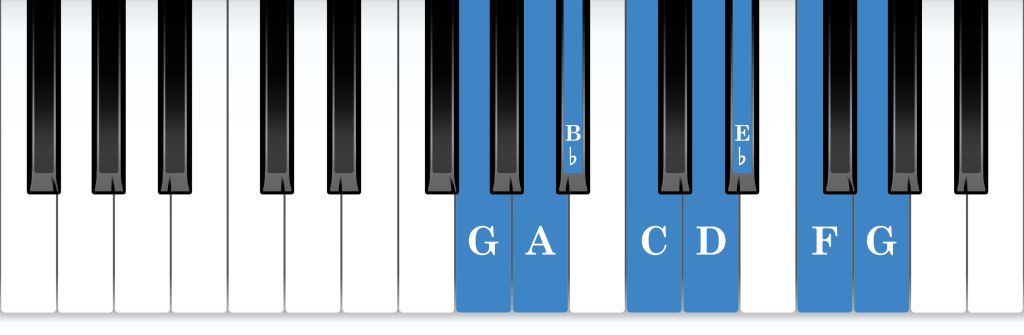
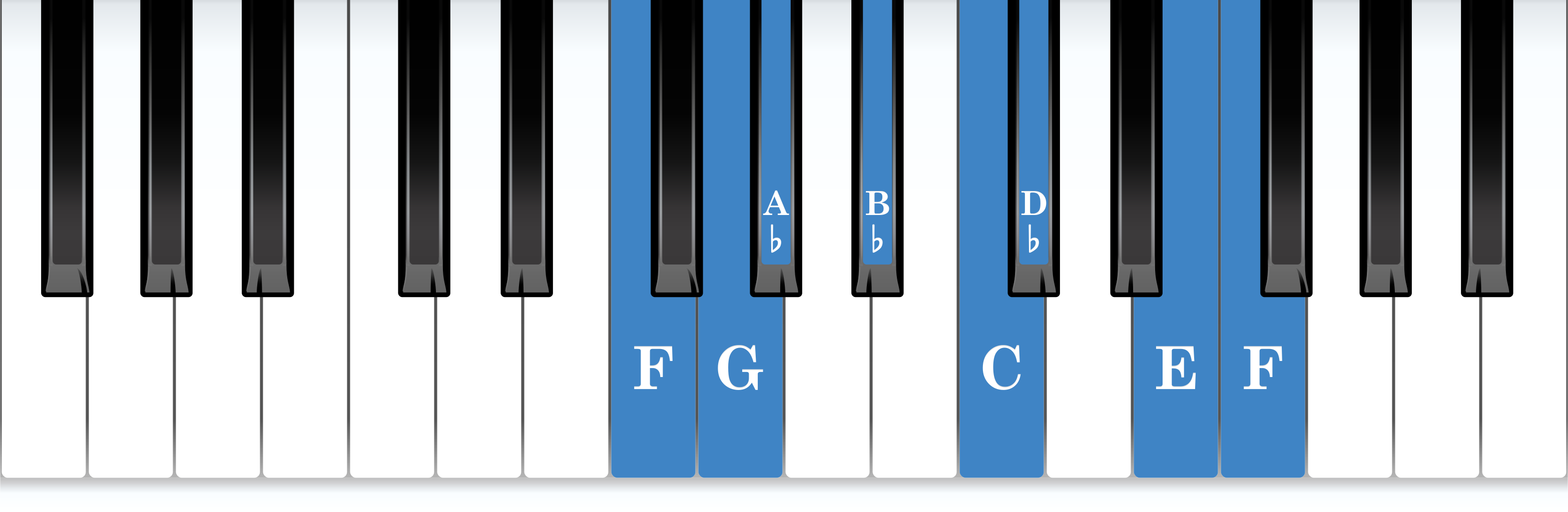
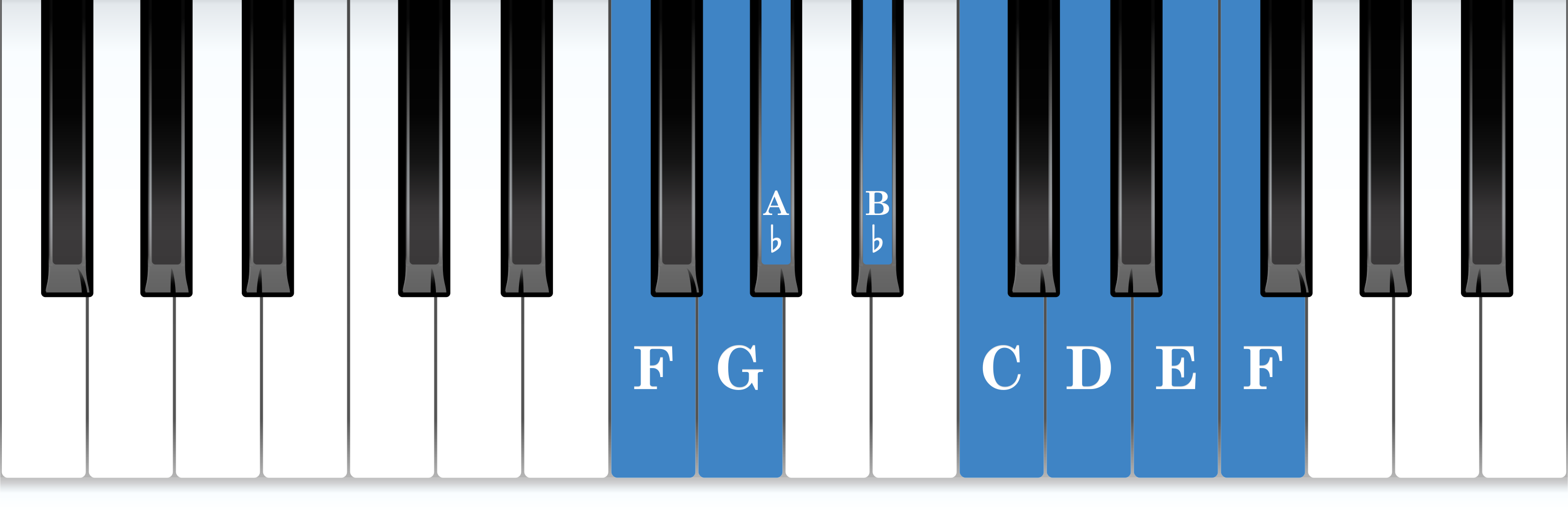
These charts show the overall layout, or terrain, of the F minor scale in each of its three forms.
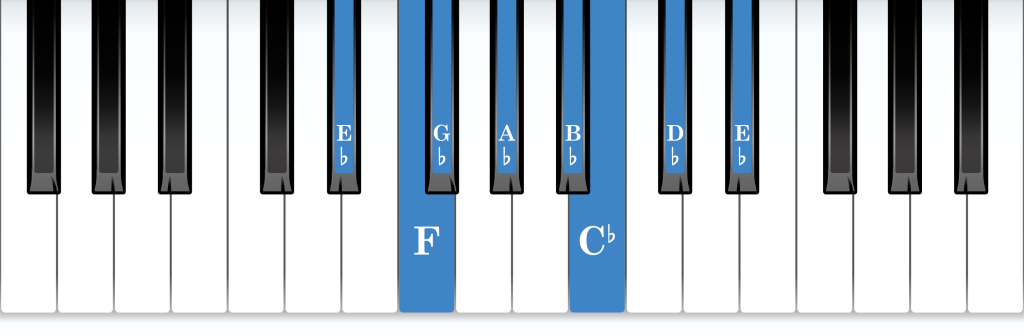
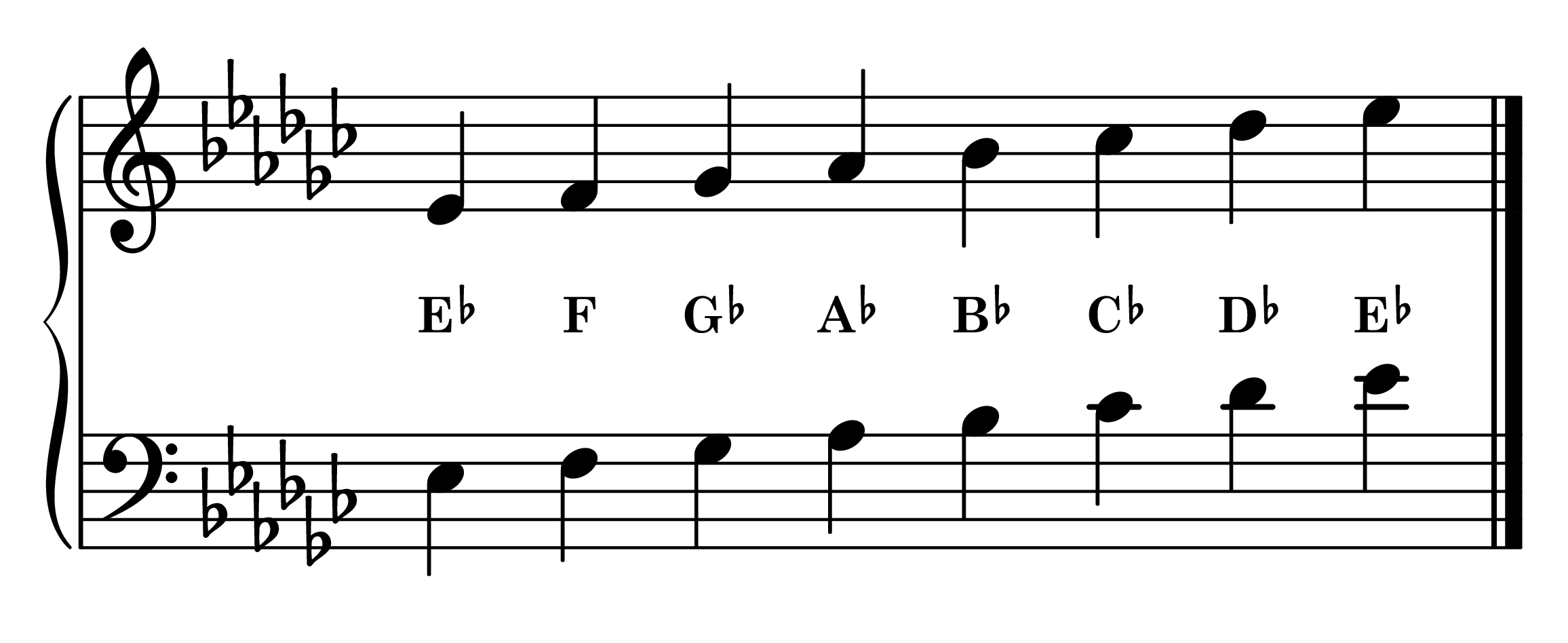
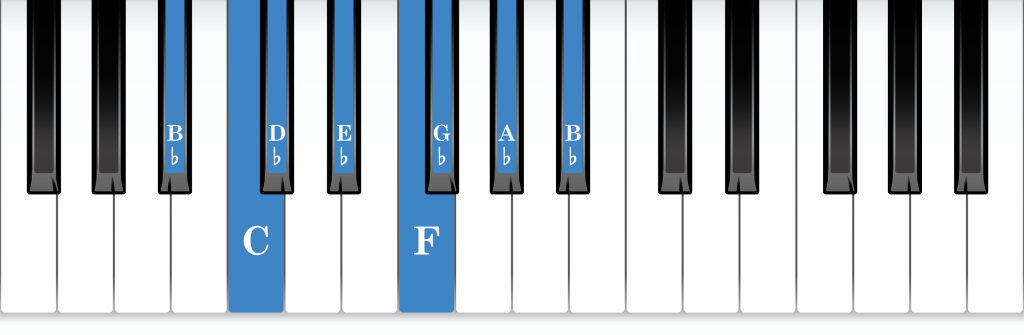
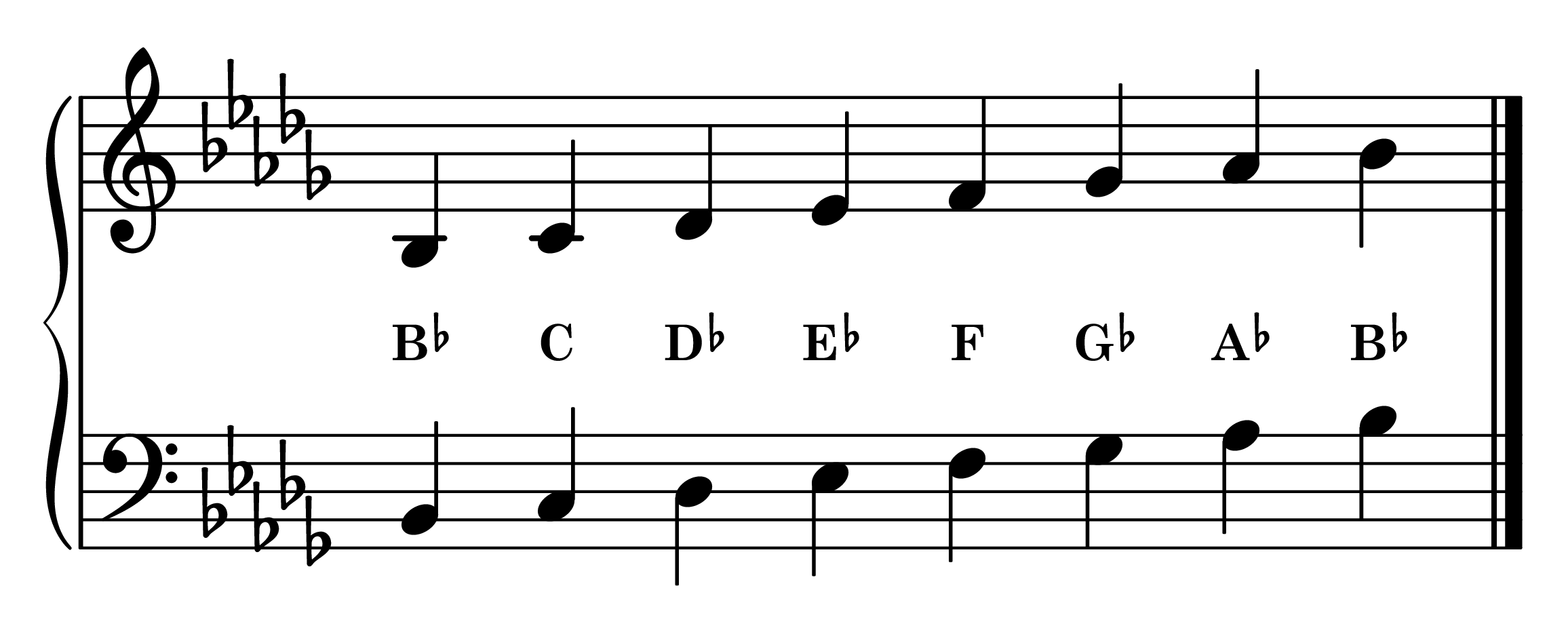
The natural minor has four black keys, A-flat, B-flat, D-flat, and E-flat, with the white keys F, G, and C in between. It shares its notes with its relative major, A-flat major.
The harmonic minor raises the seventh note to E-natural, replacing E-flat with a white key just before the top F. The space between D-flat and E-natural gives the harmonic minor its characteristic leap.
Going up, the melodic minor raises the sixth and seventh notes to D-natural and E-natural, so the top of the scale becomes a run of white keys, C, D, E, F, like the F major scale. Coming down, it returns to the natural minor (first tab).
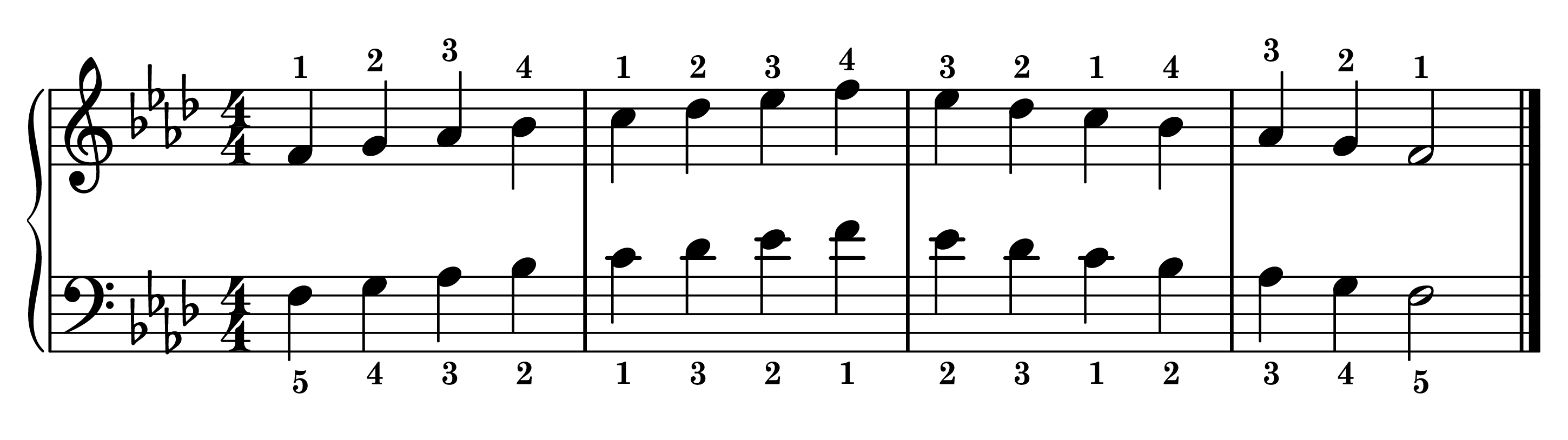
Here is the F natural minor scale on the staff, one octave up and back down.
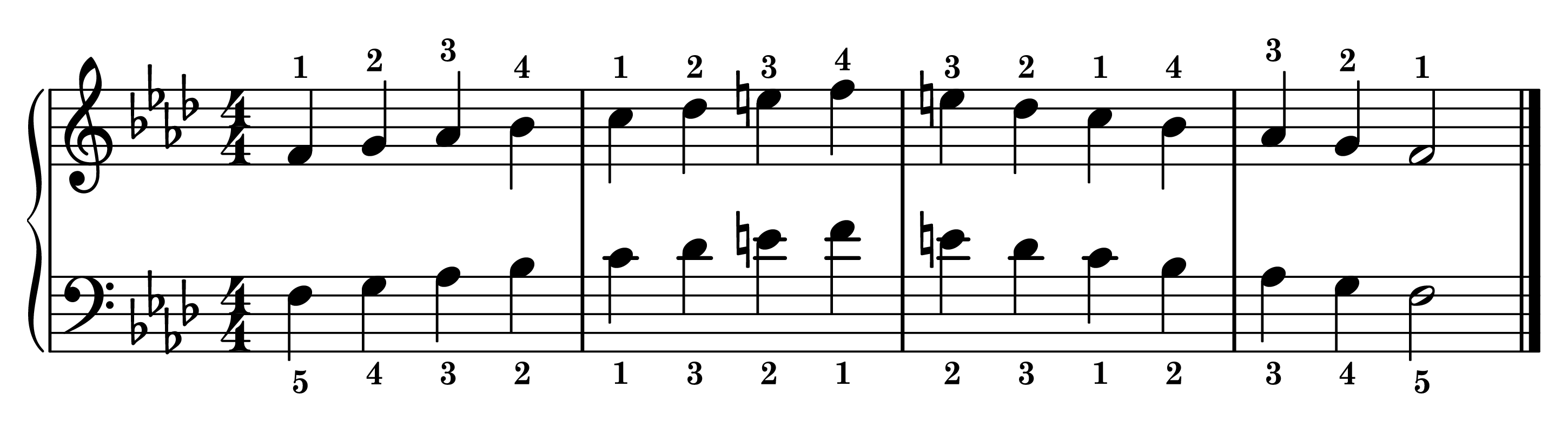
Here is the F harmonic minor scale on the staff, one octave up and back down.
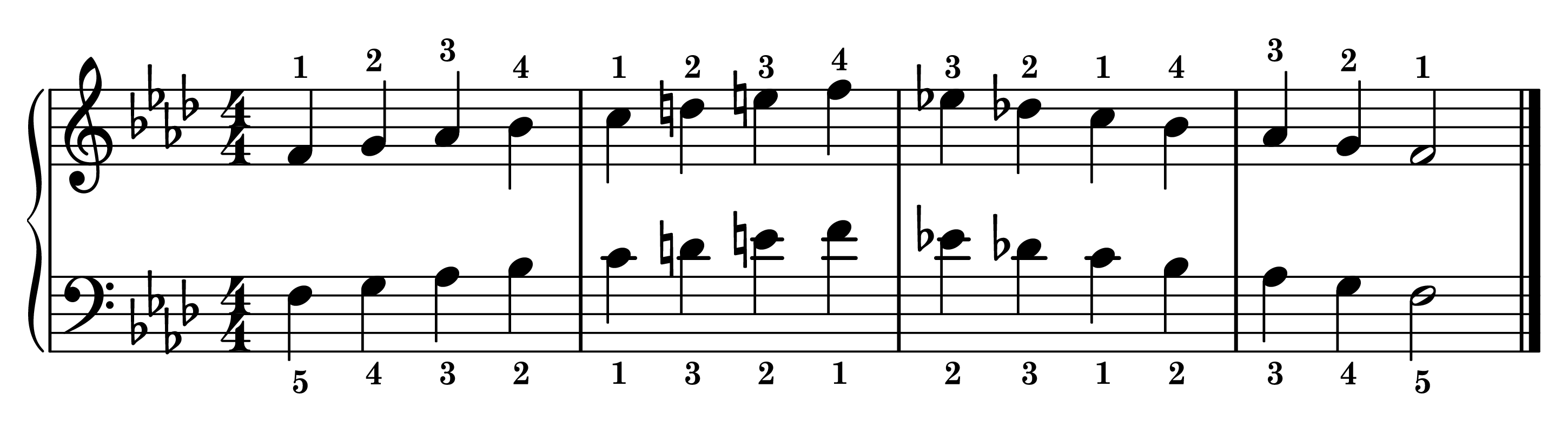
Here is the F melodic minor scale on the staff, one octave up and back down.
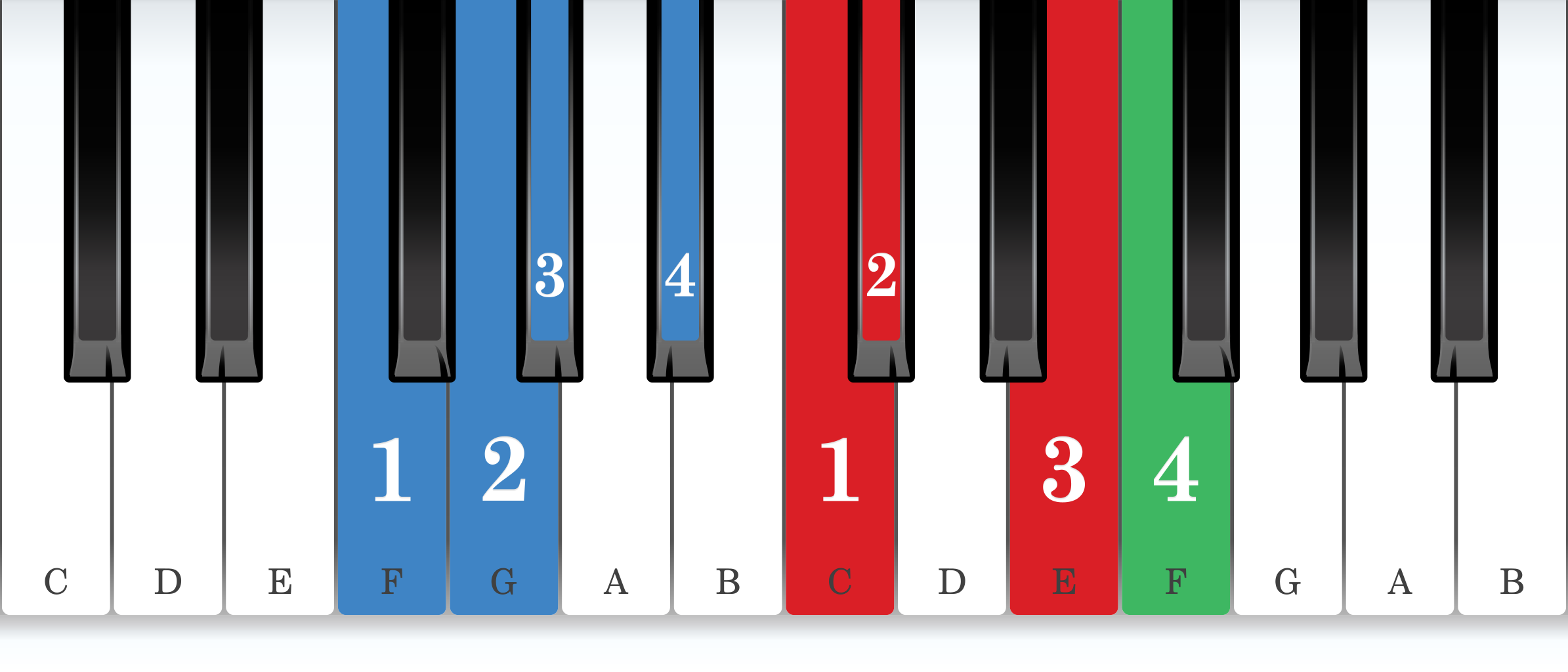
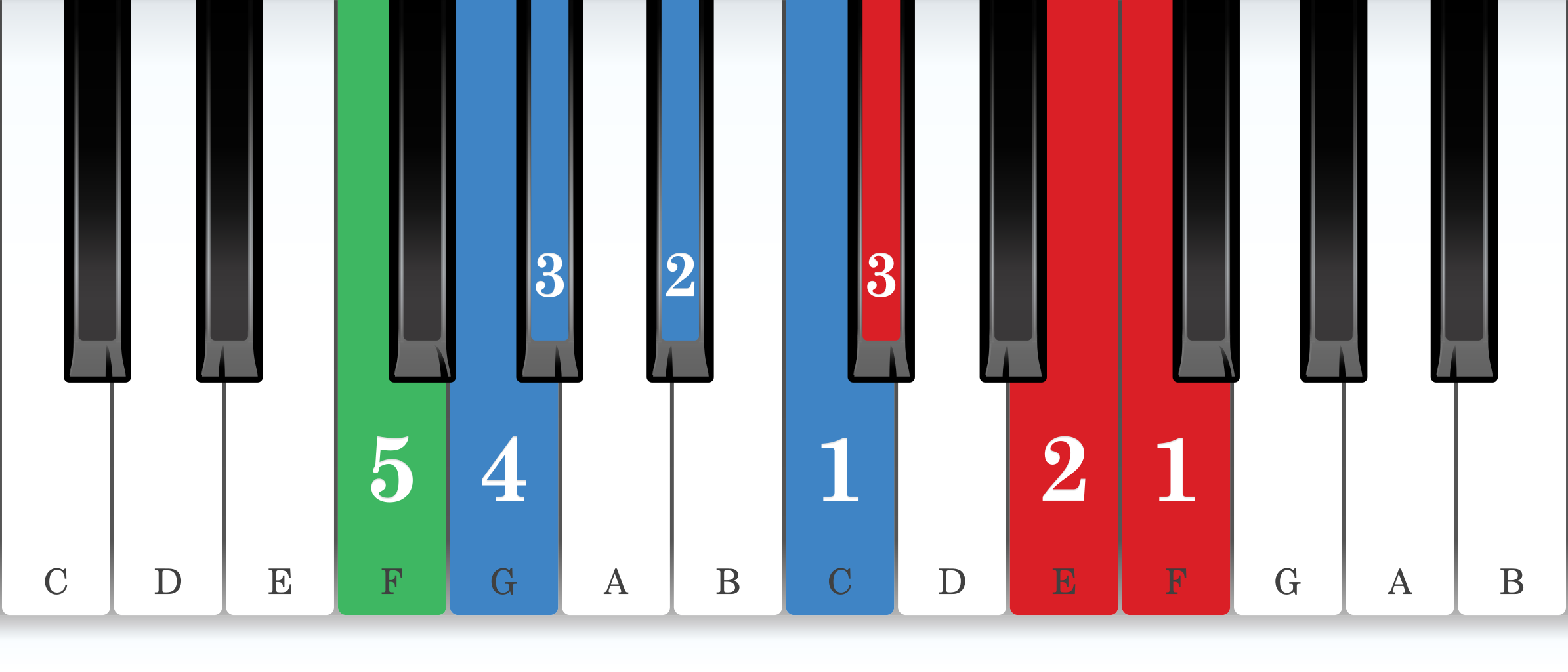
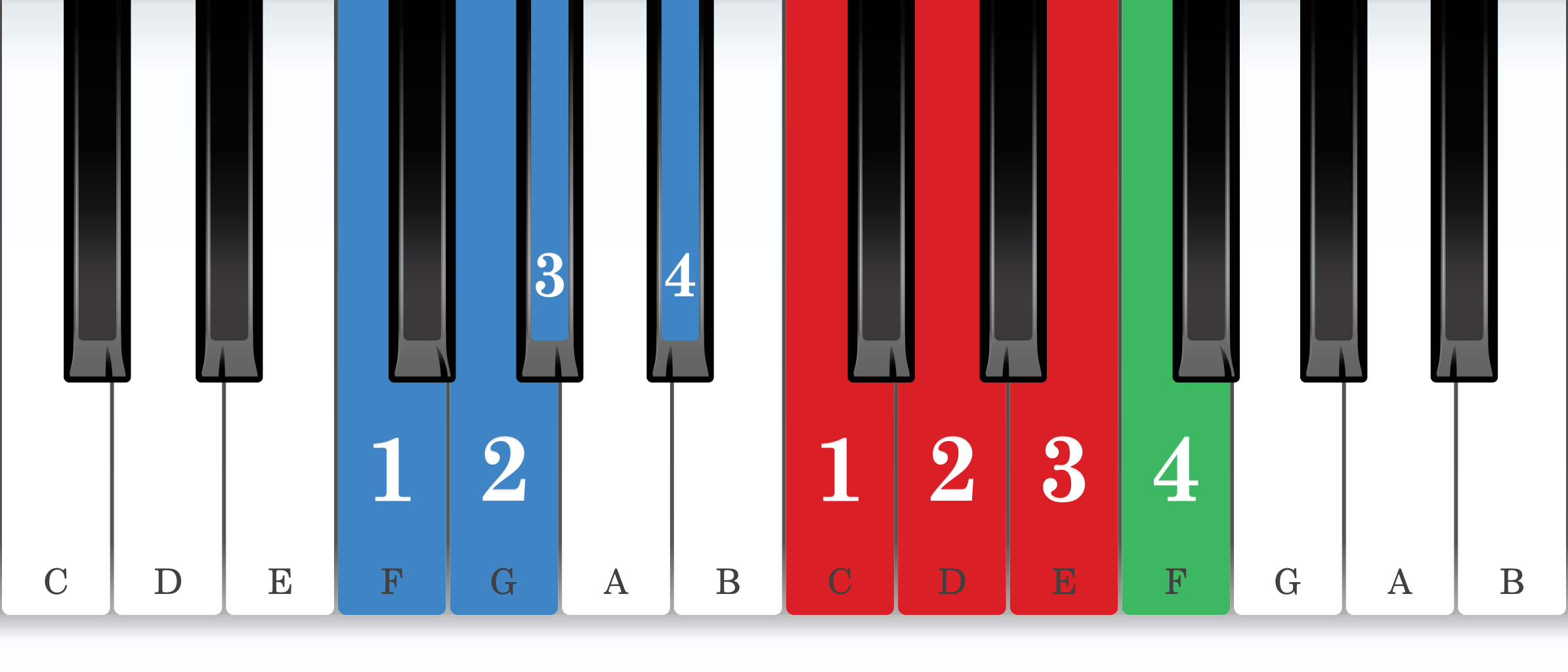
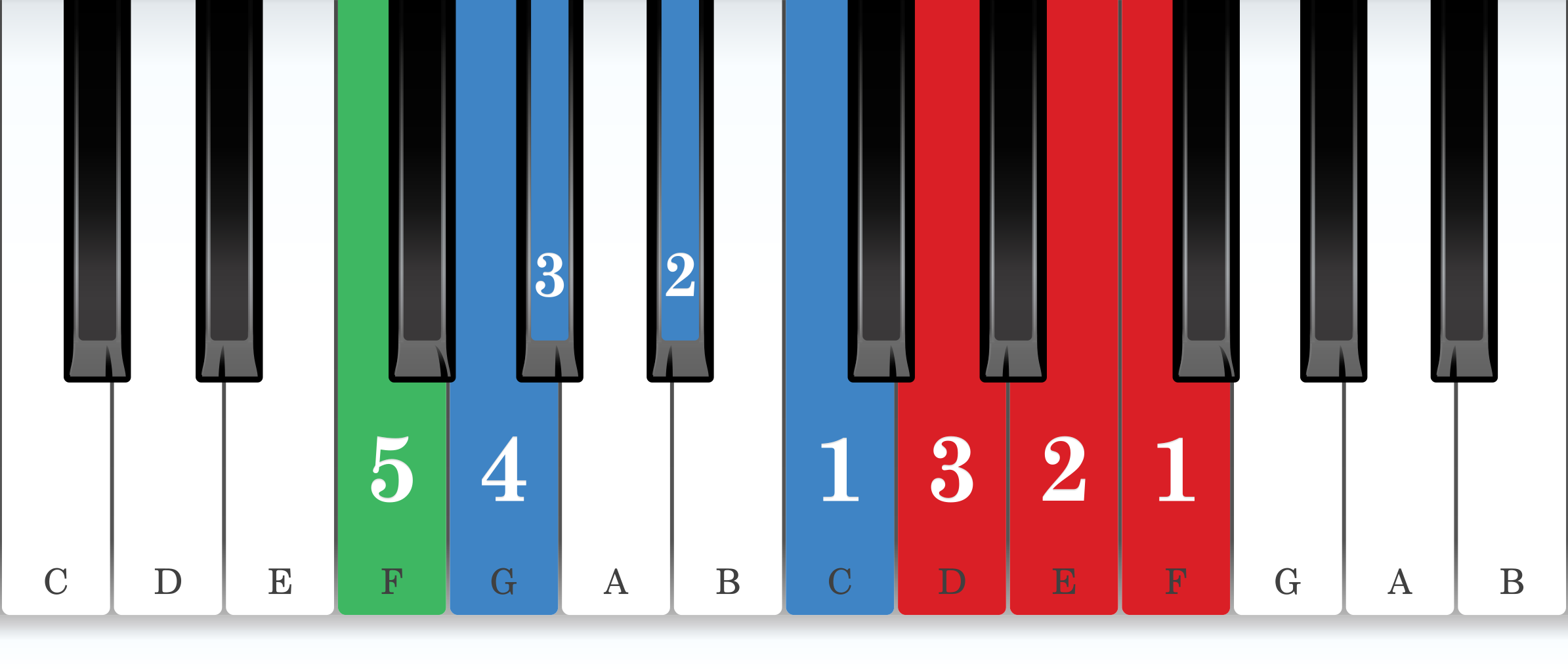
Let’s start with each hand on its own. Every scale divides into two core positions, the groups of notes the hand can hold in one position: a group of three notes played with fingers 1-2-3 (red on the charts) and a group of four played with 1-2-3-4 (blue).
The F minor scale uses the same fingering as F major. In the right hand, the four-note group comes first: F, G, A-flat, and B-flat on 1-2-3-4, then C, D-flat, and E-flat on 1-2-3, with the top F on the fourth finger. In the left hand, the fifth finger plays the bottom F, 4-3-2-1 play G, A-flat, B-flat, and C, and 3-2-1 play D-flat, E-flat, and F.
The charts below show the core positions of the F minor scale in each of its three forms.
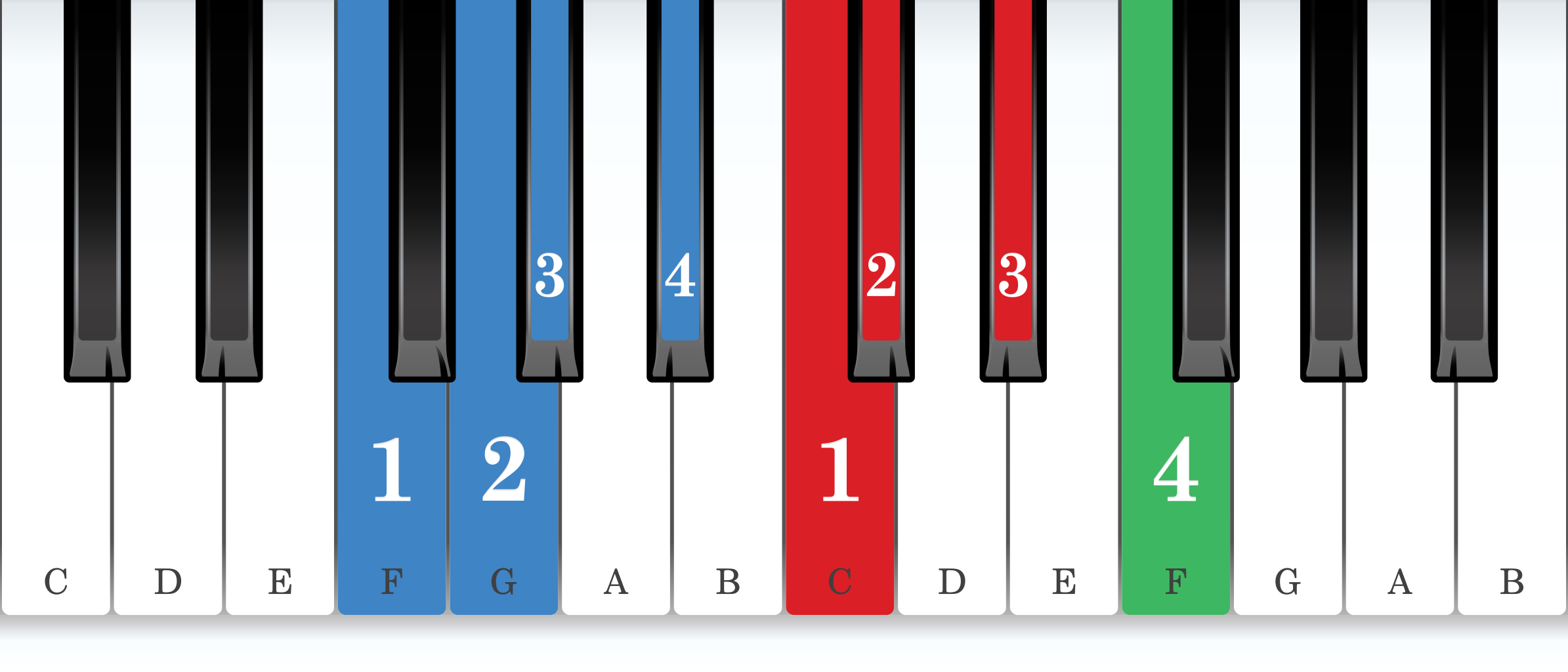
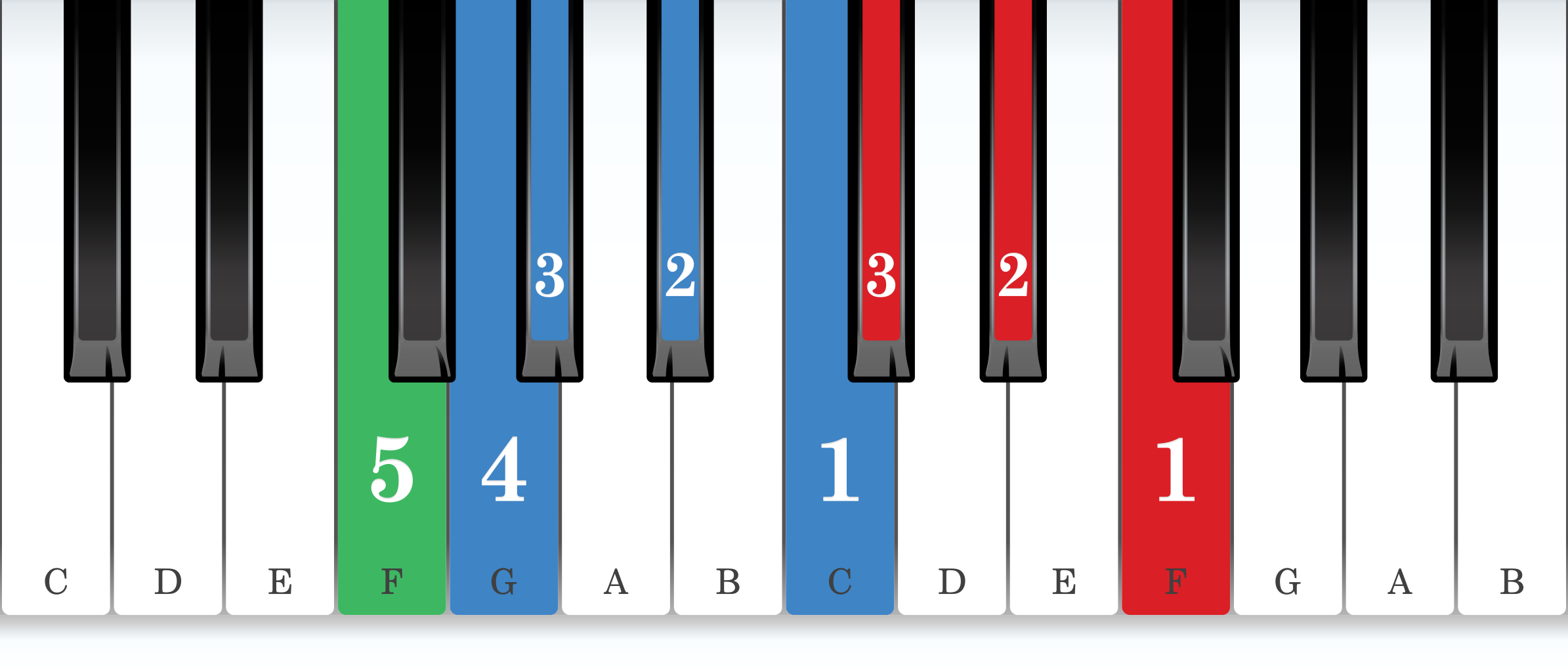
A useful way to work with the core positions is in three stages:
When we put the hands together in F minor, the sync points are the thing to follow: the moments where both hands land on the same finger, or where the fingers form a mirror image. They fall in the same places in all three forms, even though some of the notes change, and the examples below use the harmonic minor.
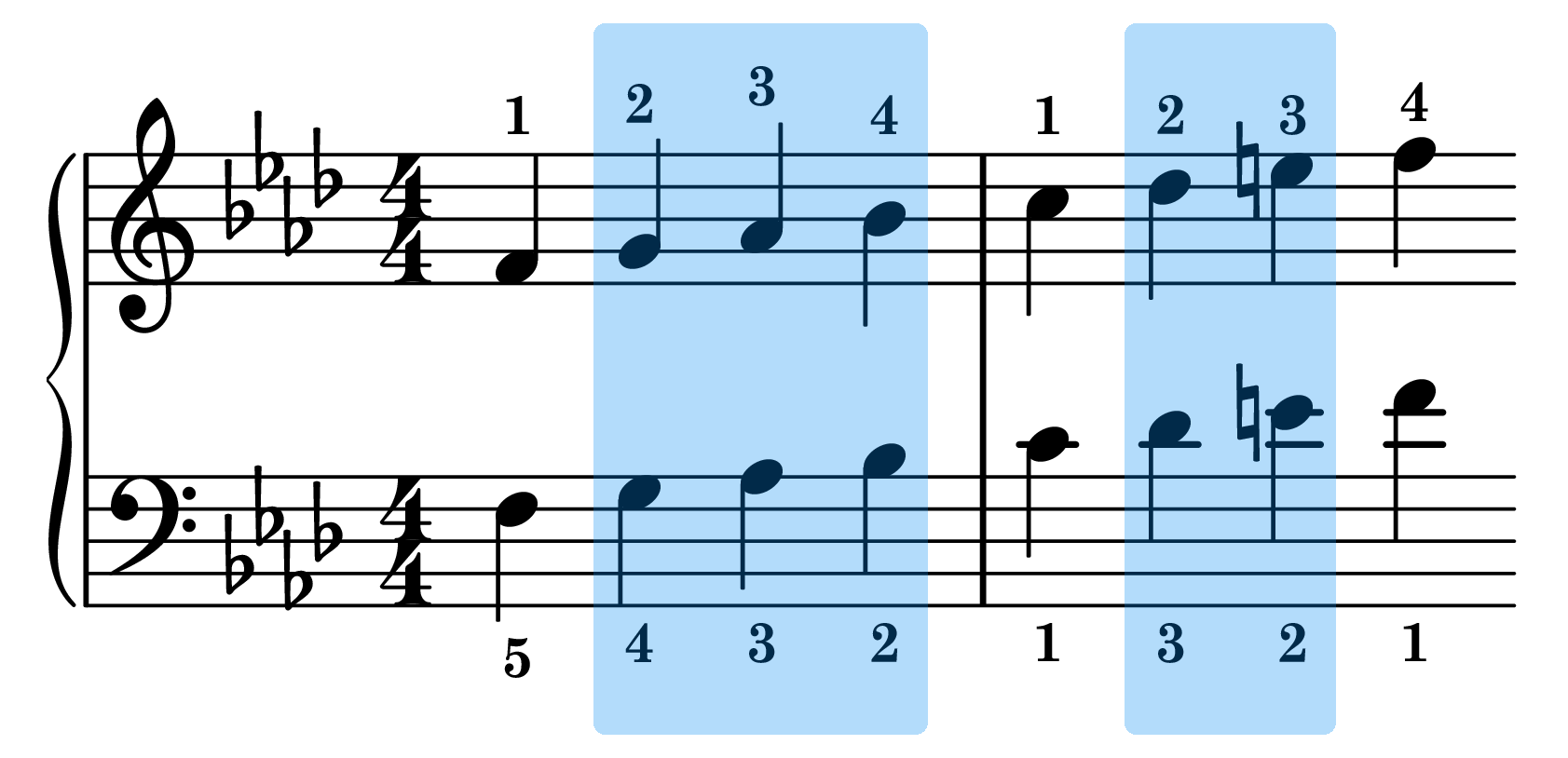
Fingers 2, 3, and 4 form a mirror image on G, A-flat, and B-flat, and fingers 2 and 3 form another on D-flat and E.
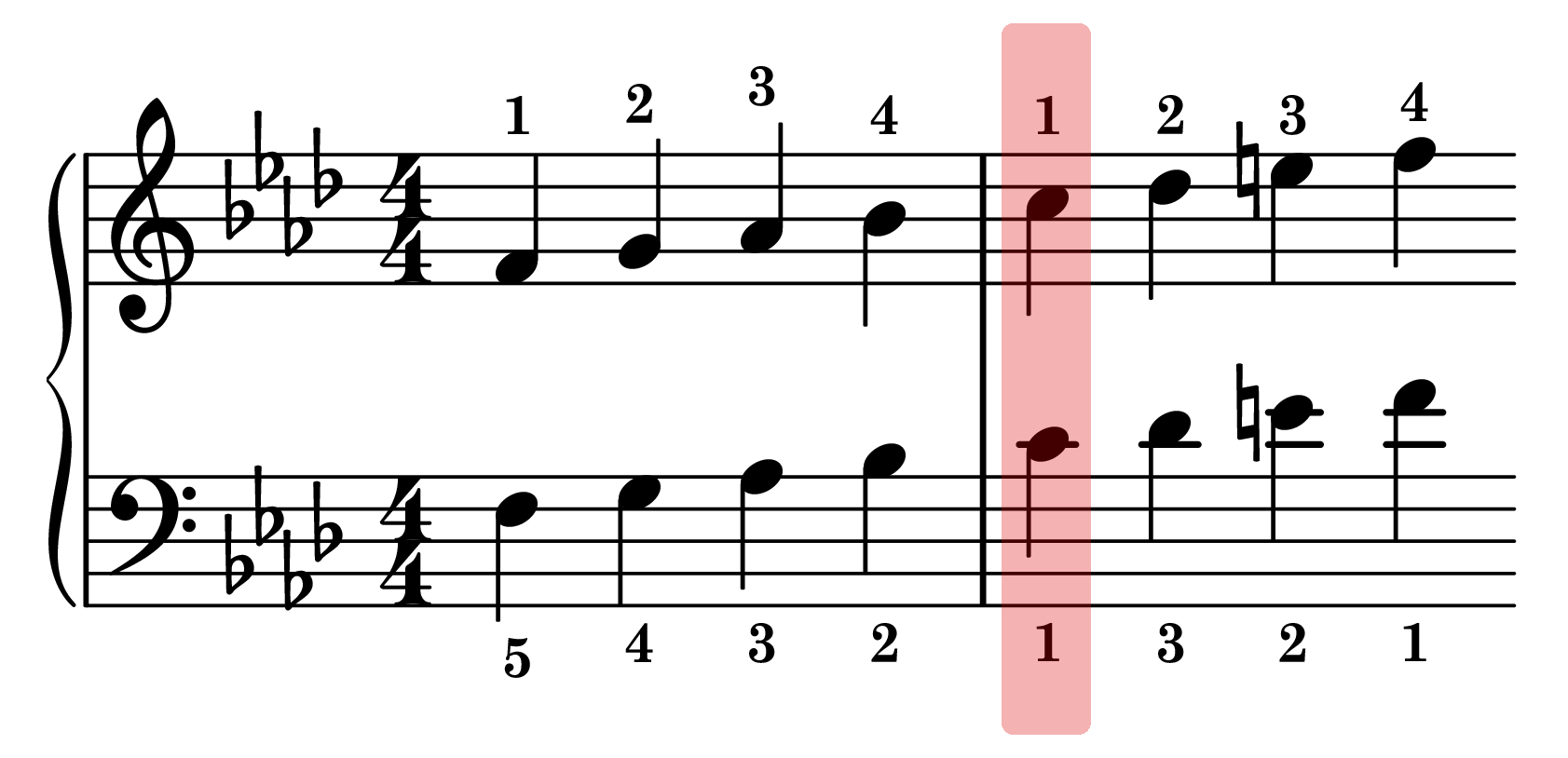
The thumbs come together on C, in the middle of the scale.
The same three stages work for sync points:
Once one octave feels consistent, we can extend the scale. In the right hand, the thumb takes over the top F from the fourth finger and the core positions repeat, with the fourth finger returning only on the final note. The left hand continues the core positions, with the thumb on each F above the starting note and the fifth finger only at the very bottom.
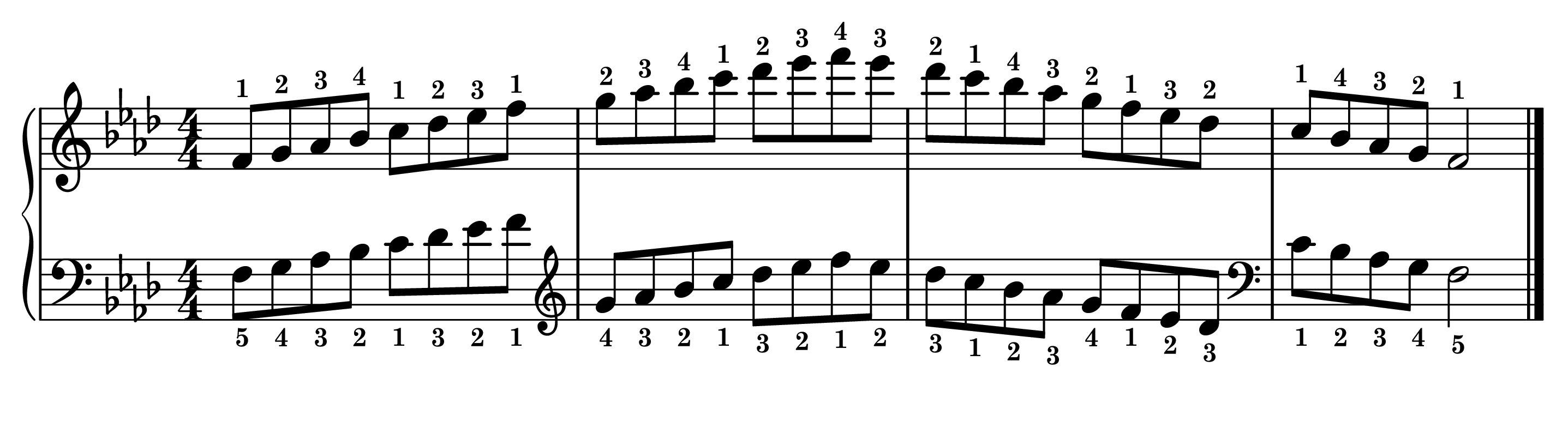
Here is the F natural minor scale in two octaves, ascending and descending, with fingering.
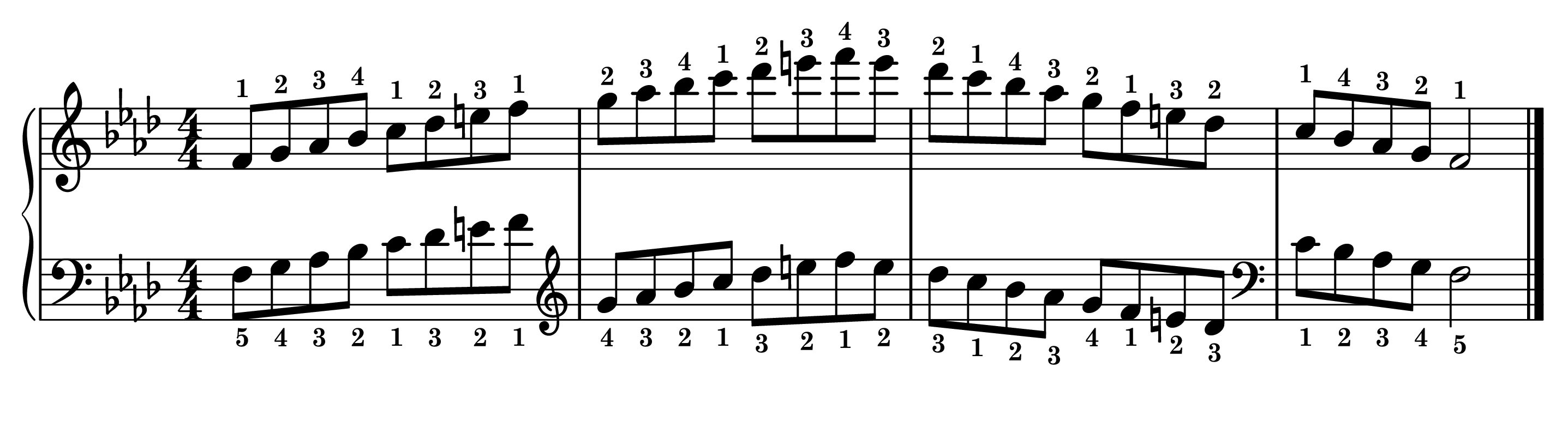
Here is the F harmonic minor scale in two octaves, ascending and descending, with fingering.
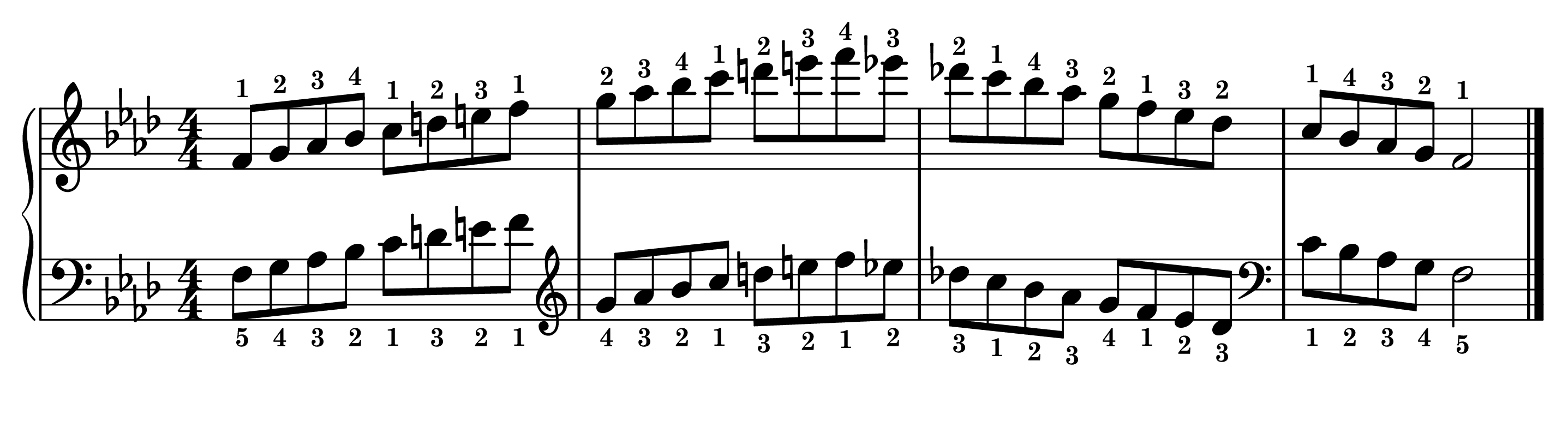
Here is the F melodic minor scale in two octaves, ascending and descending, with fingering.
As in F major, the right hand plays four notes, F, G, A-flat, and B-flat, before the thumb passes under to C. The habit of tucking the thumb under after the third finger is the thing to watch for.
The thumbs land on F and C, surrounded by black keys. Tucking the thumb under a little early means it arrives in time.
Other techniques related to the F minor piano scale:
No questions on this lesson yet. Be the first to ask one.
Continue learning with our full library of piano scale lessons